


The complete guide
Portable Electronic Drums Buyer's Guide
The problem with learning drums at home
Drums are the loudest instrument most people ever try to learn in a house. That single fact shapes everything. Parents put off buying a kit because of the noise. Apartment dwellers rule it out entirely. People who would happily practise for twenty minutes a day end up practising twice a week, because every session involves negotiating with somebody.
Then there is the space. A beginner acoustic kit swallows a corner of a room and does not move easily. Once it is set up, it stays set up. That is fine if you have a spare room. It is a dealbreaker if you have a bedroom shared with a sibling, or a living room that has to be a living room again by dinner time.
A roll up drum kit answers both problems without pretending to be something it is not. It is not a replacement for an acoustic kit. It is a practice tool that lets someone play every day instead of occasionally, and daily practice beats occasional practice every single time at the beginner stage.
How a roll up drum kit actually works
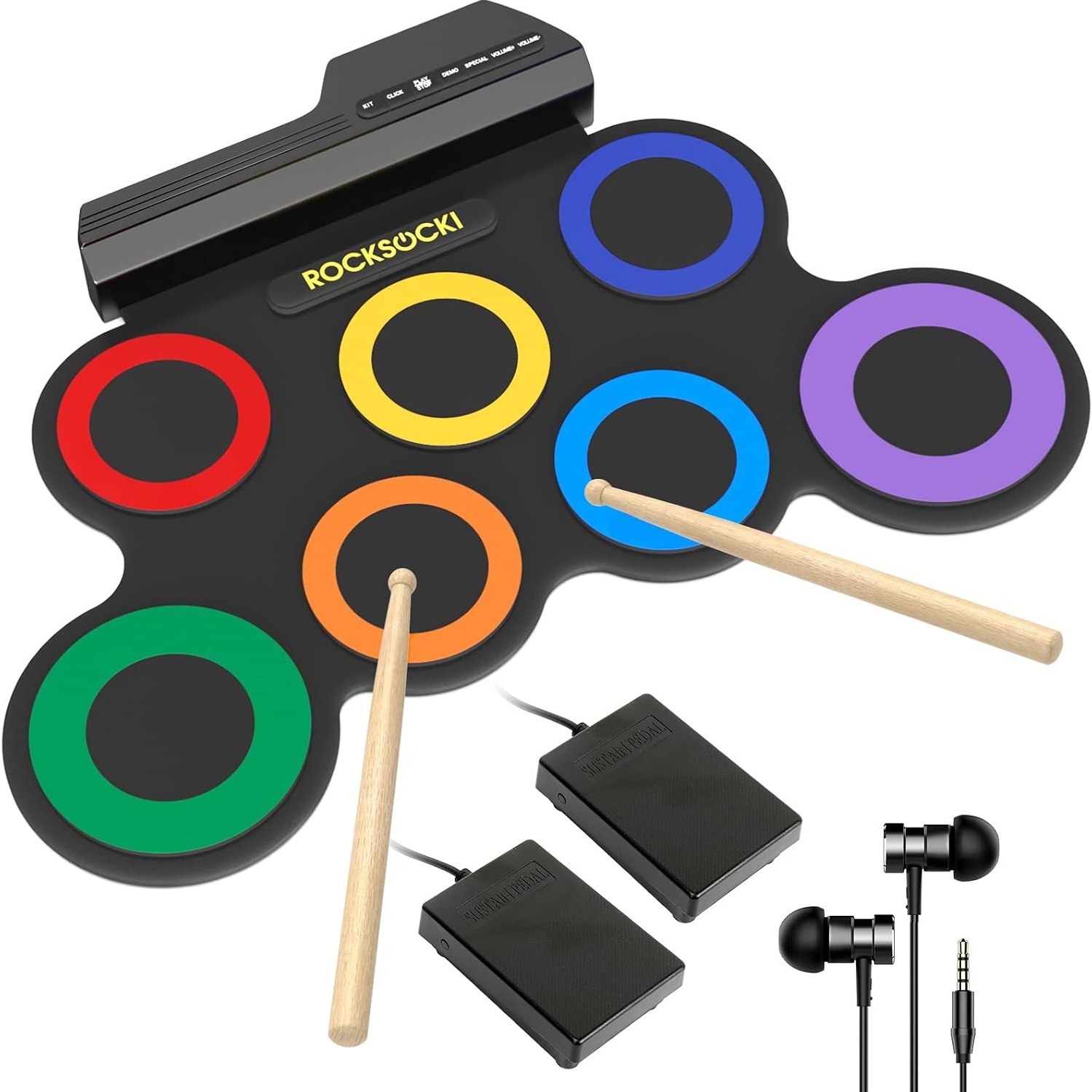
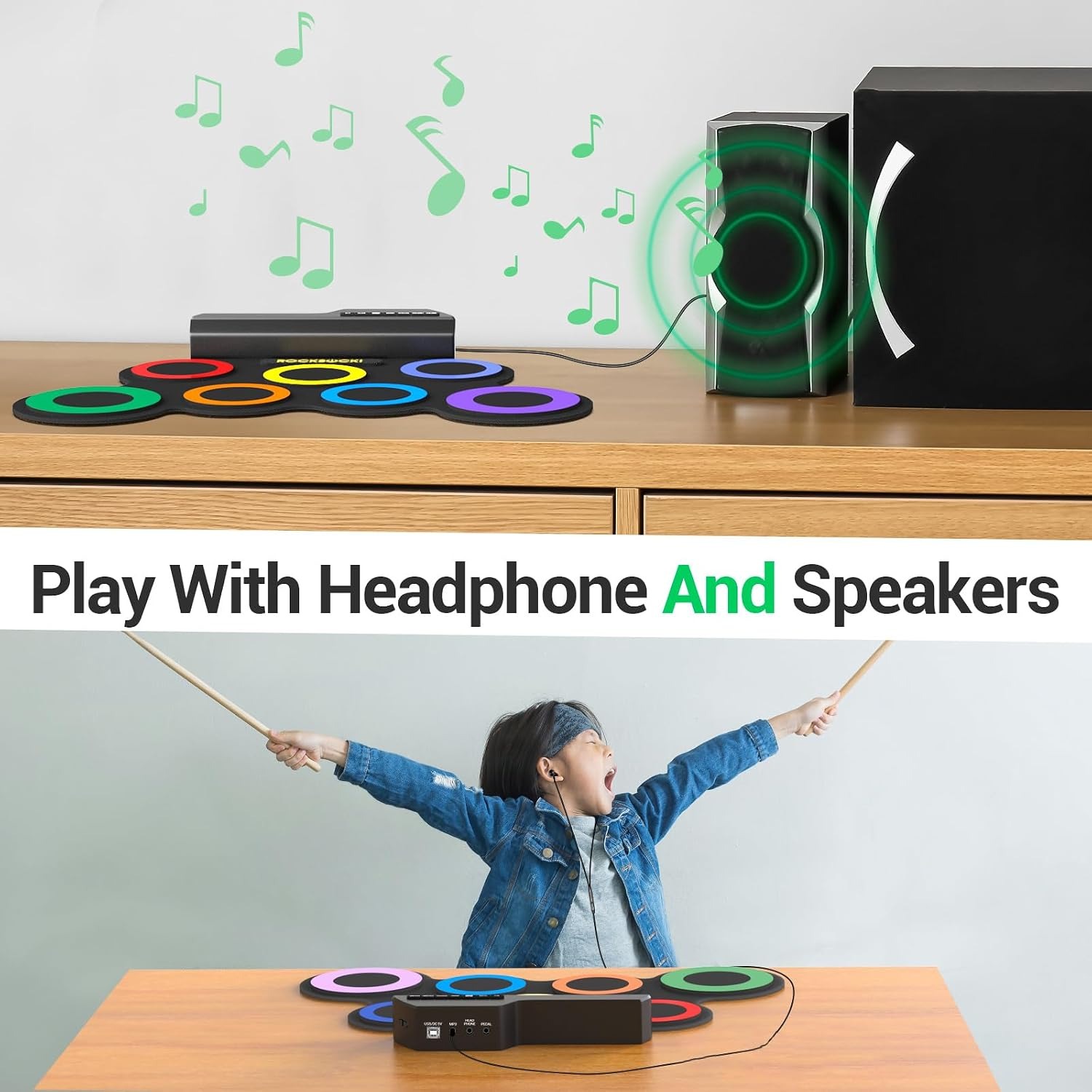
The playing surface is a flexible mat with seven pads marked on it. Each pad has a sensor underneath. When you strike it, the sensor triggers an electronic drum sound. That sound goes out through a headphone socket or to an external speaker, which is where all the actual volume lives. The pads themselves make a quiet tap, nothing more.
On this kit the seven pads cover three toms, a snare, a hi-hat, a ride and a crash. That is the core of a standard kit layout, which matters more than it sounds. When a learner reaches for the snare, it should be where the snare lives on a real kit. The snare and hi-hat positions here can be swapped around, which is useful for left-handed players and for anyone who learned on a differently arranged setup.
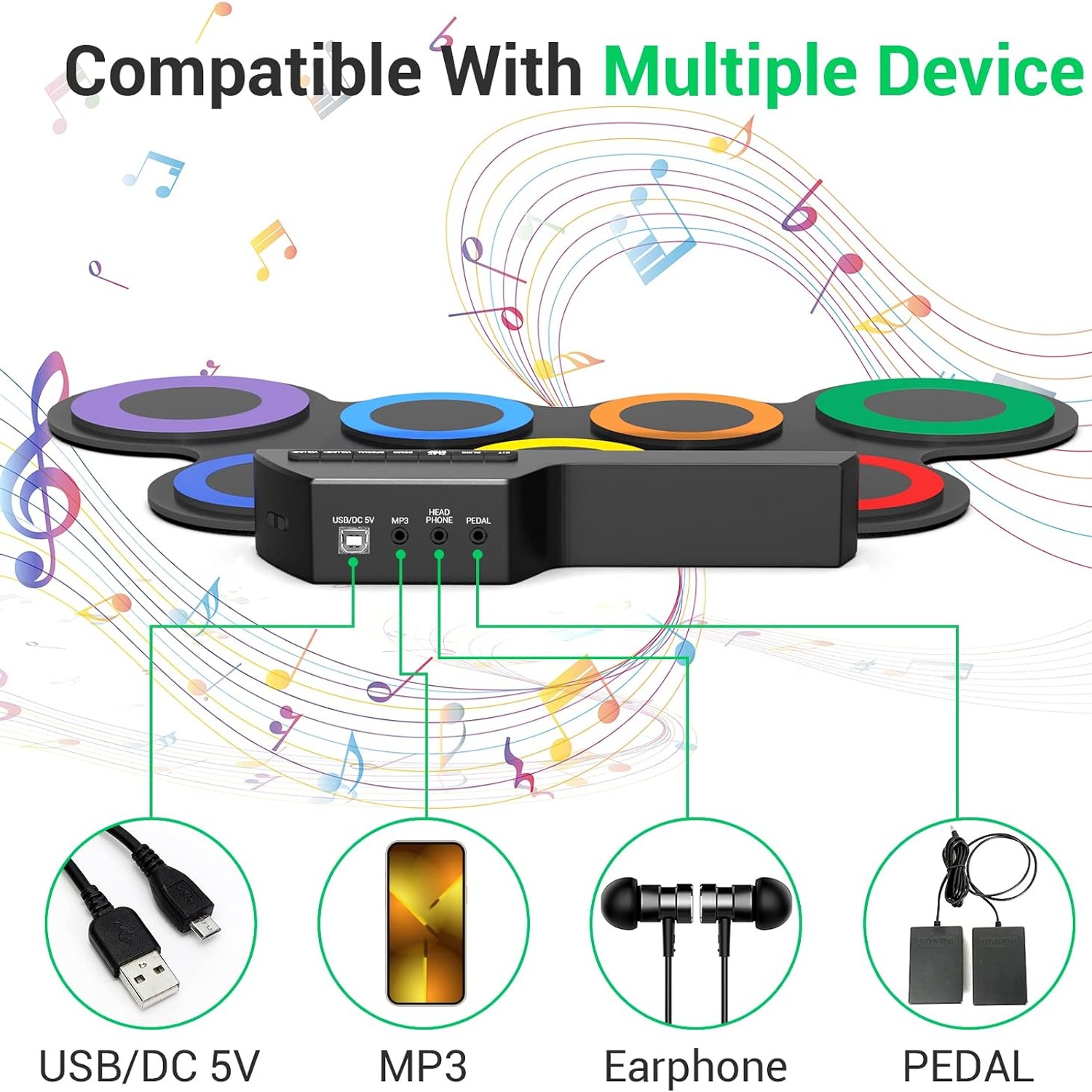
Two foot pedals come with it, one for the bass drum and one for the hi-hat. This is the bit that separates a proper practice kit from a simple drum pad. Drumming is a four-limb activity. A kit with no pedals teaches your hands and leaves your feet behind, and that gap shows up badly the first time someone sits at a real kit.
Power runs either from 2 x AAA batteries or from DC5V through the included USB cable. The USB option is the one most people end up using at home, since a phone charger or laptop port does the job. The battery option is what makes it work in the back of a car or at a campsite.
Who this suits
Children starting out. The supplier describes it as a beginner kit for kids who want to practise and play. It is light at 762 g, easy for them to carry, and there is no assembly beyond unrolling it. If a child's interest in drums turns out to be a six-week phase, you have not committed a corner of the house to it.
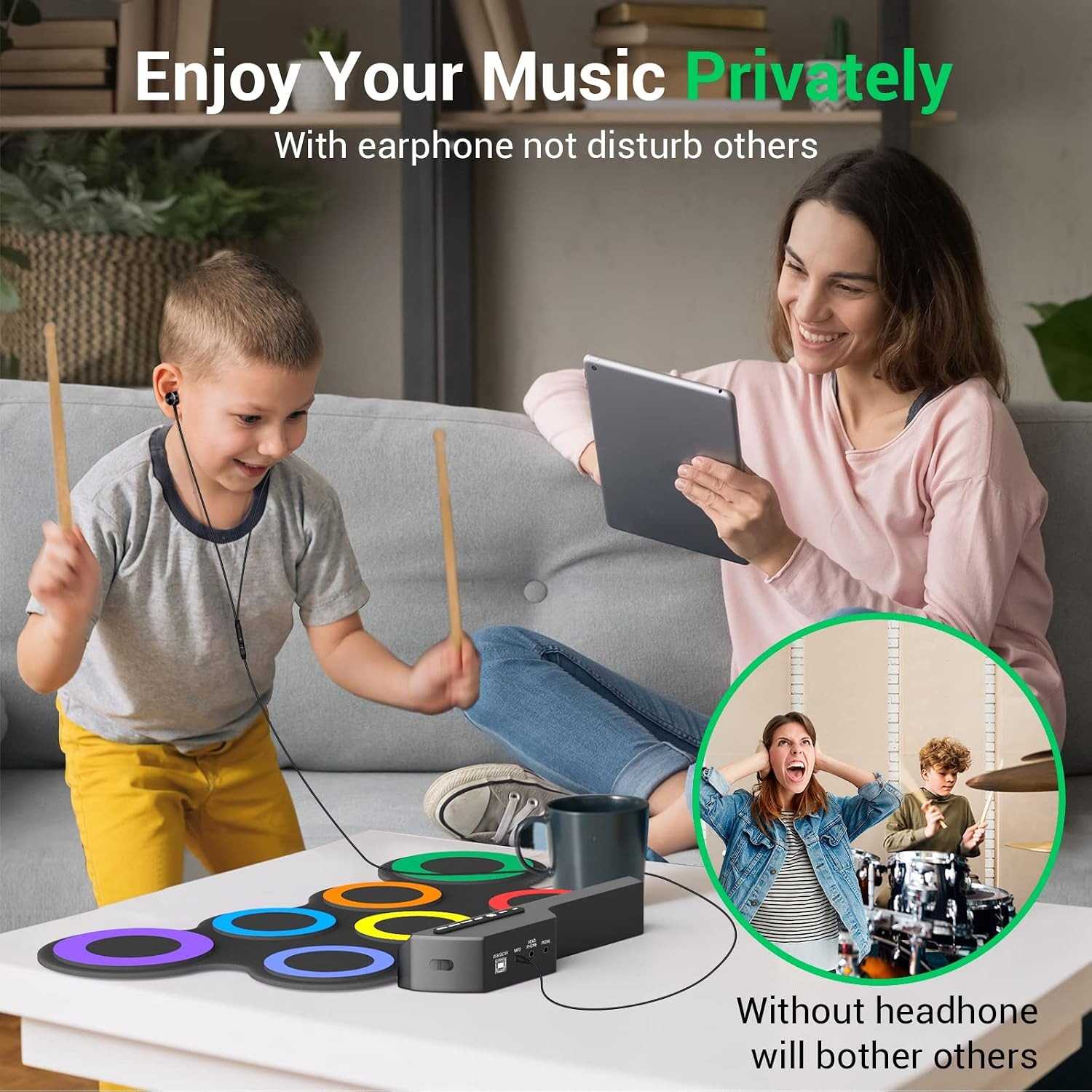
Apartment and shared-house players. Headphone practice is the whole point. The headphone comes in the box, so there is no extra purchase before the first session. If you have been searching for the best quiet practice drum set because of thin walls, this is the category you want.
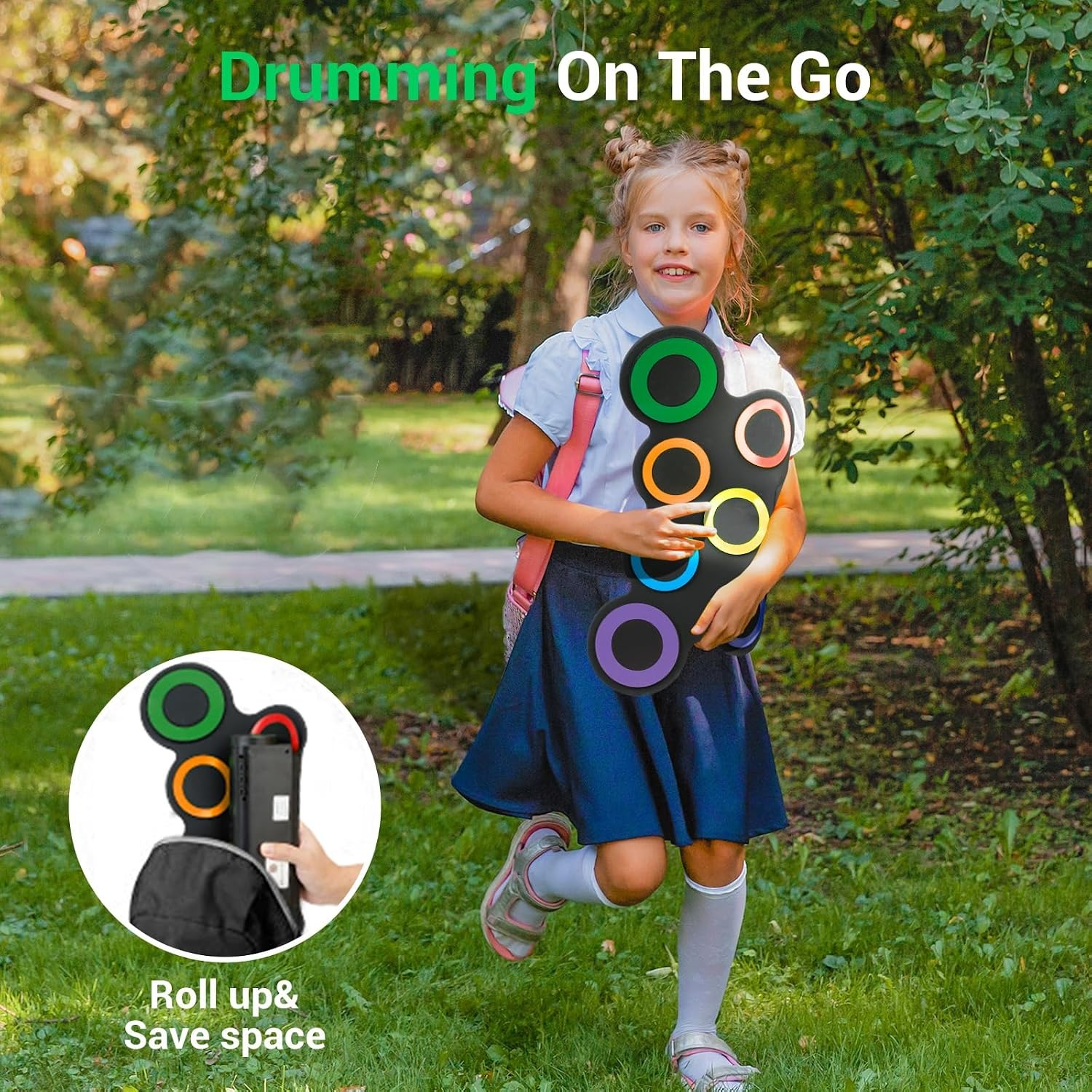
Players who travel. Rolled, it is 42 x 15 x 4.7 cm. That goes in a backpack. People take kits like this to holiday rentals, to grandparents' houses, to rehearsal spaces and to music lessons. A case is included, which keeps the mat and the two pedals together.
Drummers who want a warm-up tool. Experienced players sometimes keep something like this for hotel rooms and backstage. It will not replace their kit, but it keeps hands moving between gigs.
Who it does not suit: anyone expecting the stick rebound and dynamic range of a real snare head, and anyone who needs confirmed MIDI recording into music software. The connector type is listed as USB and the USB cable is described as a power option. The listing does not say it works as a MIDI controller, so do not buy it on that basis.
How to choose between portable drum options
Count the pads. Fewer than seven and you start losing parts of the kit. Seven covers toms, snare, hi-hat, ride and crash, which is enough for most beginner beats and fills.
Check for pedals. Plenty of cheap roll up mats have none. Without them, the learner is only training half the body. Two pedals is the minimum worth having.
Look at the power options. Battery-only kits die at the worst moment. USB-only kits tie you to a socket. Having both, as this one does, is the flexible answer.
Confirm the headphone situation. Quiet practice is usually the reason for the purchase, so a headphone included in the box saves a trip. Check whether you can also connect a speaker for the times you want the sound out loud.
Think about where it will live. Measure the table or desk. The mat needs a firm flat surface to respond properly. Playing on a bed or a soft sofa deadens the pads and makes everything feel vague.
Be realistic about sticks. Some players use light sticks, some use fingers. Check what arrives in the box and buy a cheap pair of practice sticks if you want them.
Getting the most out of it
Set it up on a table at a height where the player's forearms sit roughly level. Too low and they hunch. Too high and the wrists lock up. The pedals go on the floor directly below, spaced about shoulder width apart so the knees are not knocking together.
Start with the feet. Most beginners want to spend all their time on the hands, and then the bass drum pedal feels alien for months. Five minutes of steady quarter notes on the bass pedal at the start of each session fixes that early.
Use a metronome or a backing track through the same headphones. Playing to a click is the single habit that separates drummers who get asked back from drummers who do not. Build it in from week one and it never feels like a chore.
Keep sessions short and frequent. Twenty minutes a day will do far more than two hours on a Sunday. The portability is what makes that realistic, because the kit comes out in seconds and goes away just as fast.
Looking after it
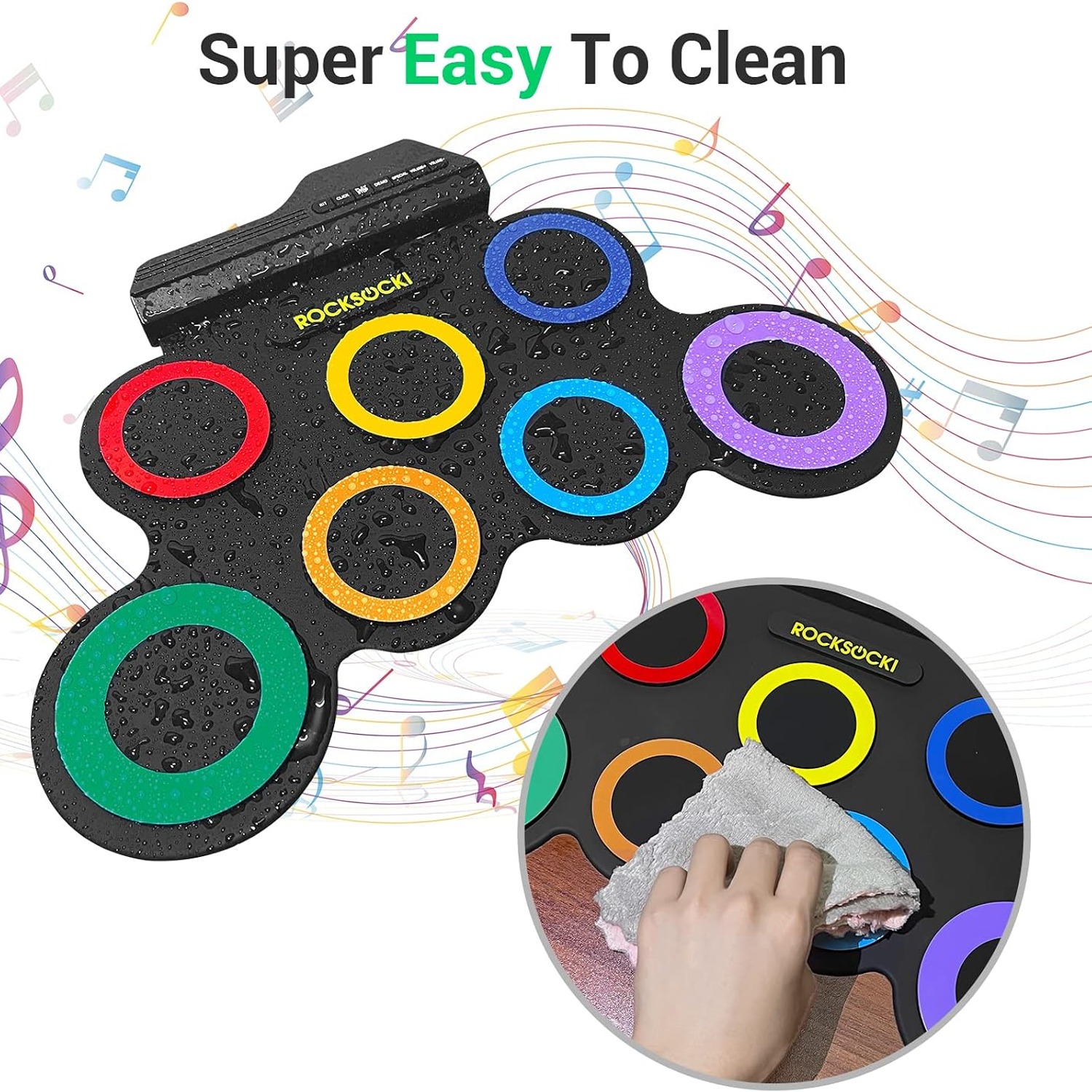
Wipe the pads with a dry or slightly damp cloth after playing, and let the surface dry fully before you roll it up. Trapped moisture inside a rolled mat is not kind to electronics.
Roll it loosely. Creasing the same spot every time puts repeated stress on the same point. Vary the roll slightly and use the included case to keep the shape.
Keep food and drink away from it. That sounds obvious, and it is still the most common cause of failure in any flexible electronic surface. A knocked glass is a bad afternoon.
If it is going into storage for a season, take the AAA batteries out. Leaking cells will ruin a battery compartment faster than anything else on the kit. The supplier record lists a 12 month warranty, so keep your order confirmation somewhere you can find it.
The short version
This is a seven-pad roll up drum kit with two foot pedals, a headphone for silent practice, a case, and the choice of USB or AAA battery power. Rolled it measures 42 x 15 x 4.7 cm and the whole thing weighs 762 g. The body material is listed as bass wood, and the warranty is 12 months.
It is a practice instrument, not a stage kit. What it does well is remove the two excuses that stop people practising, noise and space. If you have a child who wants to drum, a neighbour who would rather they did not, and no corner of the house to spare, this solves all three in one rolled-up bundle that fits in a backpack.
Delivery is tracked across Canada, free on orders of $75 or more and $25 below that.