


The complete guide
Moving Straps Buyer's Guide, How to Carry Heavy Furniture Without Wrecking Your Back
The part of moving day that goes wrong
Packing is tedious but it is not dangerous. The danger is the twenty minutes where a fridge has to come out of a kitchen, round a corner, and down a set of stairs. That is when people grab the nearest edge, squat badly, and find out their back has opinions.
The problem is grip and geometry. Big furniture has no handles. You end up clamping your fingers under a lip, holding the weight out in front of you, and twisting to see where your feet are going. Every one of those things makes a heavy item feel heavier and puts the load through your lower back instead of your legs.
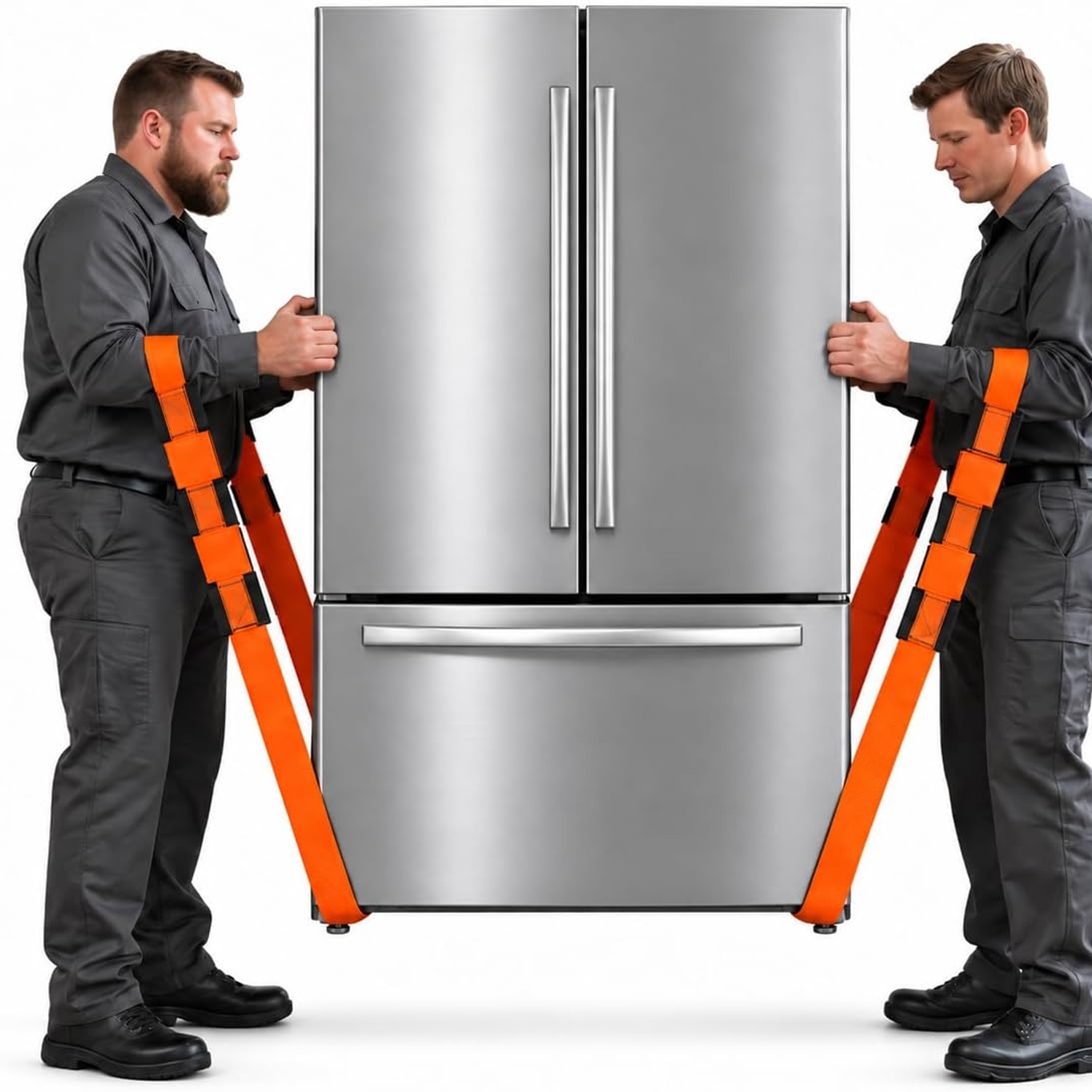
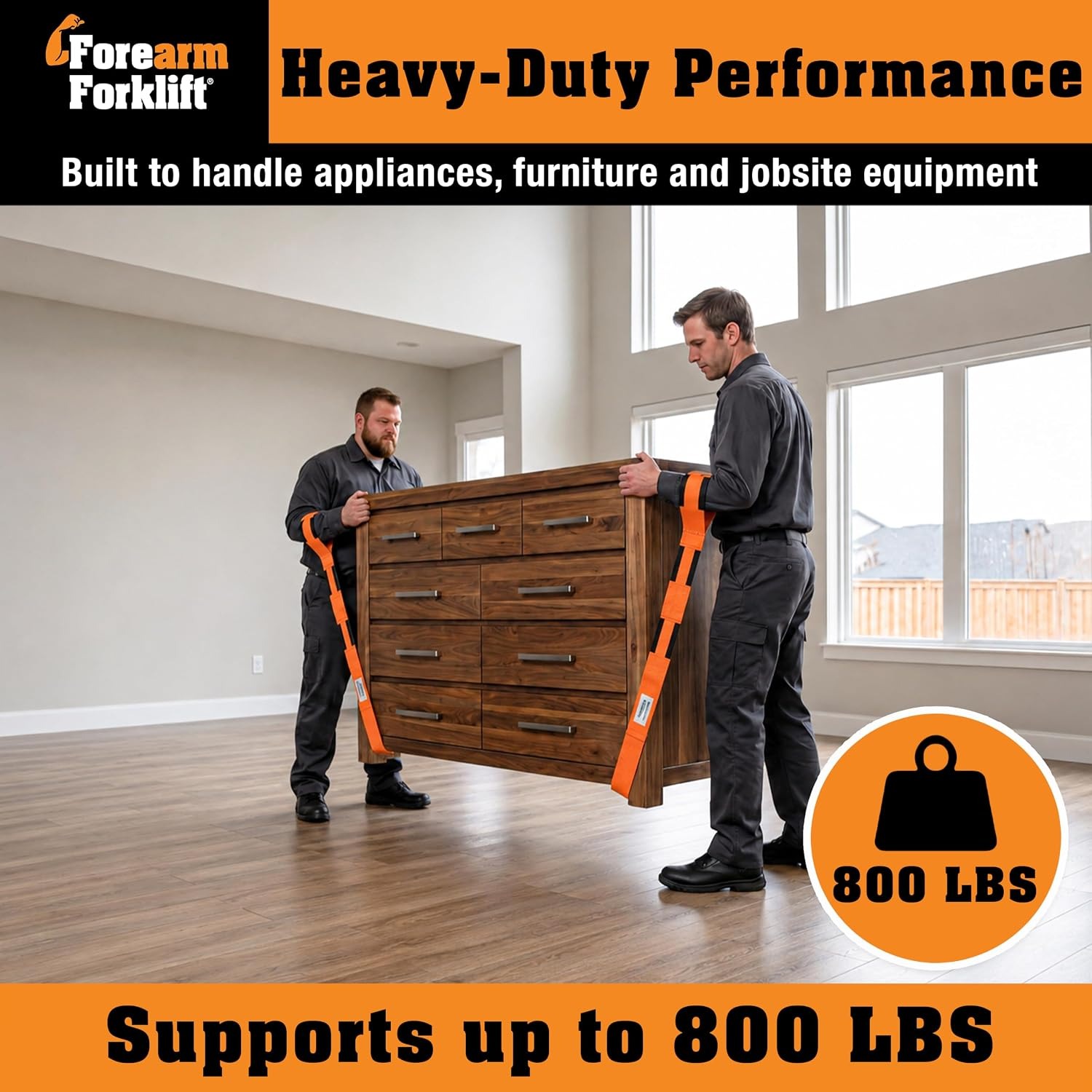
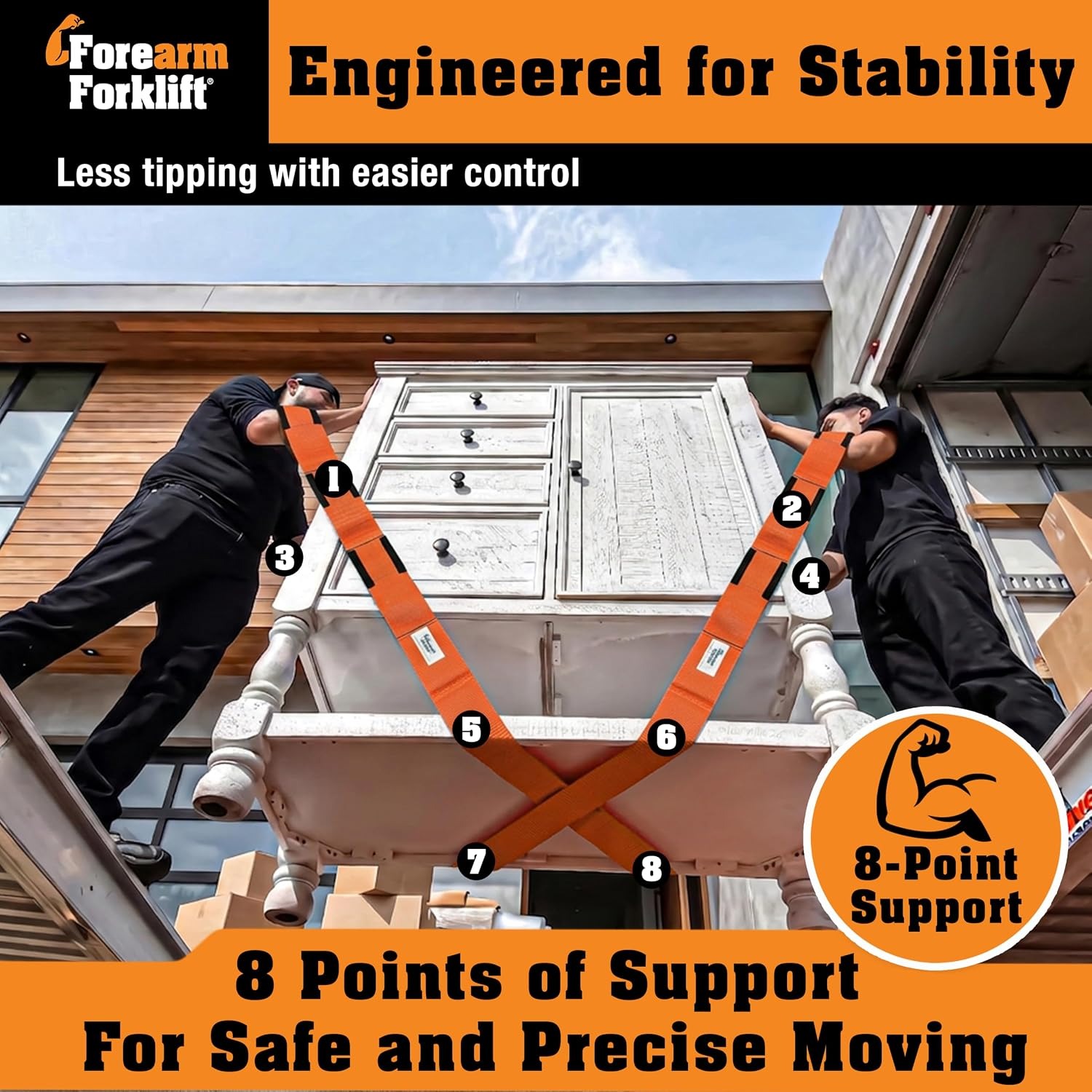
Moving straps fix the geometry. Two long webbing straps go under the item in a crisscross, each person puts their forearms through a loop, and you both stand. The weight now hangs from your forearms, close to your body, with the item balanced between you. Your hands are free to steady and guide. Your back stays upright because standing up from a squat is a leg movement, not a spine movement.
How this set works
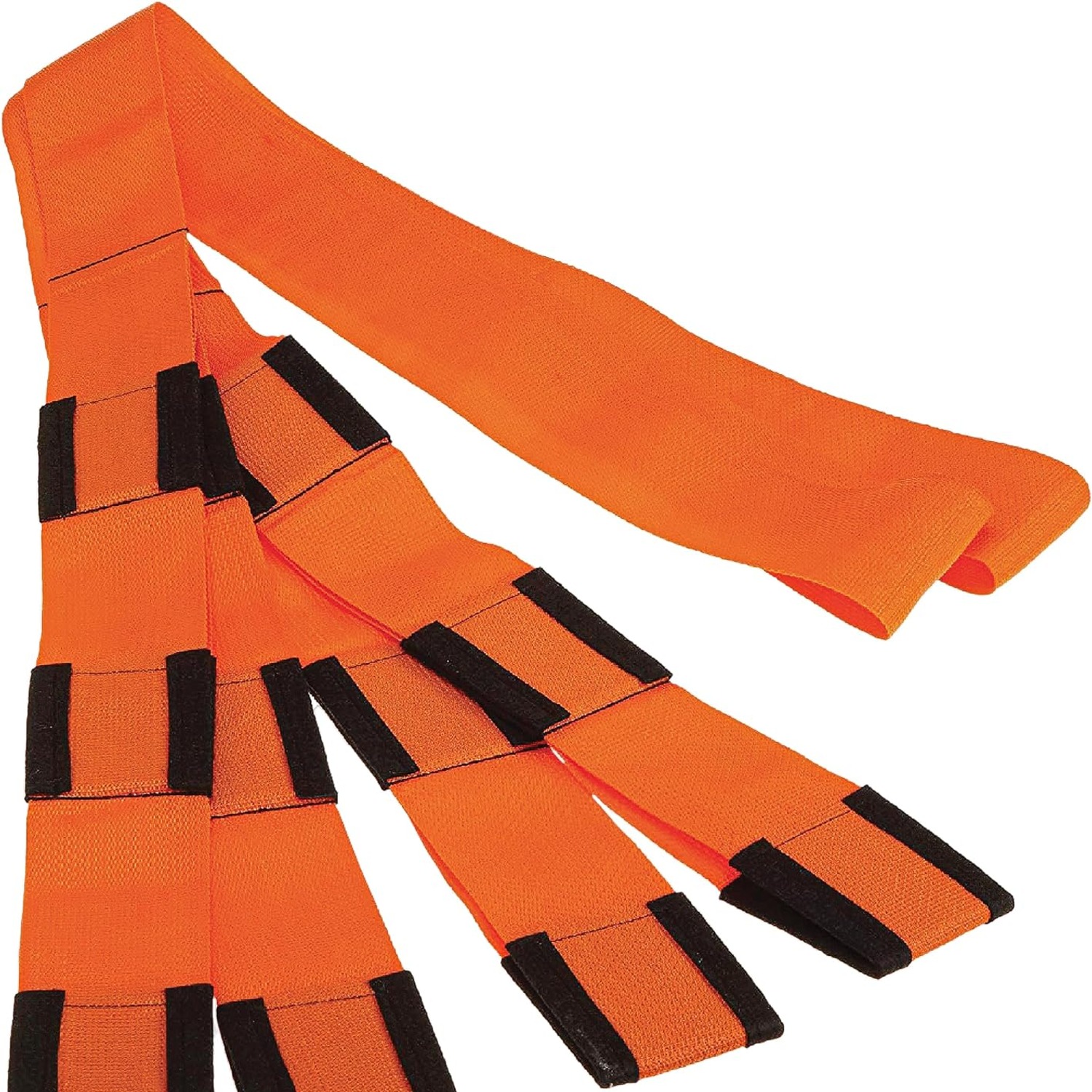
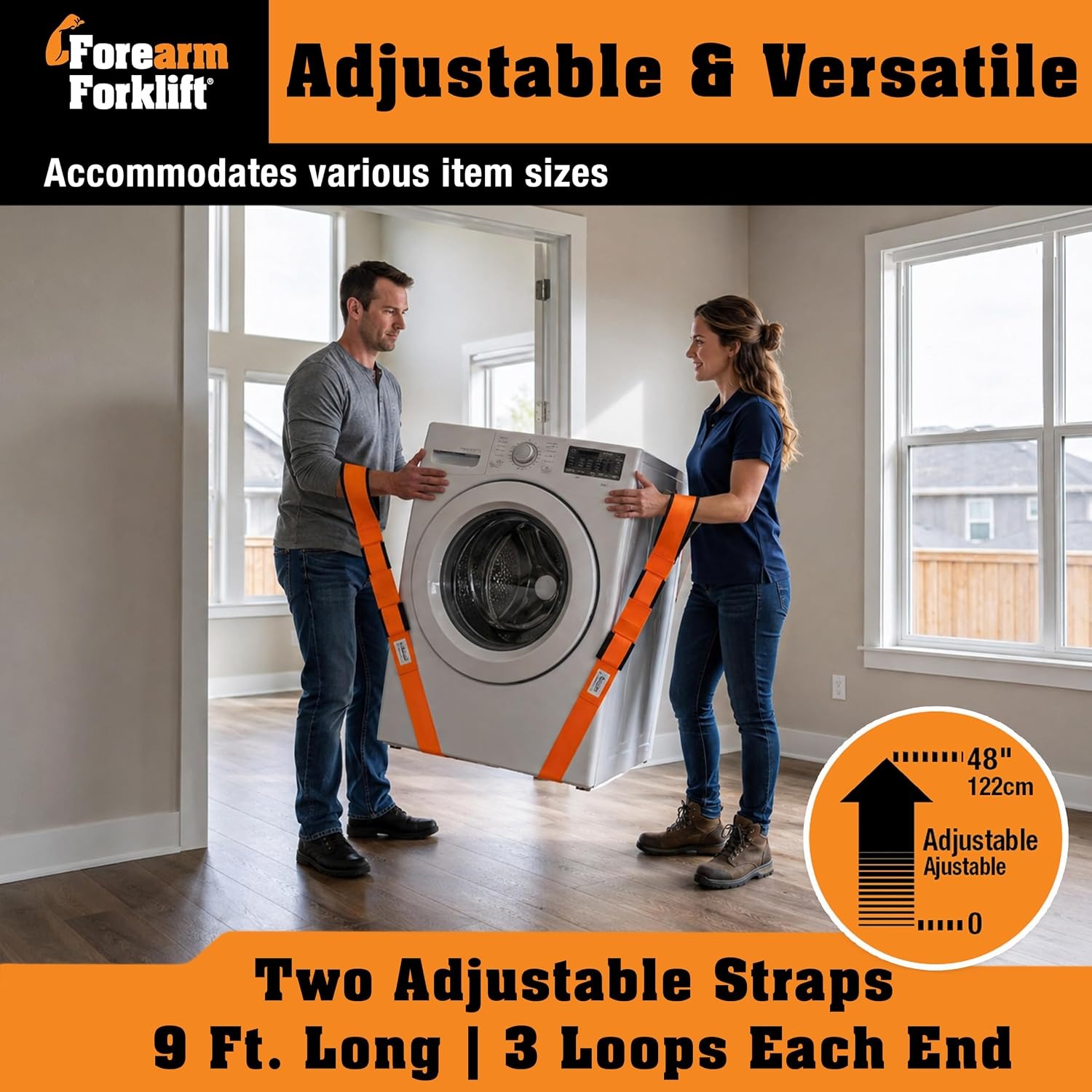
There are two straps in the pack. Each one is 2.84 m long and 8 cm wide. The webbing is polypropylene, the hardware is alloy steel, and the listed load capacity and tensile strength are both 362.87 kg.
The adjustment is the clever bit, and it is deliberately low-tech. Each strap has three arm loops at each end. Pick a different loop and you change the effective length. Across both ends that gives twelve combinations, covering up to 121.92 cm of adjustment. There is nothing to thread, no ratchet, no buckle to fight with while someone holds a wardrobe. You just move your arm to a different loop.
The crisscross under the item is what keeps things stable. Rather than two parallel slings that let a tall item rock, the crossed layout puts contact under the load at eight points. That is why a fridge or a bookcase stays planted while you pivot it through a doorway instead of leaning away from you at the worst moment.
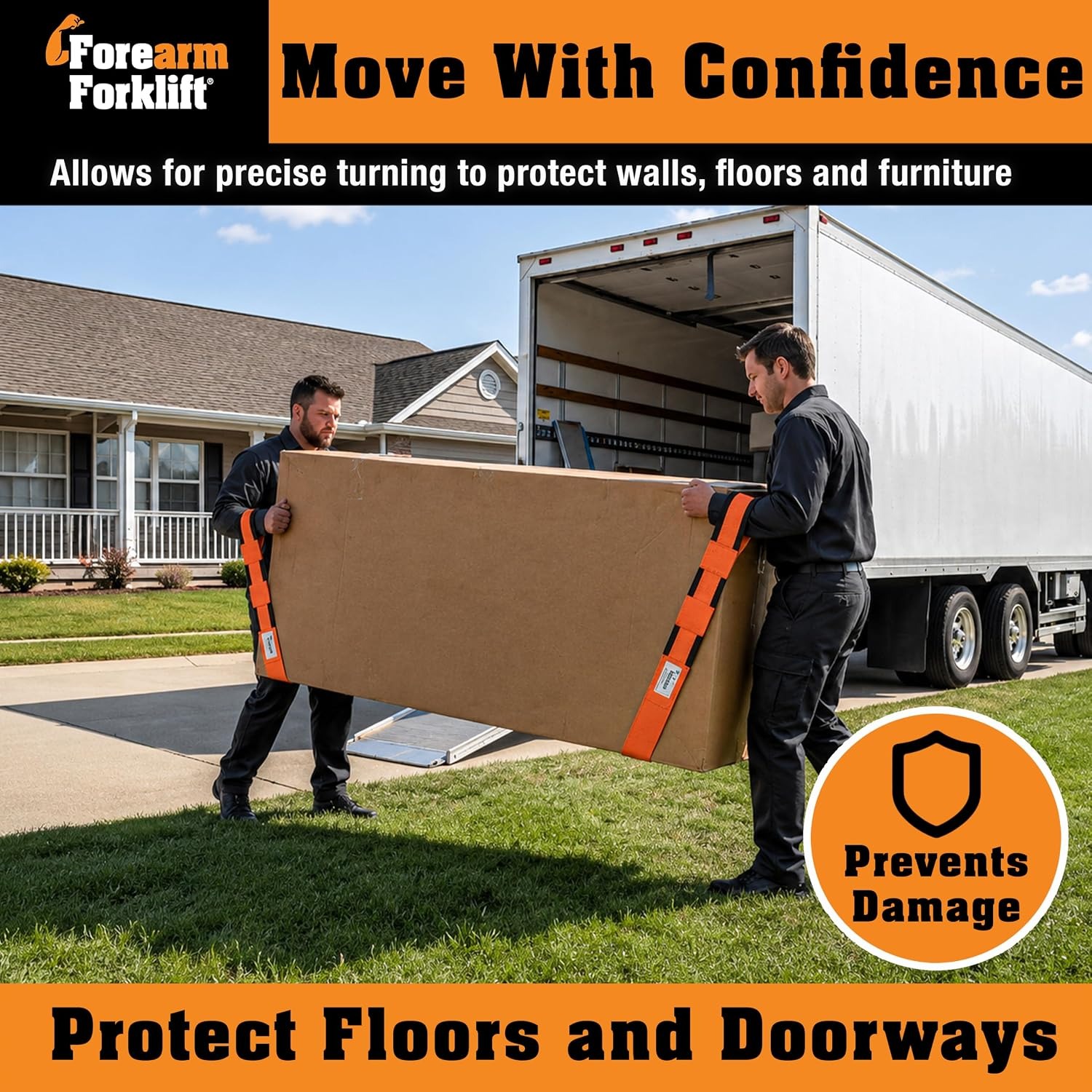
Because nothing rolls, nothing marks your floors. Hand trucks and dollies are fast across a flat garage, but they catch rug edges, chew up soft timber and dent skirting boards. They also stop being useful the second you reach a step.
Who these suit
Anyone moving house, obviously. But the straps tend to keep earning their keep after the move. Rearranging a living room, getting a new washing machine into a laundry, pulling a sofa out to retrieve something, shifting a spare bed when guests come, all easier with two people and a pair of straps than with four people and a lot of shouting.
They are also worth having if you are the person friends call. If you are regularly helping someone else shift furniture, owning the best moving straps you can get your hands on is less about the single move and more about not hurting yourself across a dozen of them.
They suit smaller homes too. A dolly needs somewhere to live. This set weighs 227 g and coils into a drawer.
What they are not for
They are lifting and carrying straps, not tie-downs. Once furniture is in a van, secure it with proper ratchet tie-downs rated for transport. Do not use these to hold a load still while a vehicle is moving.
They also need two people. There is no single-person mode. If you are on your own, the straps will not help, and the honest answer is to wait for a second pair of hands rather than improvise.
And a weight rating is a rating, not a dare. Even with 362.87 kg of capacity, very dense items like safes, pianos and commercial appliances are awkward in ways that have nothing to do with the number. Shape, balance and the route matter more than the mass. If you have any doubt about getting an item round a landing, call someone who does it professionally.
Choosing your settings
Start on the floor. Lay the two straps out crossed under the item before you lift anything. Pick a loop combination that lets both of you stand up with your backs straight and the item just clear of the ground, maybe five centimetres. If either of you is stooping, shorten the straps. If your arms are up around your chest and cramped, lengthen them.
For height differences, the taller person uses a shorter setting. That levels the load between you. It sounds obvious but it is the single most common thing people get wrong on their first carry, and a tilted load is a load that slides.
For wide items like mattresses and tabletops, go long and set the straps well apart so the item cannot fold or pivot in the middle. For tall narrow things like fridges and bookcases, go short and keep the load low, because the lower the centre of gravity sits between you, the less it wants to topple.
Agree on words before you lift. Who counts, who leads on stairs, where you are putting it down. Most strap accidents are communication accidents.
Stairs, corners and doorways
Stairs are where the best stair moving straps pay for themselves. The person at the bottom carries more of the weight, so they usually want a shorter setting, and they should be going down backwards with someone spotting the route. Clear the whole staircase first. No boxes on the landing, no shoes, no cat.
Corners want patience. Stop, reposition your feet, then pivot. Do not try to swing a load around a bannister in one motion.
Doorways are about measuring before you lift, not after. Take the door off its hinges if it is tight. Taking two minutes with a screwdriver beats five minutes of wedging a sofa against a frame.
Looking after them
Webbing lasts a long time if you keep it clean and dry. Brush grit off after a move. If something greasy gets on them, spot clean with mild soap and cool water and let them air dry completely, away from radiators and direct heat. Do not bleach them or put them through a washing machine or dryer.
Store them coiled, somewhere dry and out of sunlight. UV is what quietly ages synthetic webbing.
Before every lift, run the full length of each strap through your hands. You are looking for cuts, fraying, melted or glazed patches, stiffness, and any damage to the hardware. If a strap shows any of that, retire it. The warranty covers manufacturer's defects for life, but it does not cover a strap that has been dragged over a concrete edge for a year.
The short version
Two straps, 2.84 m long and 8 cm wide, rated to 362.87 kg, with twelve length settings and alloy steel hardware. You crisscross them under heavy furniture, two people slide their forearms through, and the weight shifts onto your legs where it belongs. No wheels, so your floors stay unmarked, and the whole set weighs 227 g so it lives in a drawer rather than a shed.
They will not make a fridge light. They will make it manageable, and they will stop you from carrying it in the one position that hurts people. For the price of a decent takeaway, that is a reasonable trade.