

The complete guide
How to Choose a Queen Mattress Topper That Actually Changes How You Sleep
The problem most people are actually trying to solve
Nobody shops for a mattress topper because they are curious about hollowfibre. They shop because something about the bed has gone wrong. Usually it is one of three complaints. The mattress feels like a plank and your shoulder goes numb. The middle has softened while the edges stayed firm, so you roll into a shallow trench. Or the bed is fine, honestly, but it is boring, and you came home from a hotel wondering why their bed felt so much better than yours.
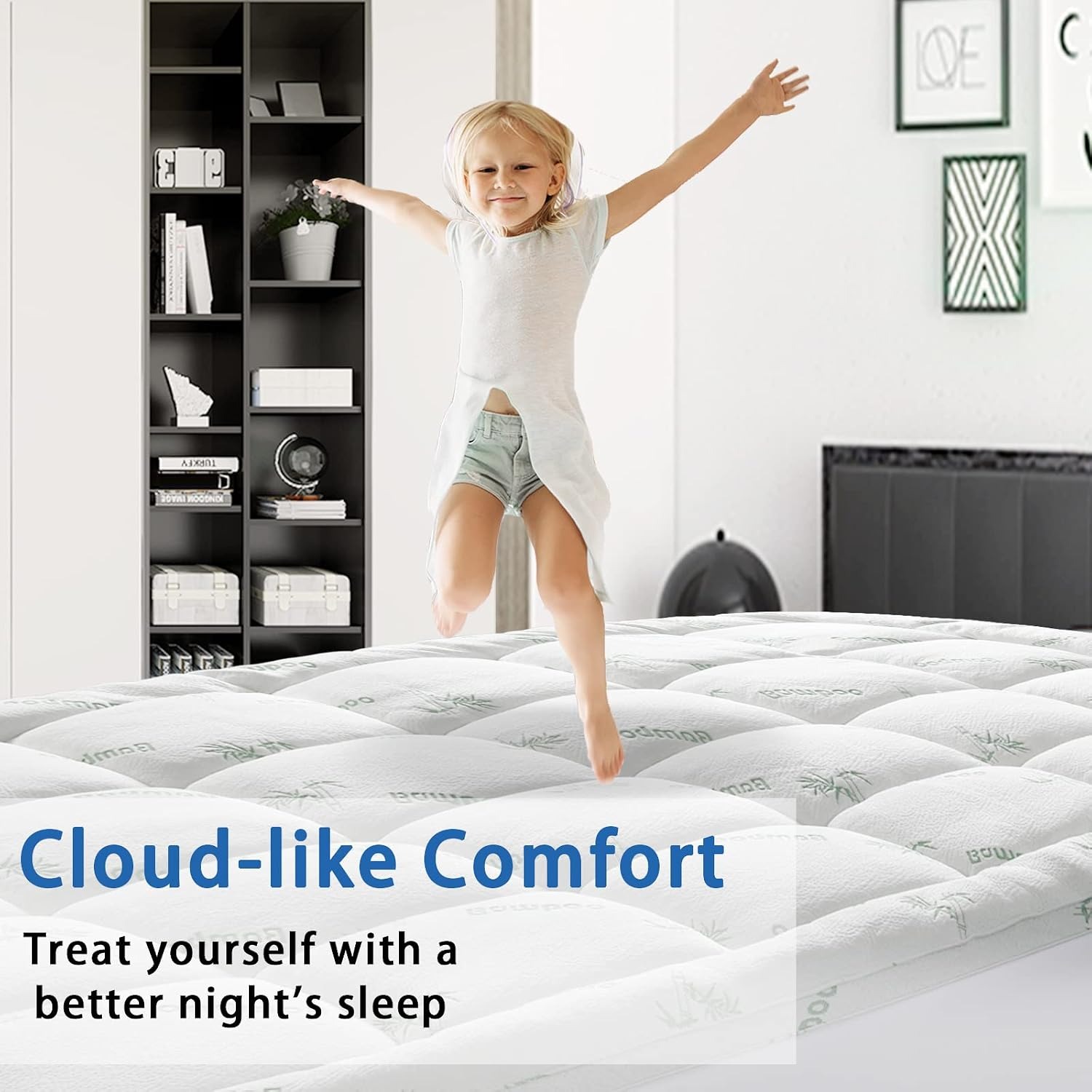
A topper answers all three to different degrees. It is a filled layer that sits on the mattress, under your fitted sheet, and changes the first few centimetres your body touches. Since most of what you register as "comfort" happens in that top layer, a good topper can make a two hundred dollar difference feel like a two thousand dollar one. What it cannot do is add support. Support comes from underneath, from springs or dense foam, and no amount of soft fill on top will rebuild it.
That distinction is the whole decision. If your mattress is sound but hard, a topper is the right tool. If the mattress is collapsing, a topper is a delay tactic.
What is inside this one
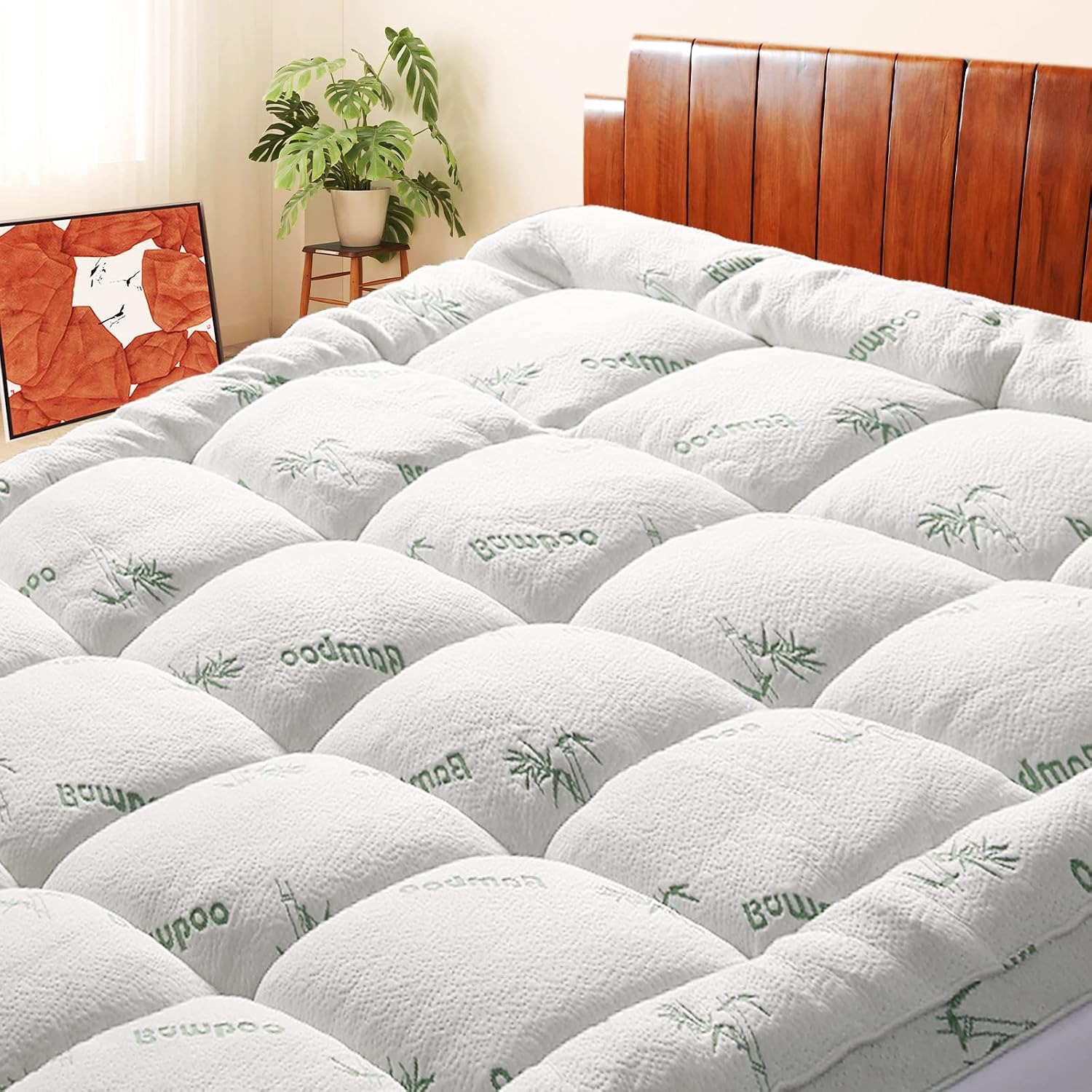
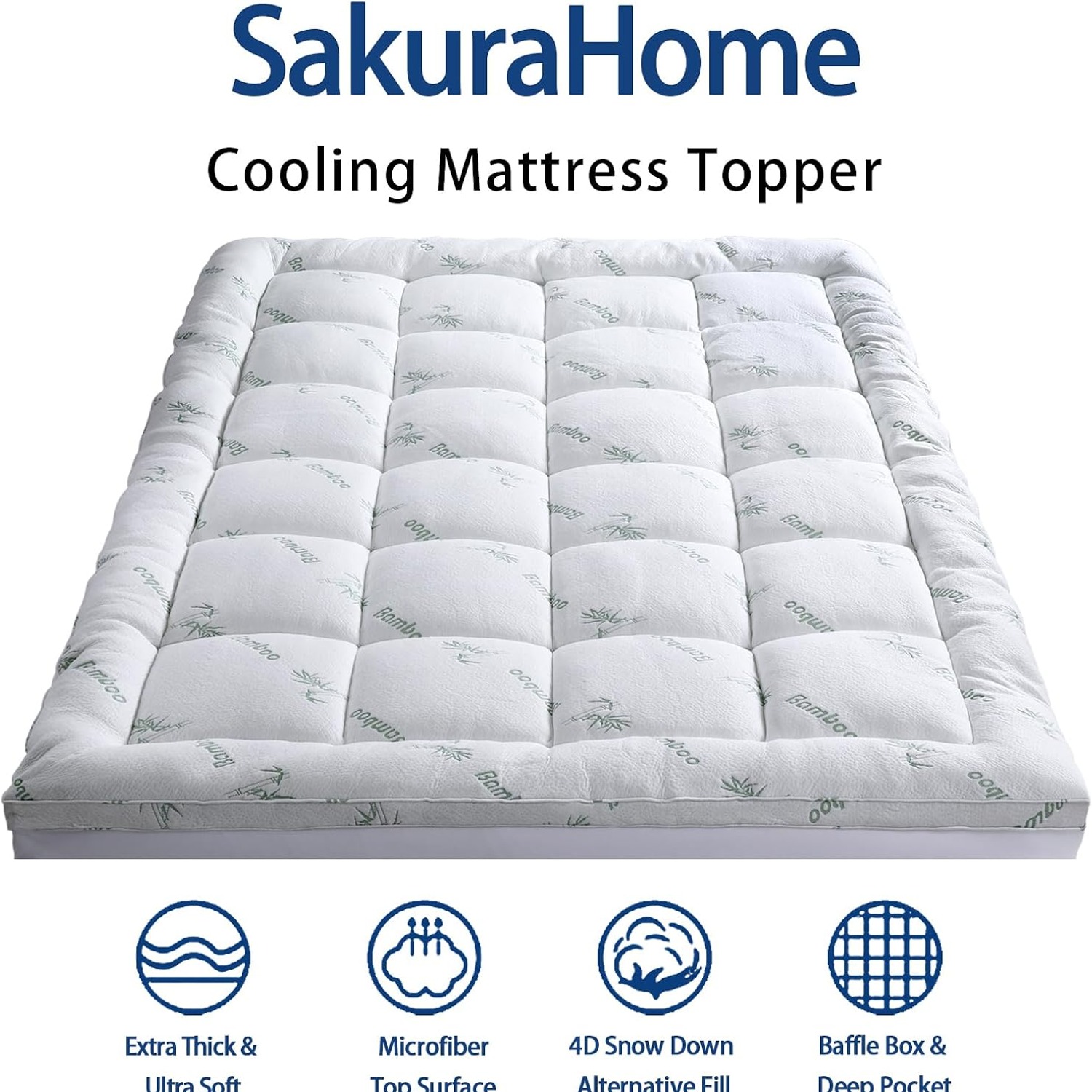
The fill here is hollowfibre at 1000 GSM. GSM means grams per square metre, so it is a measure of how much fill is packed into the pad. One thousand is a lot for a topper. For comparison, a thin quilted mattress pad might sit somewhere near two or three hundred. That is why this one weighs 4.58 kg and why it feels like a pillow top rather than a padded sheet.
Hollowfibre is a synthetic fibre with a hollow core, which is a small engineering trick that does two useful things. It traps air, giving loft and softness for very little weight, and it springs back after being squashed. It is the standard down alternative in bedding because it behaves like down for a fraction of the cost, washes easily, and does not involve feathers for anyone who would rather avoid them.
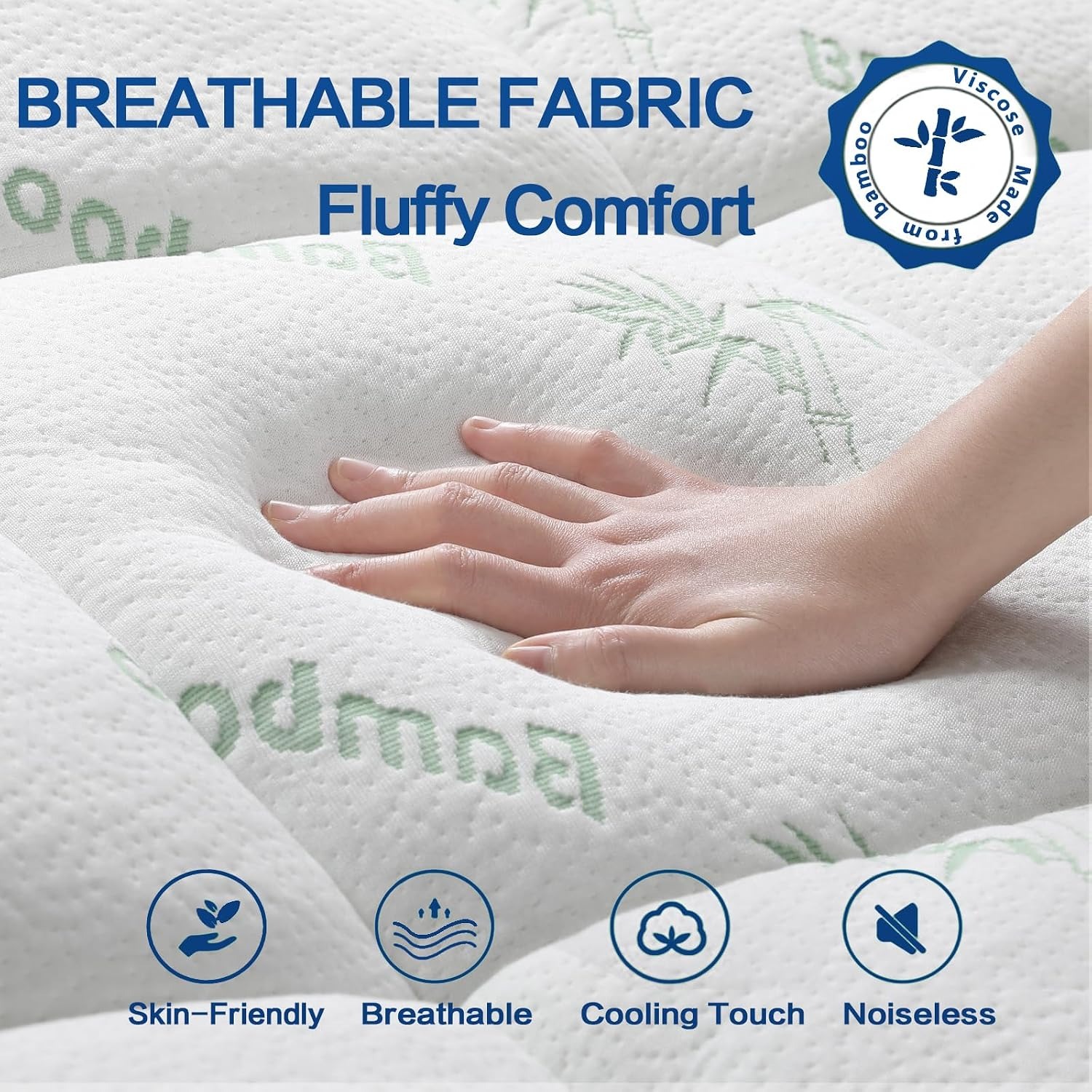
The cover is where the bamboo mattress topper label comes from. It is 40% viscose made from bamboo blended with 60% polyester. Viscose made from bamboo is a regenerated cellulose fibre. It has a smooth, slightly slippery hand and tends to feel cooler against skin than straight polyester, which is why it turns up so often in bedding aimed at warm sleepers. The polyester in the blend adds durability and helps the fabric survive repeated washing. The base layer is 100% polyester and the skirt is knitted polyester, both sensible choices for the parts nobody touches.
The supplier lists OEKO-TEX certification for the product. That is a textile testing standard concerned with harmful substances in the finished fabric.
Fit is not a detail
People underestimate this part and then get annoyed. A topper that slides around becomes useless within a week. You wake up with it bunched at your knees and the bare mattress under your shoulders.
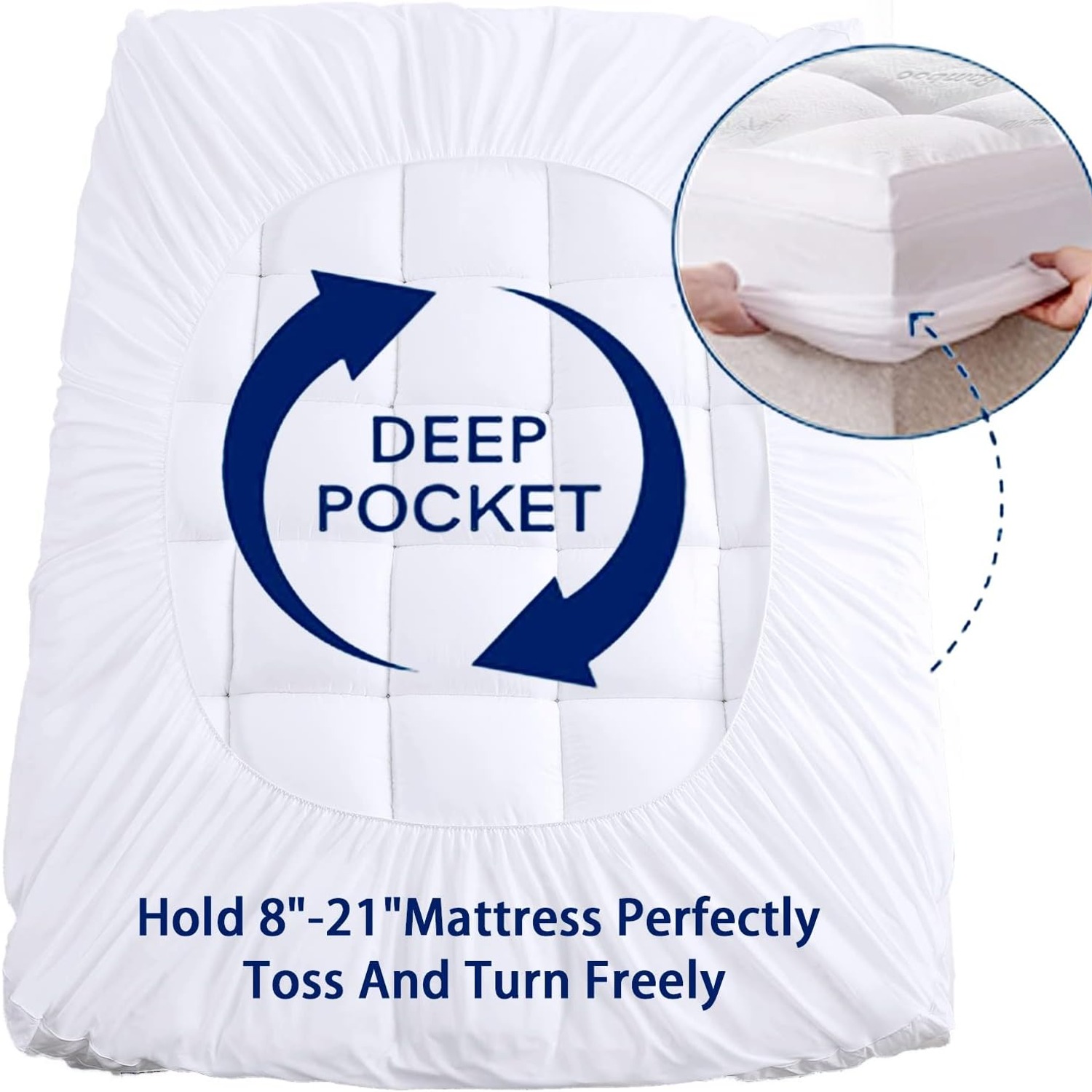
This one uses an elasticated deep pocket skirt that pulls on exactly like a fitted sheet. It is rated for mattress depths from 8 to 21 inches, which is a wide range and covers nearly everything on the market now, including thick hybrids and mattresses that already have a built in pillow top. Measure your mattress from the top surface to the bottom edge before ordering. If you sit inside that range, the skirt will grip.
One knock on effect worth planning for. Adding a thick topper raises the total height of the bed, so a shallow fitted sheet that just barely fitted before may now pop off a corner in the night. Deep pocket sheets solve it. If you are already using them, you will probably not notice a difference.
Who this suits, and who it does not
It suits someone with a firm mattress who wants it softer. It suits a guest room with an older bed that gets used a few times a year and does not justify replacing. It suits side sleepers who get pressure at the hip and shoulder, because the plush surface lets those points sink rather than pushing back. It suits anyone who found hotel beds comfortable and wants to work out why, because a lot of that feel is simply a thick pillow top layer.
It is less suitable if you need a firmer bed. Nothing about a plush topper will stiffen a soft mattress. It is also not the answer if you share a bed with someone who wants the opposite feel, since this is one continuous surface across the whole queen. Two separate single toppers are the usual workaround there.
It is not a waterproof layer either. The listing is clear that it is not water resistant. If there is any chance of spills, bedwetting, or a pet with opinions, put a waterproof protector over the topper, not under it.
Getting it right in the first week
Unpack it and give it room. Compressed bedding always arrives flat, and the fill needs air to recover. Several hours spread out on the bed usually does it. If you are impatient, a short tumble in the dryer on low will fluff it faster.
Fit the skirt at the corners first, then work along the sides. Smooth the top so the fill sits evenly before you put the sheet on, because any bunching you lock in at that stage tends to stay.
Expect the feel to settle. The first night often reads as very soft, and after a week or two the fill compresses slightly into something steadier. That is normal with hollowfibre, not a fault.
Keeping it in good shape
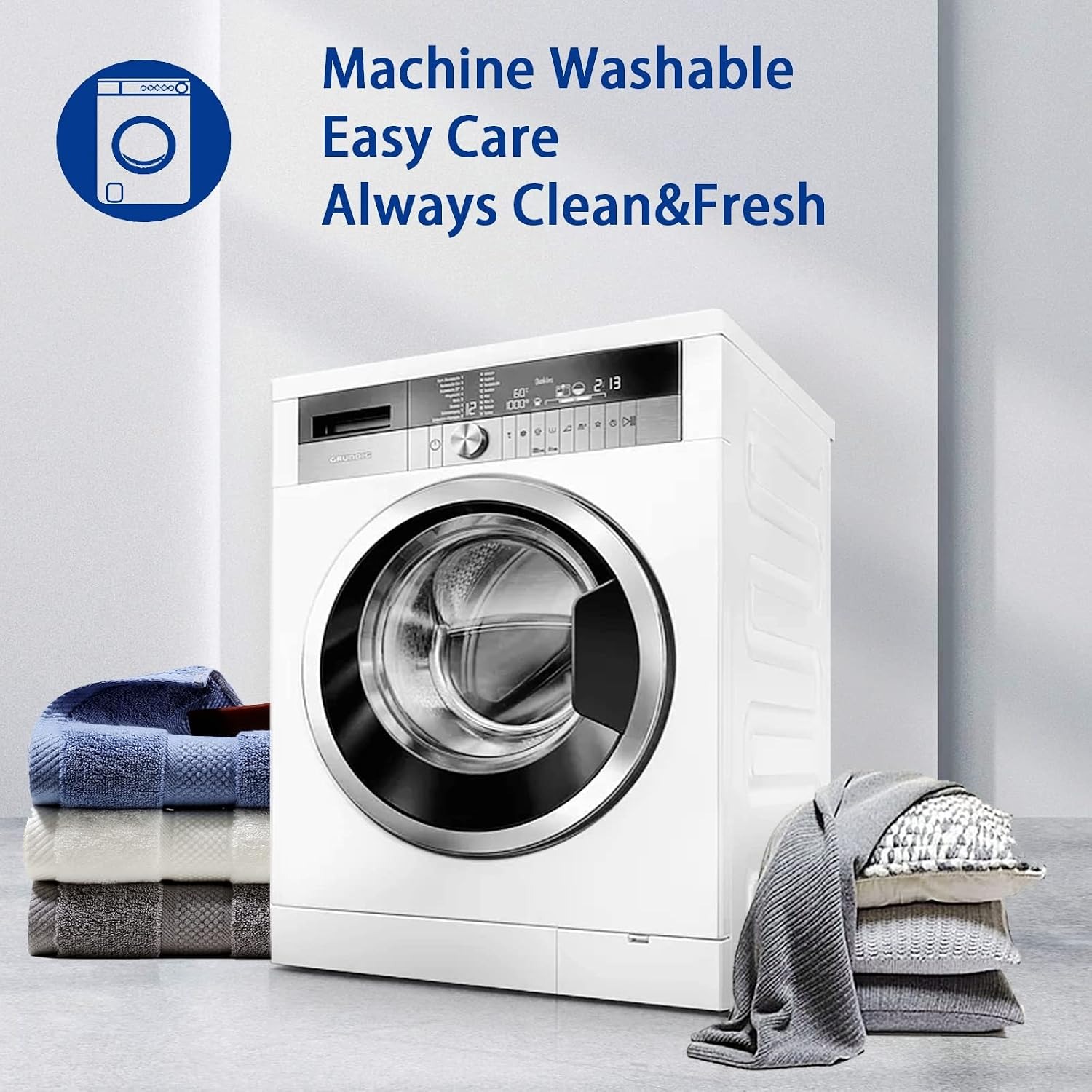
The practical advantage of a machine washable mattress pad over a foam topper is enormous. Foam cannot be washed. Sweat, body oil and the occasional spill just accumulate. This one goes in the machine on a gentle cycle with a mild detergent, no bleach, and comes out clean.
Drying is the step that matters most. Hollowfibre holds water in the middle and a half dried topper will stay lumpy and can develop a musty smell. Tumble dry on low and give it longer than you think it needs. Some people throw in a couple of dryer balls to break up clumps and speed things along.
Between washes, shake it out when you change the sheets. A minute of that redistributes the fill and keeps the loft even. How often you wash depends on whether you use a protector and sheet over it, but a couple of times a year is reasonable for most households.
Comparing it to the alternatives
Memory foam toppers contour closely and hold heat. They cannot be washed and they have a distinct slow sinking feel that people either love or hate. Latex toppers are springier and more durable but cost considerably more and are heavy to handle. Thin quilted pads are cheap and wash easily but do almost nothing to change how a bed feels.
A high fill hollowfibre pillow top like this one lands in a useful middle. You get real cushioning, a washable product, a moderate price, and a feel closer to a hotel bed than to a foam slab. The compromise is that fibre fill does compress over time in a way that latex does not, so it is a product you will eventually replace rather than one that lasts fifteen years.
The short version
If your queen mattress is firm, flat or simply unexciting, a plush pillow top topper is the cheapest meaningful upgrade available. This one has a thick 1000 GSM hollowfibre fill, a bamboo viscose and polyester cover, and a stretch skirt that fits mattress depths from 8 to 21 inches. It weighs 4.58 kg, it goes in the washing machine, and it is not waterproof, so add a protector if you need one.
Check your mattress depth, get deep pocket sheets if yours are shallow, and give it a few hours to loft before you judge it. Do that and you will have a noticeably softer bed by the end of the first week.