

Clearance Warehouse Canada
Company
Shop By Category
T&Cs
Shop Online
  • Free delivery across Canada on orders of $75 or more
  • Lawn and garden, home improvement, bedding, car, kids and health lines in one place
  • Dispatch within 2 working days, then delivery in up to 7 working days by tracked courier
  • Tracking number emailed as soon as your order ships

Lawn Edger Tool | Manual Lawn Edger | Half Moon Lawn Edger

Tidy lawn edges without a motor, battery or petrol

Lawn Edger Tool

$59.99 $71.99 Save $12.00
  • Manganese Steel Blade
  • Extra-Wide Footplate
  • T-Grip Handle
  • Full-Length Shaft

Price: $59.99 $71.99

  • Delivery time: up to 7 working days by tracked courier, after dispatch within 2 working days
  • Free delivery on orders $75+, otherwise a flat $25
  • Pay by card or PayPal, handled by the payment provider
  • 15 days from delivery to return an unused item, plus your statutory rights
Product specifications
MaterialMetal
Blade MaterialManganese Steel
Grip TypeT-Grip
ColourBlack and Yellow
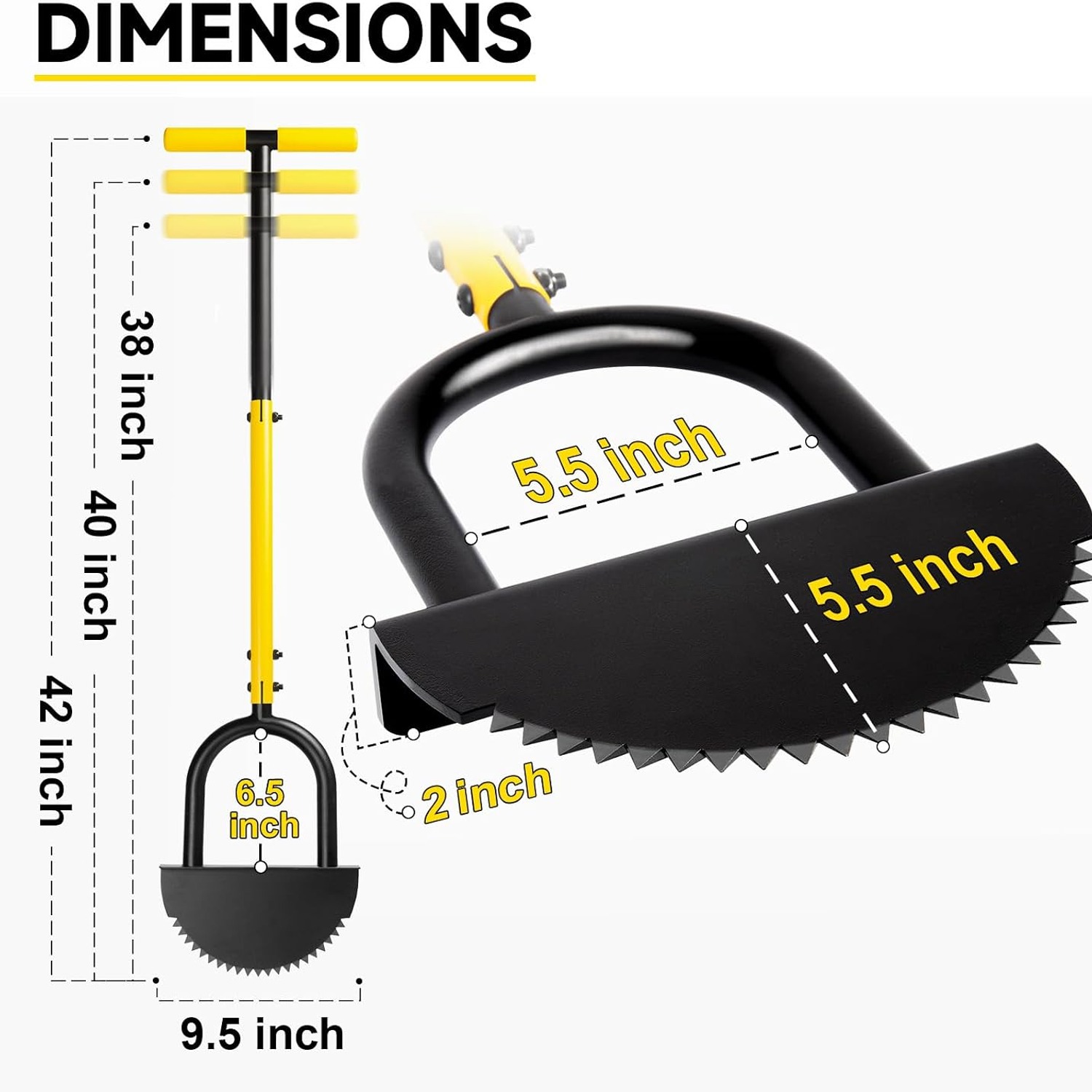
Product Dimensions106.68 x 24.13 x 5.08 cm
Item Weight2.08 kg
Number of Items1
Number of Packs1
Country of OriginChina
Weight2.08 kg
Shipping & returns

Tracked delivery across Canada. It is free on orders of $75 or more, and a flat $25 below that. Allow up to 7 working days in transit after dispatch within 2 working days.

You have 15 days from delivery to return an unused item in its original packaging for an exchange or a refund. You cover the cost of shipping it back.

If it arrives faulty, damaged or not as described, tell us right away and our customer service team will sort it.

Shipping details · Refunds and returns

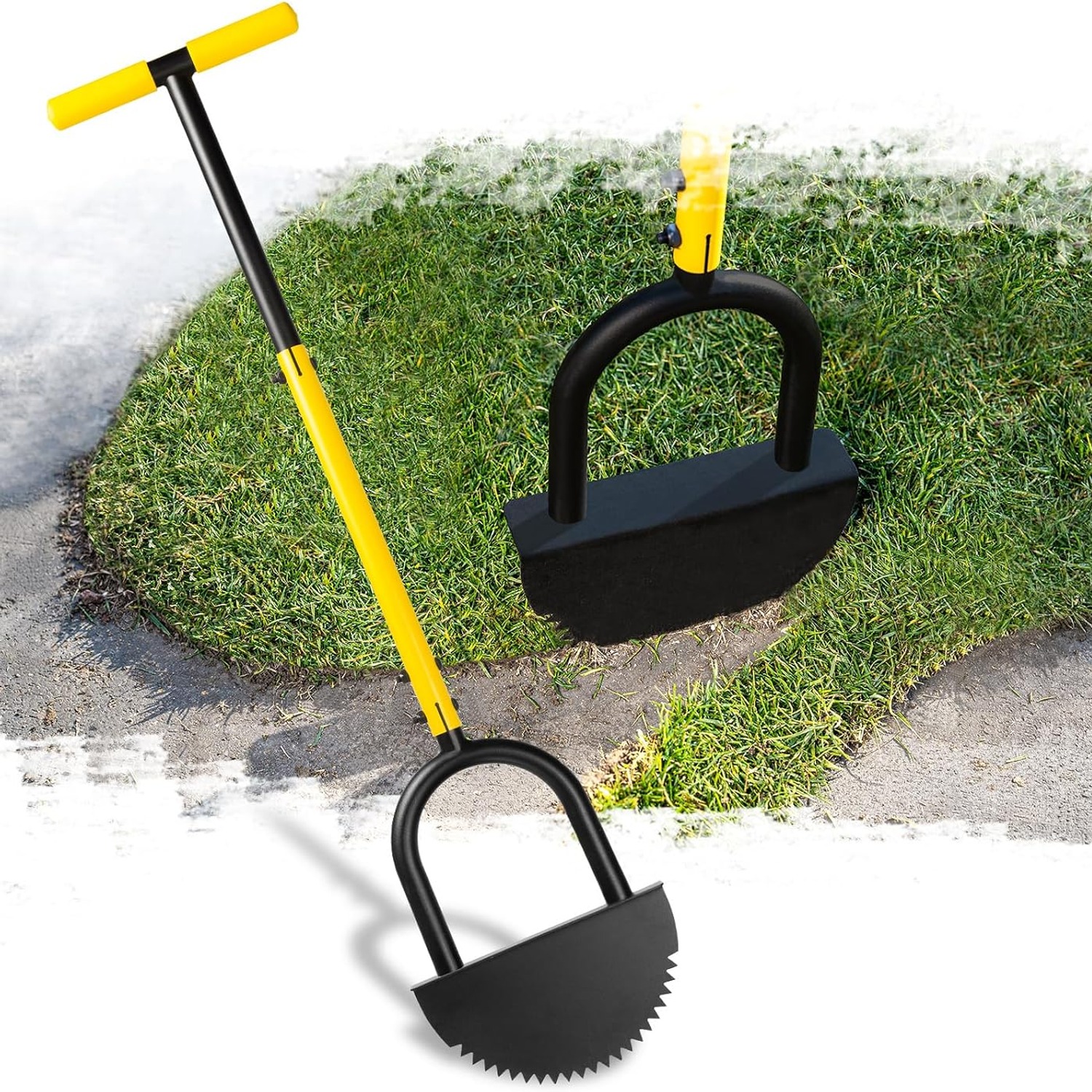
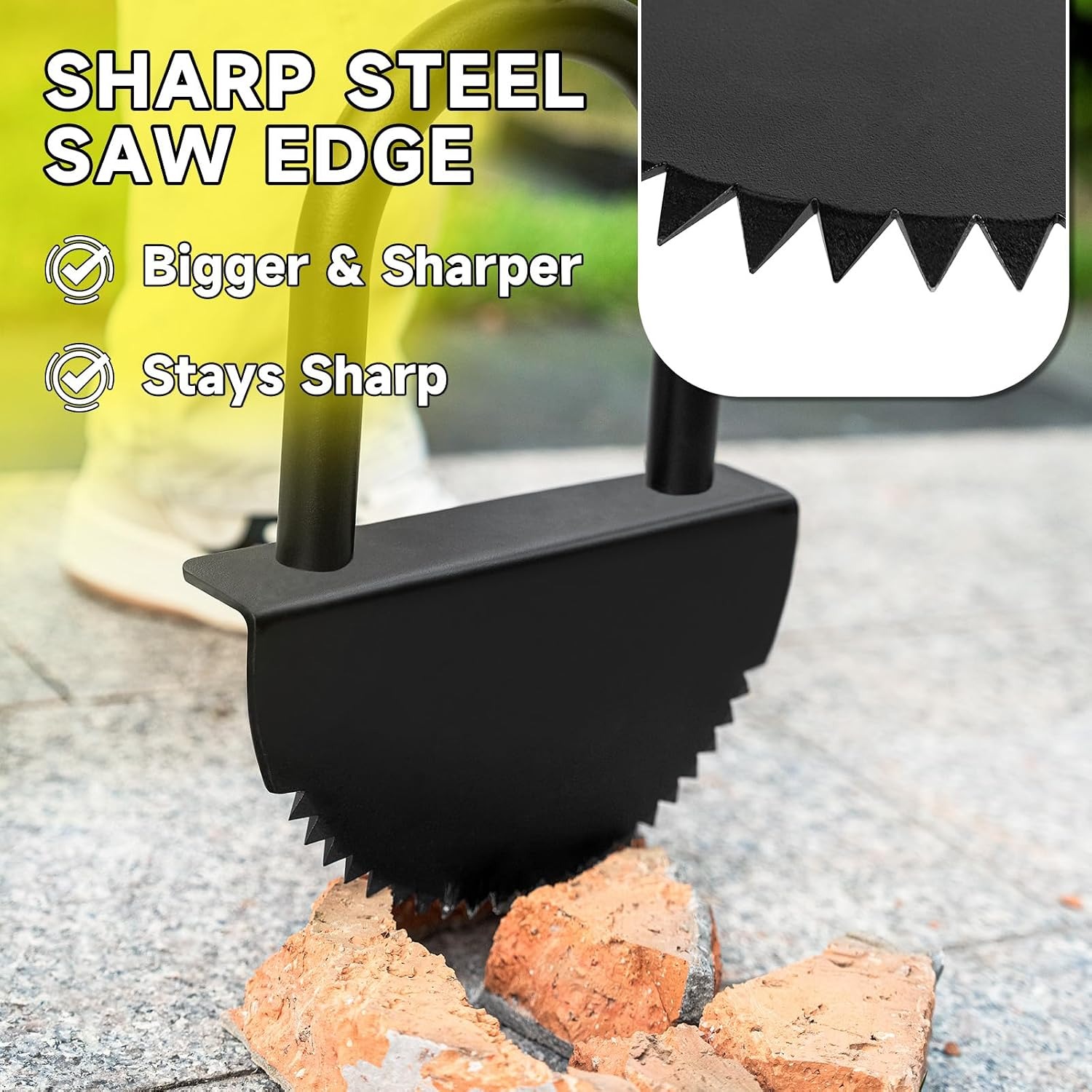
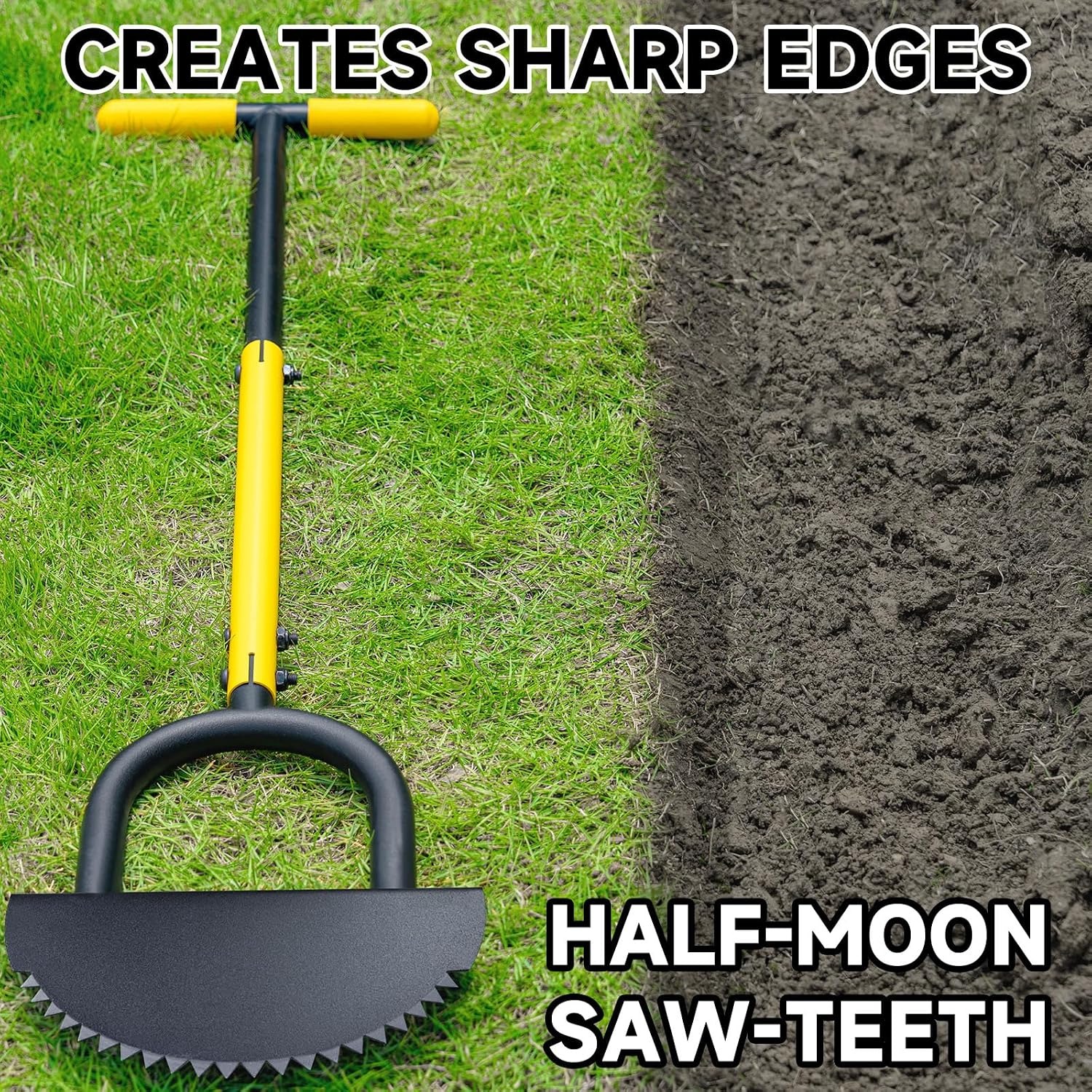
Manganese Steel BladeA saw-tooth half-moon edge for cutting through turf and roots.
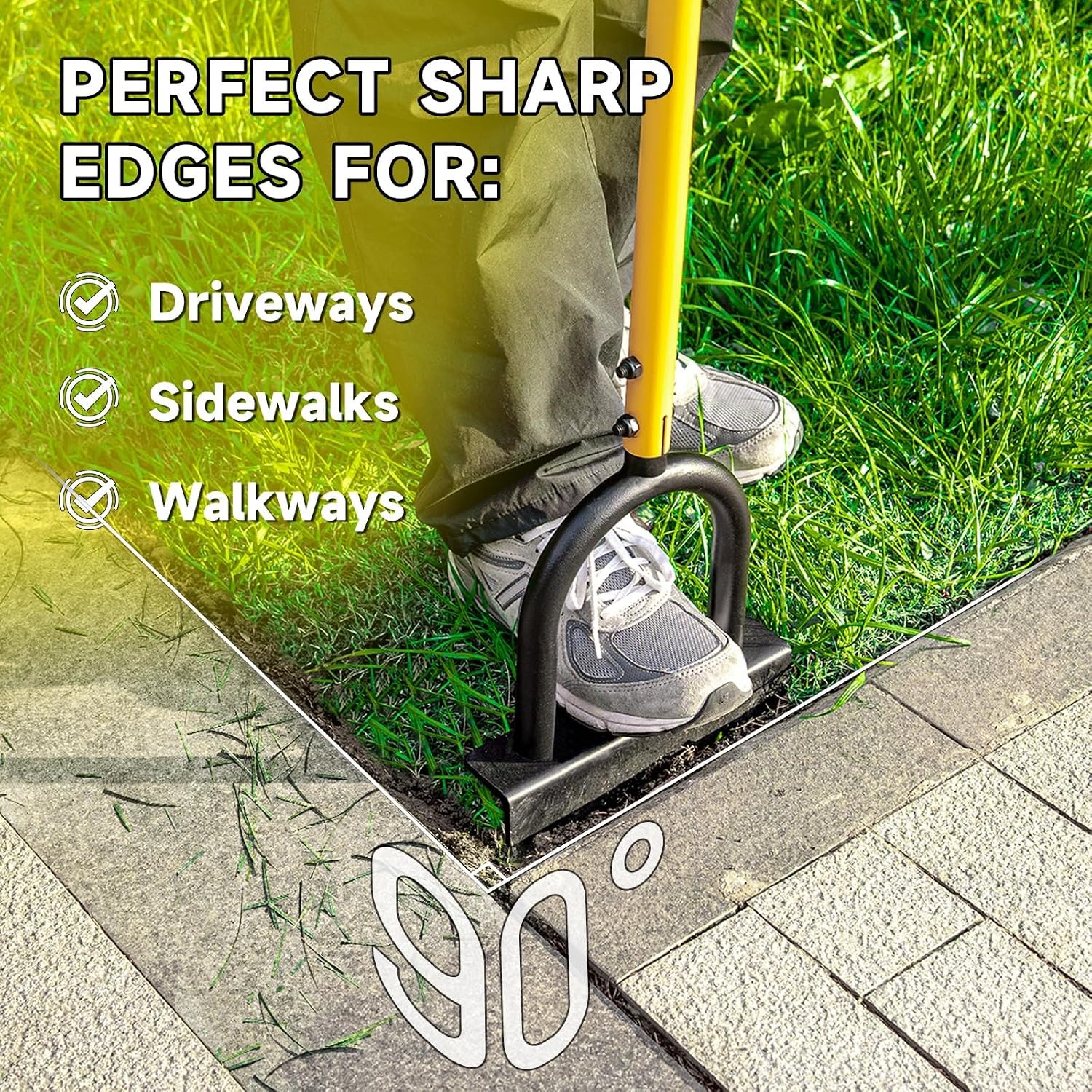
Extra-Wide FootplateStep down with your body weight instead of straining your arms.
T-Grip HandleTwo-handed control for straighter, steadier lines.
Full-Length Shaft106.68 cm long so you can edge standing upright.

Cut a clean, confident line between lawn and path with a lawn edger tool built for real garden work.

A manganese steel half-moon blade, saw-tooth cutting edge and extra-wide footplate let you slice through turf and compacted soil with body weight instead of brute force.

This manual lawn edger cuts a clean separation between grass and paving, gravel, beds or borders without a motor, fuel or cord.

The half-moon blade is manganese steel with a saw-tooth cutting edge, so it bites into dense turf and compacted soil rather than bouncing off it.

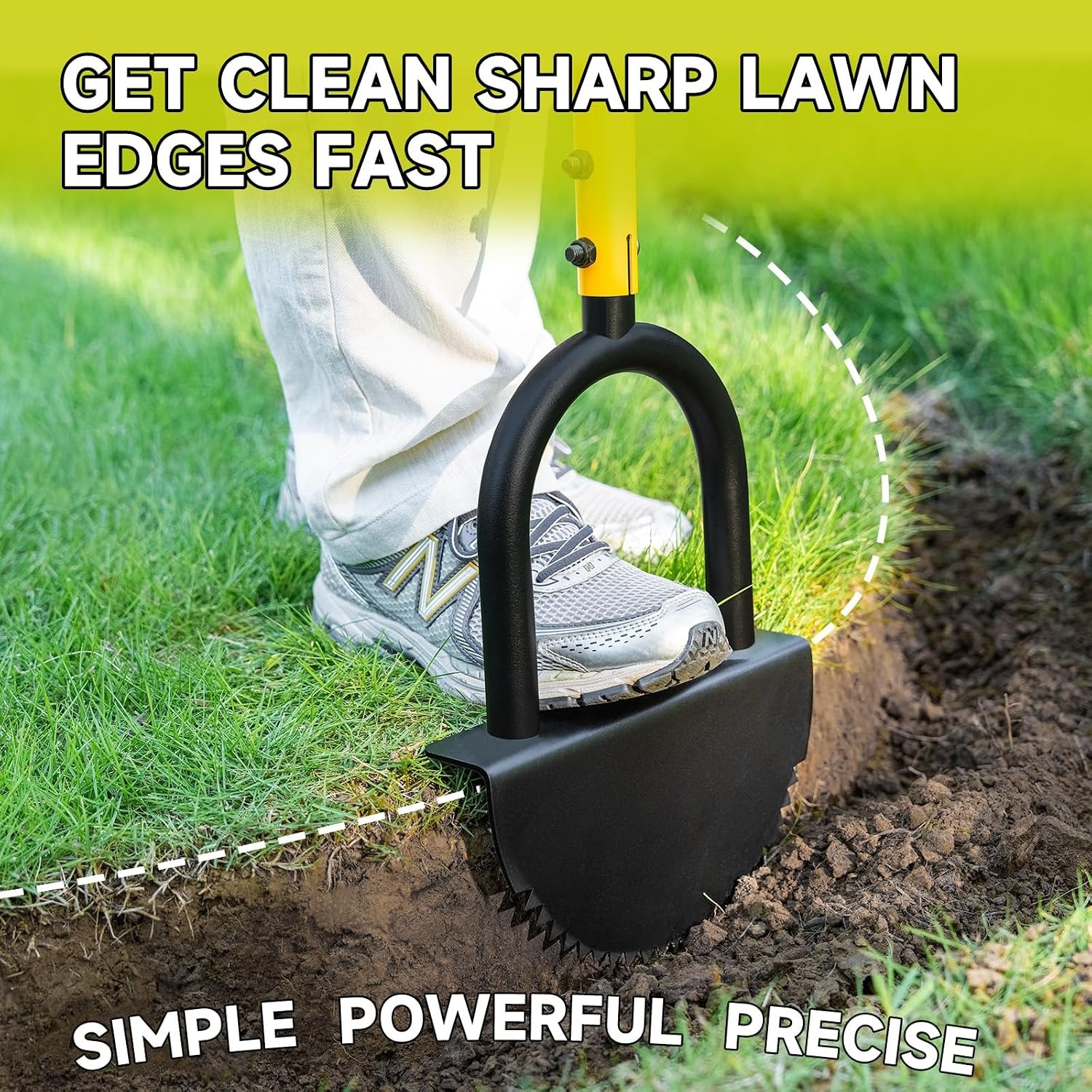
An extra-wide footplate lets you drive the blade down with your foot and body weight, which saves your arms and shoulders on long runs of edging.

At 106.68 cm long and 2.08 kg, it is sized for working upright and light enough to carry around the garden all afternoon.

The T-grip handle gives you two hands on the tool for straighter cuts and better control when you rock the blade out of the ground.

Lawn Edger Tool

A lawn stops looking cared for the moment its edges blur. Grass creeps over the path, the border between bed and turf goes soft, and the whole garden reads as untidy even when the mowing is spot on. This lawn edger tool fixes that with one simple action. You line the blade up where you want the edge to sit, step down on the footplate, and the manganese steel half-moon slices a vertical cut through the turf. Work along the line, lift out the strip of grass, and you have a crisp border that will hold its shape for weeks.

Lawn Edger Tool

The blade is the part that matters most, and this one is manganese steel with a saw-tooth cutting edge. Plain flat blades tend to skid on dry, compacted ground or stall against a mat of roots. The saw teeth give the edge something to grab with, so the blade starts its cut instead of sliding sideways. The half-moon shape spreads the load across a wide arc, which is what gives you that smooth curve along a bed rather than a series of flat chops.

Lawn Edger Tool

Above the blade sits an extra-wide footplate. This is the difference between an edger you enjoy using and one you abandon after ten metres. With a broad, flat platform to stand on, you push with your leg and body weight rather than hauling on the handle with your arms. Your boot sole is better supported, you stay balanced on uneven ground, and the work shifts off your lower back. On a long driveway or a wandering border, that adds up.

Lawn Edger Tool

The whole tool measures 106.68 x 24.13 x 5.08 cm and weighs 2.08 kg. That length means most adults can work standing nearly upright, with the T-grip at a comfortable height for two hands. Two-handed control is what keeps a line straight. You can sight down the shaft, keep the blade square to the ground, and rock it back and forth to free the cut without the tool twisting in your palm.

Lawn Edger Tool

Because there is no engine, no battery and no cord, there is nothing to charge, trail behind you or service at the end of the season. You rinse the soil off, dry it, oil the metal occasionally and hang it up. It works in the rain, it works at seven in the morning without annoying anyone, and it works just as well on the second year as the first provided you keep the steel clean and dry.

Not sure yet? That is fine.

You can change your mind. You have 15 days from delivery to return an unused item in its original packaging for an exchange or a refund. You cover the cost of shipping it back.

If it turns up faulty, damaged or not as described, tell us and our customer service team will sort it. Read the full detail on our refunds and returns page, or ask us anything before you order.

Frequently Asked Questions

What exactly is this tool?

It is a manual lawn edger with a half-moon steel blade on a long shaft. You press it into the ground with your foot to cut a clean vertical line through turf. It is the traditional tool for defining lawn edges and borders without power.

How does a half moon lawn edger work?

You stand the blade on the line you want to cut, put one foot on the footplate, and press down so the blade slices into the soil. Then you rock it slightly to free it, step along, and repeat. Overlapping each cut by a couple of centimetres keeps the line continuous.

How long is the tool?

The overall product dimensions are 106.68 x 24.13 x 5.08 cm. That puts the handle at a comfortable height for most adults working upright. It is long enough that you should not need to stoop while edging.

How much does it weigh?

The listed item weight is 2.08 kg. That is light enough to carry around the garden for a long session but heavy enough that the blade has some momentum behind it. Most people find this weight range easy to control.

What is the blade made from?

The blade material is listed as manganese steel. Manganese steel is used on digging and cutting tools because it holds up to repeated impact. The overall tool material is listed as metal.

Why does the blade have saw teeth?

The saw-tooth edge helps the blade grip dry, compacted ground and root mats instead of skidding across the surface. It makes the first bite of each cut easier. That is especially useful along older lawn edges where the soil has packed down hard.

What is the footplate for?

It is the flat step above the blade where you place your foot. A wider footplate spreads the pressure across your boot sole and lets you drive the blade down with body weight rather than arm strength. It also helps you stay balanced on uneven ground.

What kind of handle does it have?

It has a T-grip. That means a crossbar at the top you can hold with both hands, which gives better control than a straight shaft. Two hands on the grip makes it easier to keep cuts straight and square.

Is this the best manual lawn edger for a small garden?

For a small garden, a hand tool like this is usually the sensible choice over a powered machine. There is nothing to store, charge or maintain, and you can do a whole small plot in one session. Larger properties with hundreds of metres of edge may prefer a powered option.

Can I use it on curved borders?

Yes, and curves are where a half-moon blade earns its keep. The rounded cutting arc lets you work around bends in short overlapping steps without leaving flat facets. Take smaller bites on tight curves for a smoother line.

Will it cut through grass roots?

The saw-tooth manganese steel edge is designed to cut turf and root material. Thick, woody roots from shrubs or trees are a different matter and may need loppers or a pruning saw. For normal lawn root mats it should cope.

Can I use it on stony soil?

You can edge in stony soil, but go gently and avoid slamming the blade into buried rocks. Hitting a large stone hard can nick the edge or jar your foot. Feel for resistance and shift along a little if the blade will not seat.

Does it work on wet ground?

Wet soil is actually easier to cut than baked summer ground. The downside is that wet turf clumps and sticks to the blade, so you will stop to clear it more often. Clean and dry the steel afterwards to prevent rust.

Is it any good as a sidewalk edger tool?

It is well suited to tidying grass that has crept over paving, concrete paths and driveway margins. Run the blade along the hard edge of the paving and let the slab act as your guide. Then lift out the cut strip of turf by hand or with a trowel.

Can I use it to install plastic edging?

Yes. Cutting a clean vertical slot with the edger is the usual first step before sliding in a plastic or metal edging strip. A straight, full-depth slot means the strip sits flush rather than bowing out.

How deep does it cut?

In practice you are usually aiming for a cut through the turf layer and a little into the soil beneath. Several passes will take you deeper if needed.

Does it replace a lawn mower or strimmer?

No. The mower cuts the grass surface and this tool defines the edge. Many people run the edger a few times a season and mow as usual in between. Think of it as the finishing step rather than a replacement.

How often should I edge the lawn?

For most gardens, cutting the edges two to four times during the growing season keeps them sharp. A single cut in spring and one in late summer is enough for low-maintenance plots. Grass types and growing conditions change the answer a lot.

Do I need any other tools with it?

A rake or stiff brush helps clear the cut strips, and a trowel or hand fork is handy for lifting stubborn pieces. Gloves are worth wearing. A length of string or a hose laid on the ground makes a good guide for straight runs.

Is it suitable for someone with back trouble?

The long shaft and wide footplate are designed so you work standing up and push with your leg rather than bending. That said, edging is still physical work. If you have back problems, work in shorter sessions and stop if anything hurts.

Can a shorter person use it comfortably?

At 106.68 cm overall it suits a wide range of heights. Shorter users may find the grip sits a little high but can simply hold lower down the shaft. The footplate position does not change with user height.

What colour is it?

The listed colour is black and yellow. The brighter yellow makes the tool easier to spot if you leave it lying in long grass.

How do I keep the blade from rusting?

Rinse the soil off after use, dry the metal, and store it under cover. A light wipe of machine or vegetable oil on the steel before storage helps a lot. The worst thing you can do is leave it damp and muddy in a shed corner.

Can I sharpen the blade?

You can touch up the cutting edge with a mill file if it dulls, working along the bevel in one direction. Keep the original angle and take off as little metal as possible. Clean soil off first so the file bites properly.

How should I store it?

Hang it on a wall hook or stand it upright with the blade off the floor. Keeping it off damp concrete makes a real difference to rust. Store it out of reach of children since the cutting edge stays sharp.

Does it come assembled?

Tools of this type usually arrive either complete or needing the handle fitted to the shaft with the supplied fixings. Check any instructions in the box before first use.

What are the delivery options?

Delivery is tracked, so you get a reference number to follow the parcel. Shipping is free on orders of $75 or more and $25 on orders below that. You will get the tracking details by email once the order leaves the warehouse.

Can I return it if I change my mind?

Yes. Contact us with your order number and we will walk you through the return. Send it back unused and in its original packaging wherever possible, since that makes the process faster.

Would this make a good gift for a gardener?

It is a practical gift for anyone who takes pride in their lawn, especially someone who already mows but has never owned a proper edging tool. It is the kind of thing people rarely buy for themselves. Pair it with a good pair of gardening gloves if you want to make more of it.

What if it is not right for my garden when it arrives?

Get in touch and tell us what the problem is. If the tool is wrong for your ground conditions or does not suit the way you work, we will sort out a return or help you find a better fit. Nobody benefits from a tool sitting unused in a shed.

How to Choose and Use a Manual Lawn Edger

6 min read Clearance Warehouse

The problem nobody notices until it is fixed

Most lawns do not look scruffy because of the grass. They look scruffy because of where the grass ends. Turf creeps outward a few millimetres every week, and after a season it has spilled over the path, blurred into the gravel, and crawled into the flower bed. You mow carefully, you water, you feed, and the lawn still reads as unkempt. The reason is that the eye reads edges first. A shaggy border makes neat grass look neglected, and a crisp border makes average grass look professional.

This is exactly what a manual lawn edger is for. It cuts a clean vertical line where the lawn is supposed to stop. The half-moon blade on this one is manganese steel with a saw-tooth cutting edge, so it goes into turf rather than skating over it. Once that line is cut, the grass has a physical boundary again, and it takes weeks of growth before it starts to blur.

How a half moon lawn edger actually works

The action is simple, which is why these tools have barely changed in a hundred years. You stand the curved blade on the ground where you want the edge, put one foot on the footplate, and press down with your body weight. The blade sinks through the turf. You rock it gently backwards and forwards to break the soil's grip, lift it out, move along by most of a blade width, and repeat.

The overlap matters more than the force. If you step along the full width of the blade each time, you leave tiny uncut bridges between cuts and the edge comes out ragged. Overlap by two or three centimetres and the cuts join into one continuous slice. On straight runs you can lay a hose or a taut string along the ground and follow it. On curves, shorten your steps and let the rounded blade do the work. The arc of a half-moon blade is what makes a smooth bend possible, where a straight spade would leave flat facets.

Once the line is cut, you remove the sliver of turf that has grown past it. Most of the time a rake or a hand fork lifts it straight out. What you are left with is a small vertical face of soil between the lawn and whatever is next to it. That gap is the thing that keeps looking good for weeks.

Why the footplate and handle matter

Two parts separate a tool you keep using from one you lose interest in. The first is the footplate. This tool has an extra-wide one, and that is not a trivial detail. A narrow plate puts all the pressure through one small part of your boot sole, which hurts after twenty steps and gives you poor balance on uneven ground. A broad platform spreads the load, keeps your ankle stable, and lets you commit your weight confidently. You end up pushing with your leg, which is strong, rather than hauling with your arms and back, which tire fast.

The second is the grip. This one has a T-grip, meaning a crossbar you can hold with both hands. Two hands keeps the shaft vertical. A vertical shaft means a vertical cut, and a vertical cut is what gives you that sharp architectural edge rather than a sloping, crumbling one. The crossbar also gives you leverage to rock the blade loose when the soil is heavy, without twisting your wrist.

Put together with the 106.68 cm length, the tool is sized so an average adult works standing almost upright. Edging should not involve bending over. If you find yourself stooping, you are probably holding too low down the shaft.

Who this suits

If you have a lawn with defined borders, paths, a driveway edge or planted beds, a garden edging tool belongs in your shed. It is especially worth having if your garden has curved beds, because curves are where powered edgers struggle and a half-moon blade shines.

It suits people who do not want another machine. There is no fuel, no battery, no cord to drag behind you and nothing to service in autumn. You can use it in light rain and at an hour when a petrol engine would start an argument with the neighbours. For small and medium gardens, a hand tool will do the whole job in one session and then hang on a hook for two months.

It is less suited to someone edging several hundred metres at a time on a regular basis, like a grounds keeper. At that scale the physical work adds up and a powered machine earns its keep. For a typical domestic plot, that tipping point is a long way off.

Ground conditions matter too. The saw-tooth edge handles compacted soil and turf root mats, but very stony ground is hard work with any blade. If your soil is full of flint or rubble, expect slower progress and avoid driving the blade down hard onto something solid.

How to choose between edging tools

People usually compare three things. A half-moon edger like this one cuts a true vertical line and is the right tool for defining or re-cutting a border. A rotary or wheeled edger rolls along and trims overhanging grass but will not cut a fresh line into established turf. A strimmer with the head turned sideways trims the grass that hangs over paving, but it cuts the leaves, not the soil, so the edge creeps outward anyway.

The honest answer is that they do different jobs. The half-moon blade creates the edge. The others maintain what is already there. If you only own one, own the one that can create the line, because you can always tidy with shears afterwards.

When comparing half-moon edgers specifically, look at three practical things. Blade material tells you how well the edge will survive repeated impact, and manganese steel is a good sign. Footplate width tells you how comfortable the tool will be after fifty steps. Overall length tells you whether you will be working upright or bent over. This one lists manganese steel, an extra-wide footplate and a 106.68 cm length, which covers all three.

Keeping it in good shape

Steel garden tools fail for one reason, which is being put away wet and dirty. Soil holds moisture against the metal and rust starts within days. The fix takes about a minute. Knock or rinse the soil off, dry the blade with a rag, and store it hanging up or standing on its handle rather than lying on a damp floor.

A few times a season, wipe the metal with a light oil. Machine oil works, so does vegetable oil in a pinch. Before winter storage, give it a more generous wipe. If the cutting edge goes dull after a couple of seasons, a mill file run along the existing bevel will bring it back. Follow the original angle and take off as little metal as you can.

Check any handle fixings before a big session. A loose joint gets worse quickly under the repeated shock of stepping down on the blade.

Working safely

The blade is sharp and you are driving it into the ground with your body weight, so wear sturdy closed shoes, ideally boots. Keep your free foot clear of the cutting line. Before edging anywhere near a wall, a meter box or a run of lighting, think about what might be buried there, because irrigation lines and low-voltage cables are often laid shallow. If you are unsure, probe gently rather than stamping down hard.

Store the tool out of children's reach. The edge stays sharp between uses and it is heavy enough to do damage if it falls off a hook.

The short version

A manual lawn edger does one job and does it well. It cuts a clean vertical line between the lawn and everything next to it, and that single line does more for how a garden looks than almost any other half hour of work. This one has a manganese steel half-moon blade with saw teeth for biting into hard ground, an extra-wide footplate so you push with your leg instead of your back, and a T-grip for two-handed control. It measures 106.68 x 24.13 x 5.08 cm and weighs 2.08 kg.

Cut your line, overlap each step, lift out the turf, clean the blade and hang it up. Repeat a few times a season. That is the whole method, and the results are hard to argue with.

Browse the shop

Ready for sharper lawn edges?

Order the lawn edger tool today and get tracked delivery, free on orders over $75.

Ask us a question

Page summary

It has a manganese steel blade with a saw-tooth cutting edge, an extra-wide footplate for stepping down with body weight, and a T-grip handle for two-handed control. Overall dimensions are 106.68 x 24.13 x 5.08 cm and the tool weighs 2.08 kg. The listed material is metal and the colour is black and yellow. Country of origin is China. It is used to cut and maintain edges along paths, driveways, patios, garden borders and flower beds, and to trim turf lines by hand. Delivery is tracked.