




The complete guide
How To Choose A Jump Starter Box That Actually Works When You Need It
The problem with a flat battery
A flat battery is never a standalone event. It is attached to a late start, a missed appointment, a dark car park, or a boat ramp with nobody else around. The traditional fix involves finding a second vehicle, a set of leads long enough to reach, and a driver who trusts you not to damage their alternator. That is three things that have to line up at once, usually at the worst time.
A jump starter box replaces all of it with one object you already own. It sits in the glovebox, it holds enough stored energy to crank your engine, and it does not need anybody else's car. That is the whole pitch, and it is a good one.
Batteries go flat for ordinary reasons. An interior light left on overnight. A car that only does short trips, so the alternator never fully tops the battery back up. Cold weather, which thickens oil and reduces the chemical output of a lead-acid battery at the same moment the engine needs more effort to turn. A battery that is simply five years old and has quietly lost its reserve. None of these are dramatic failures. They are just Tuesday.
How a lithium jump starter works
Inside the case is a lithium ion battery, in this unit rated at 2150 mAh, paired with electronics that can release energy very fast. That last part is the key. A phone power bank holds plenty of energy but trickles it out slowly. A jump starter is built to dump a large current in a short burst, which is exactly what a starter motor demands.
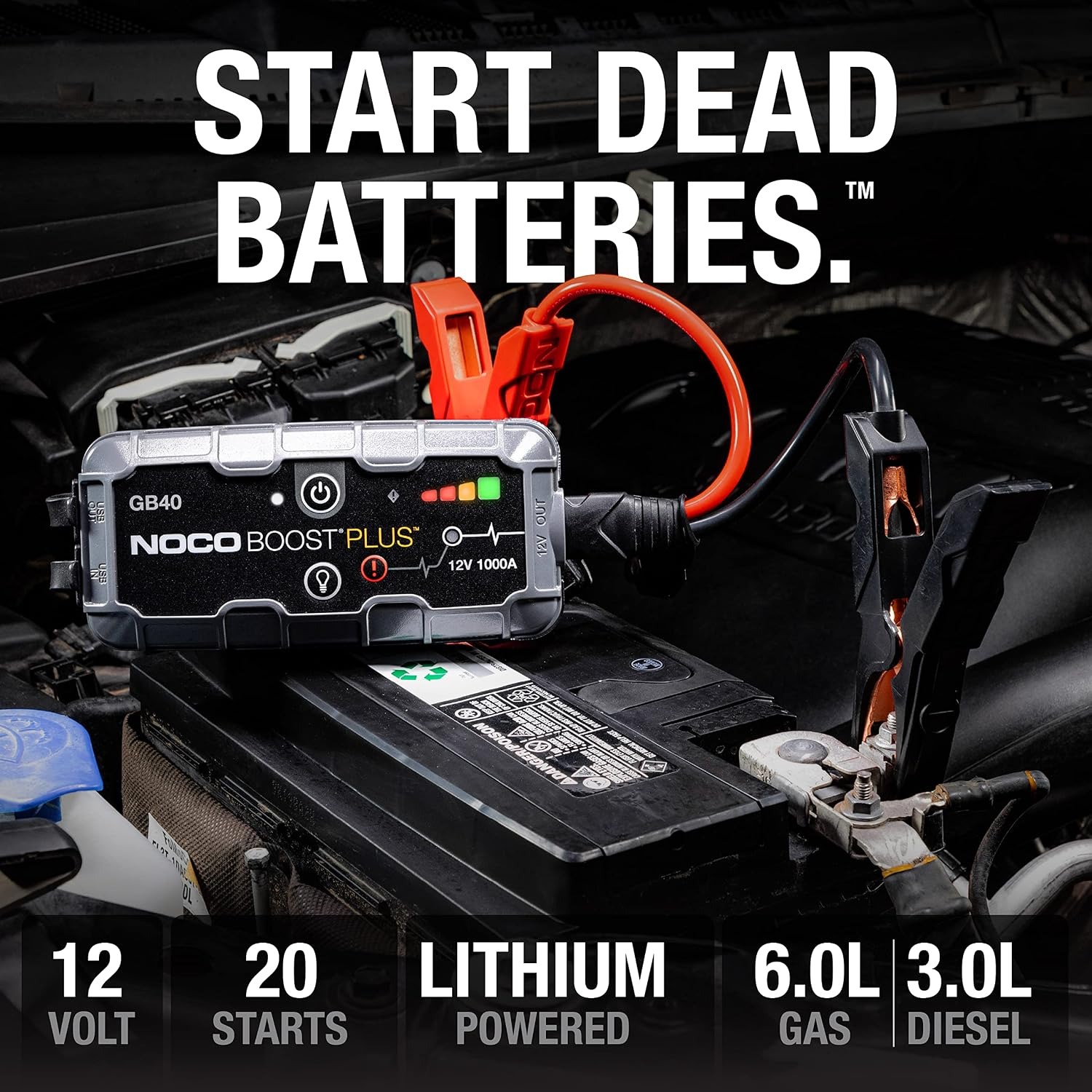
The headline figure here is 1000 amps of peak output on a 12 volt system. Peak means a brief surge, not a sustained draw. A starter motor only needs a second or two of heavy current, so peak output is the right number to look at for this job.
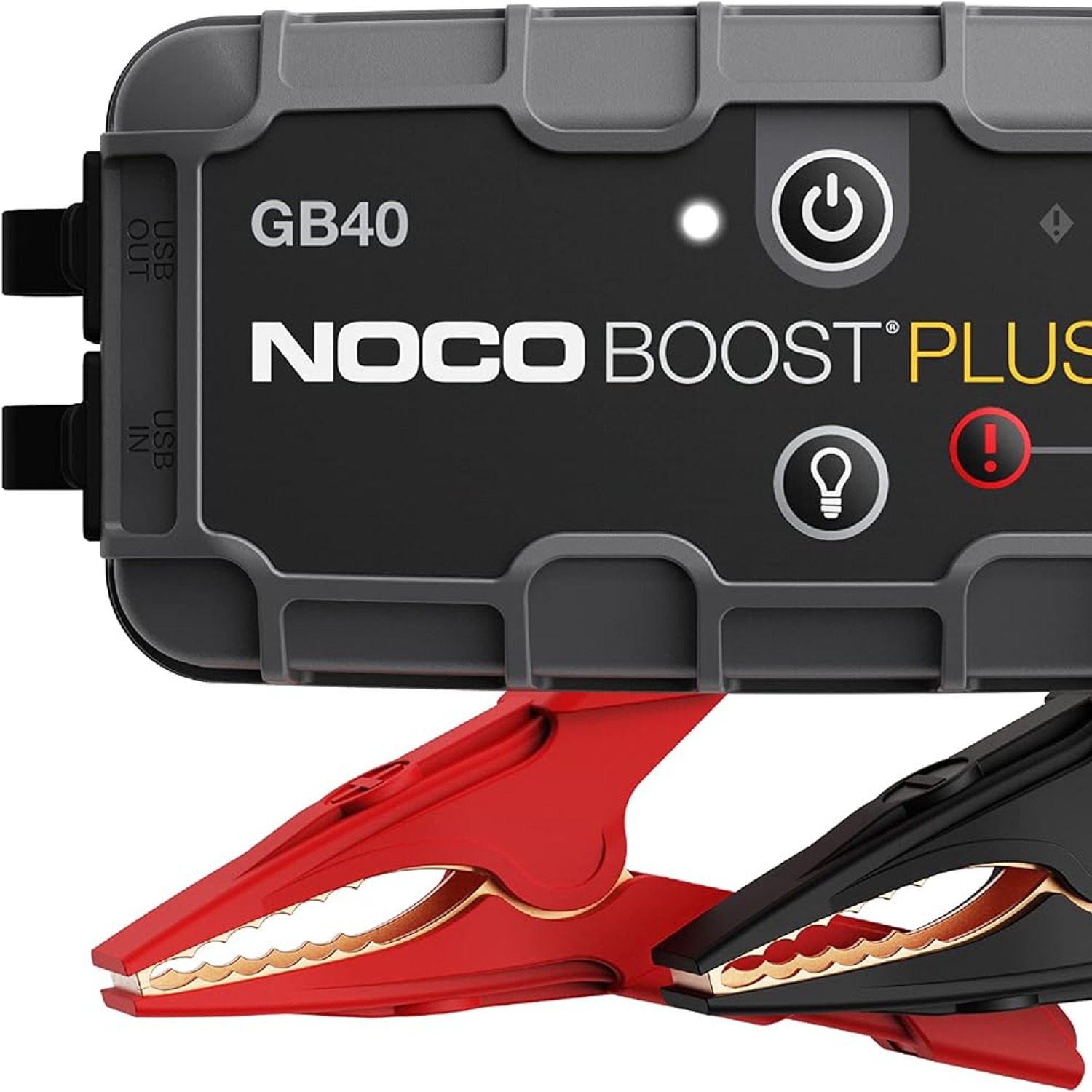
The clamps carry that current from the pack to your battery terminals. This unit uses heavy-duty clamps and spark-proof connections, with reverse polarity protection built in. In plain terms, if you put the red clamp where the black one should go, nothing bangs. The unit simply refuses to deliver power until the connection is correct. If you have ever hesitated over an engine bay in the dark, that feature is worth as much as the amp rating.
Who this suits
The engine rating tells you most of what you need to know. This box is specified for petrol engines up to 6.0 litres and diesel engines up to 3.0 litres. In practice that covers the great majority of passenger cars, hatchbacks, sedans, SUVs, vans and light utes on the road.
The compatible vehicle list is broader than cars alone. Motorcycles, ATVs, UTVs, lawn mowers, RVs, trucks and watercraft are all included, since they all run 12 volt systems. If you have a household with a car, a ride-on mower and a trailer boat, one unit can cover all three. That versatility is why a universal fit pack tends to earn its keep more than a vehicle-specific accessory.
Who it does not suit is anyone running a large commercial diesel. A 5 or 6 litre diesel truck sits outside the stated rating, and buying under-spec is a false economy. If your engine is bigger than the numbers above, look for a higher-rated unit instead.
What to look for when comparing units
Peak amps versus your engine. Match the rating to the biggest engine you actually need to start, not the smallest. Headroom is useful in winter.
Safety electronics. Spark-proof connections and reverse polarity protection are the difference between a tool anyone can use and a tool only a confident person will touch. If you are buying for a family member who is nervous around engine bays, treat these as required, not optional.
Starts per charge. This unit is rated at up to 20 starts per charge. That matters less for a single car and more if you are the unofficial roadside assistance for your street or your job site.
Size and weight. At 16.7 x 8 x 19.6 cm and 1.09 kg, this one fits a glovebox. A jump starter that lives in the shed because it is too big for the car is a jump starter that will not be there when the battery dies.
Build. The housing here is IP65 rated with rubberised over-moulding, which is a sensible spec for something that spends its life rolling around a boot alongside tools and shopping.
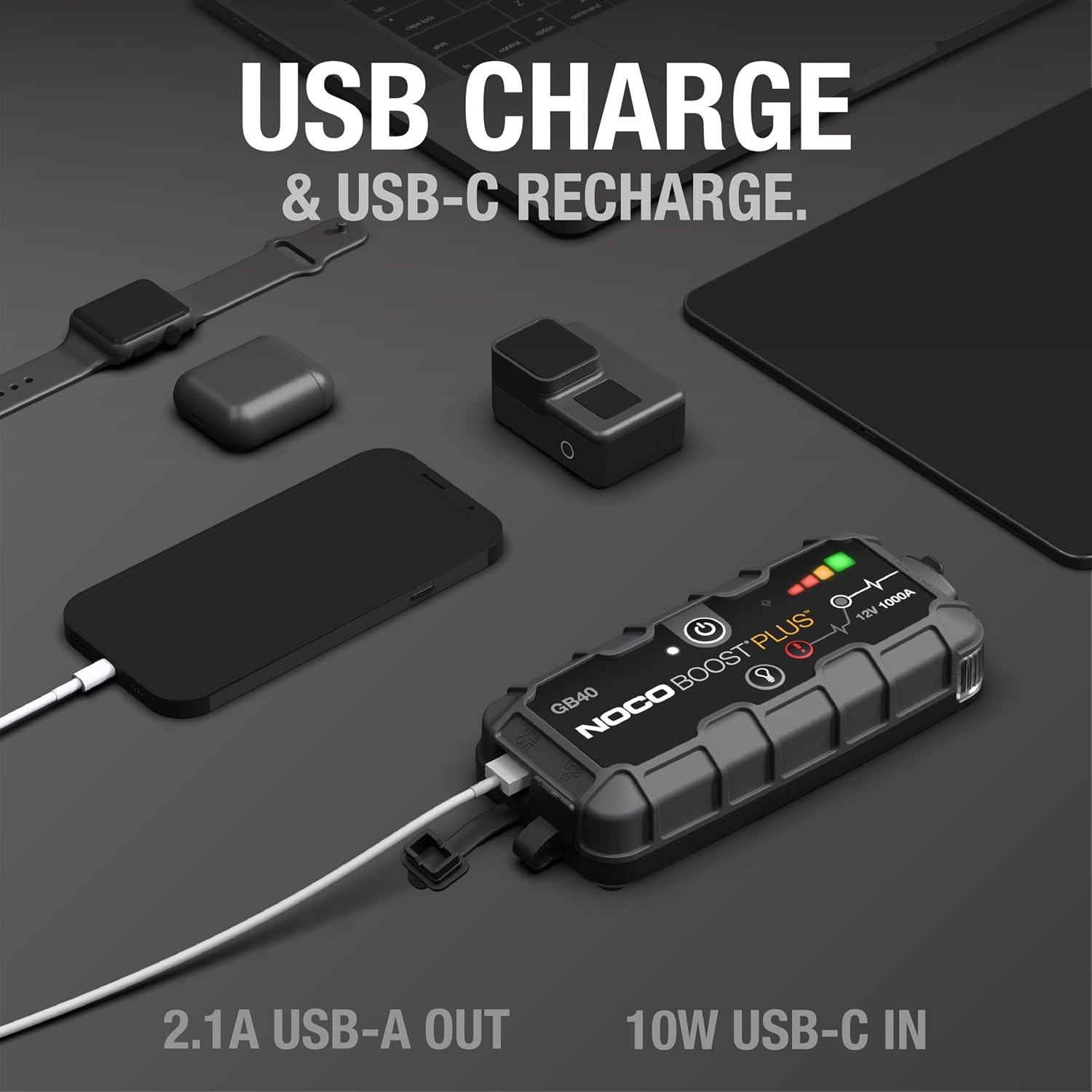
Extras that earn their place. A USB power bank and a 100 lumen LED with seven modes, including SOS and strobe, are not padding. A breakdown often means a dying phone and poor light. Most owners use the torch and the charger far more often than the clamps.
Using it without drama
The sequence is short. Make sure the vehicle is off. Connect the clamps to the battery terminals, red to positive and black to negative. Wait for the unit to show it is ready. Turn the key. Once the engine is running, disconnect the clamps and stow everything.
Two things go wrong most often. The first is a pack that was never charged, which is a planning problem rather than a product problem. The second is treating the jump starter as a cure rather than a stopgap. If you need it on the same car more than once or twice, your battery or charging system wants testing. A jump gets you home. It does not fix the underlying fault.
Drive for a decent stretch after a jump, not two blocks. The alternator needs time to put charge back into the battery, and a short hop will leave you in the same position tomorrow morning.
Looking after it
Charge it fully before the first use. Recharge takes around 3 hours over the supplied USB-C cable, so it is an evening job, not a weekend one.
Top it up every three or four months even if you have not used it, and always straight after a jump. Setting a reminder on your phone works better than relying on memory, since the whole point of this device is that you forget about it until an emergency.
Keep the clamp jaws clean. Battery terminals get a grey or greenish crust of corrosion, and if that transfers to your clamps it reduces the contact area and the energy that can flow through. A wipe with a dry cloth is usually enough.
Store it in the supplied microfibre bag. That keeps the clamps from scratching the case and stops the whole thing rattling around loose. Avoid parking it somewhere that bakes in summer sun, like an open dashboard, because heat is harder on lithium cells than cold.
Clean the housing with a dry or barely damp cloth. The IP65 rating handles rain and splashes, but it is not an invitation to rinse it under a tap.
The short version
A jump starter box is one of those purchases that feels unnecessary right up until the moment it is the only thing standing between you and a tow truck. This one gives 1000 amps of peak power for petrol engines to 6.0 litres and diesels to 3.0 litres, with up to 20 starts per charge from a 2150 mAh lithium pack.
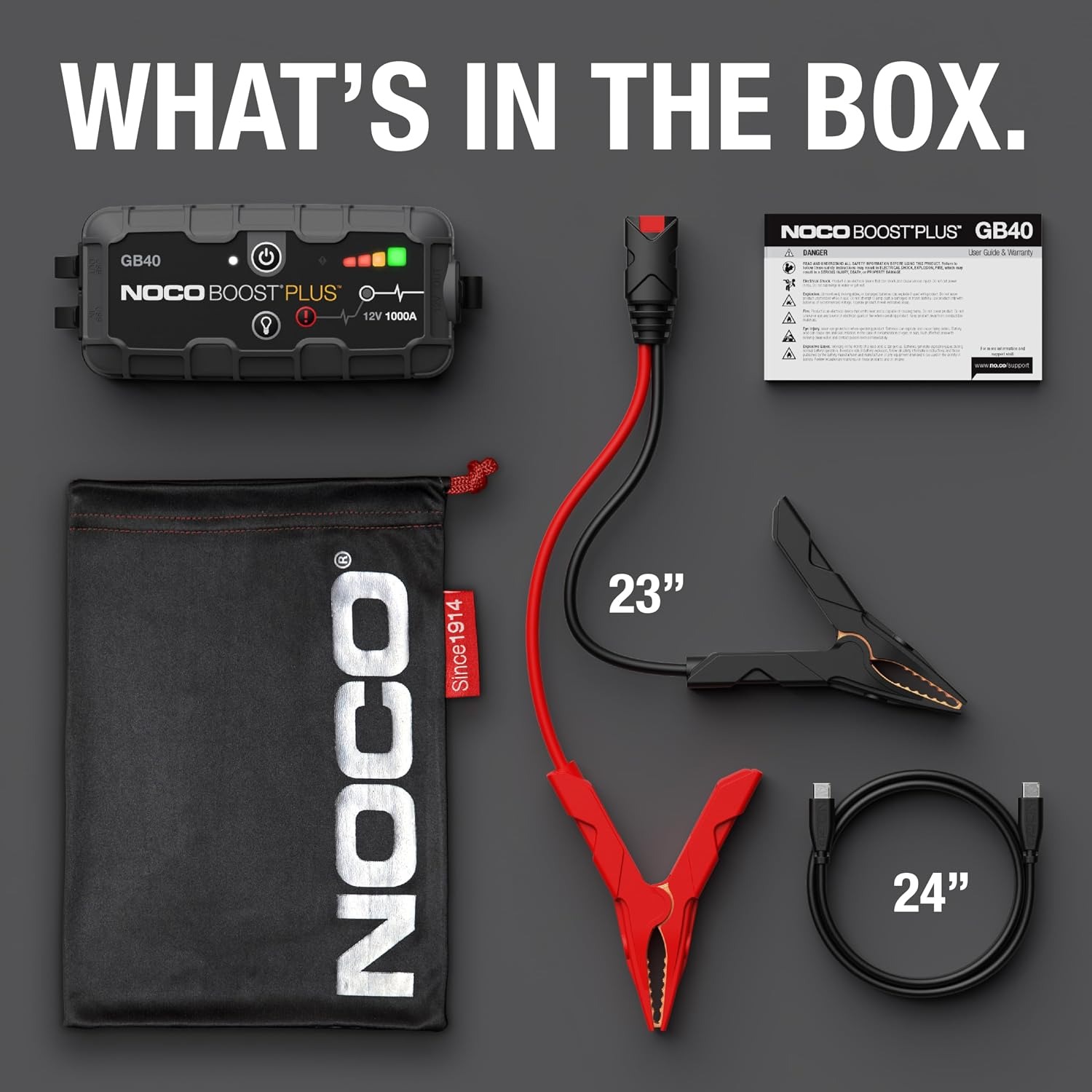
It weighs 1.09 kg, fits a glovebox, has spark-proof clamps with reverse polarity protection, charges your phone, and carries a 100 lumen light with SOS and strobe modes. The housing is IP65 rated with rubberised over-moulding, and it comes with clamps, a USB-C cable, a microfibre bag and a 1 year warranty.
Charge it, put it in the car, check it a few times a year. That is the entire maintenance routine, and it buys you the ability to solve your own flat battery at two in the morning without asking anyone for help.