


The complete guide
Hydrogen Water Bottles, A Plain Buyer's Guide
The problem with most hydrogen water gear
Hydrogen water has been around long enough now that the gear has split into two camps. On one side are bench-top machines that live in a kitchen, plug into the wall and work beautifully as long as you never leave the house. On the other are sachets and tablets, which work but mean buying something every month and remembering to restock.
Both have the same flaw. They break the moment your day gets busy. You are at the office, or in the car, or halfway through a session at the gym, and the thing that makes your water is sitting at home on the bench.
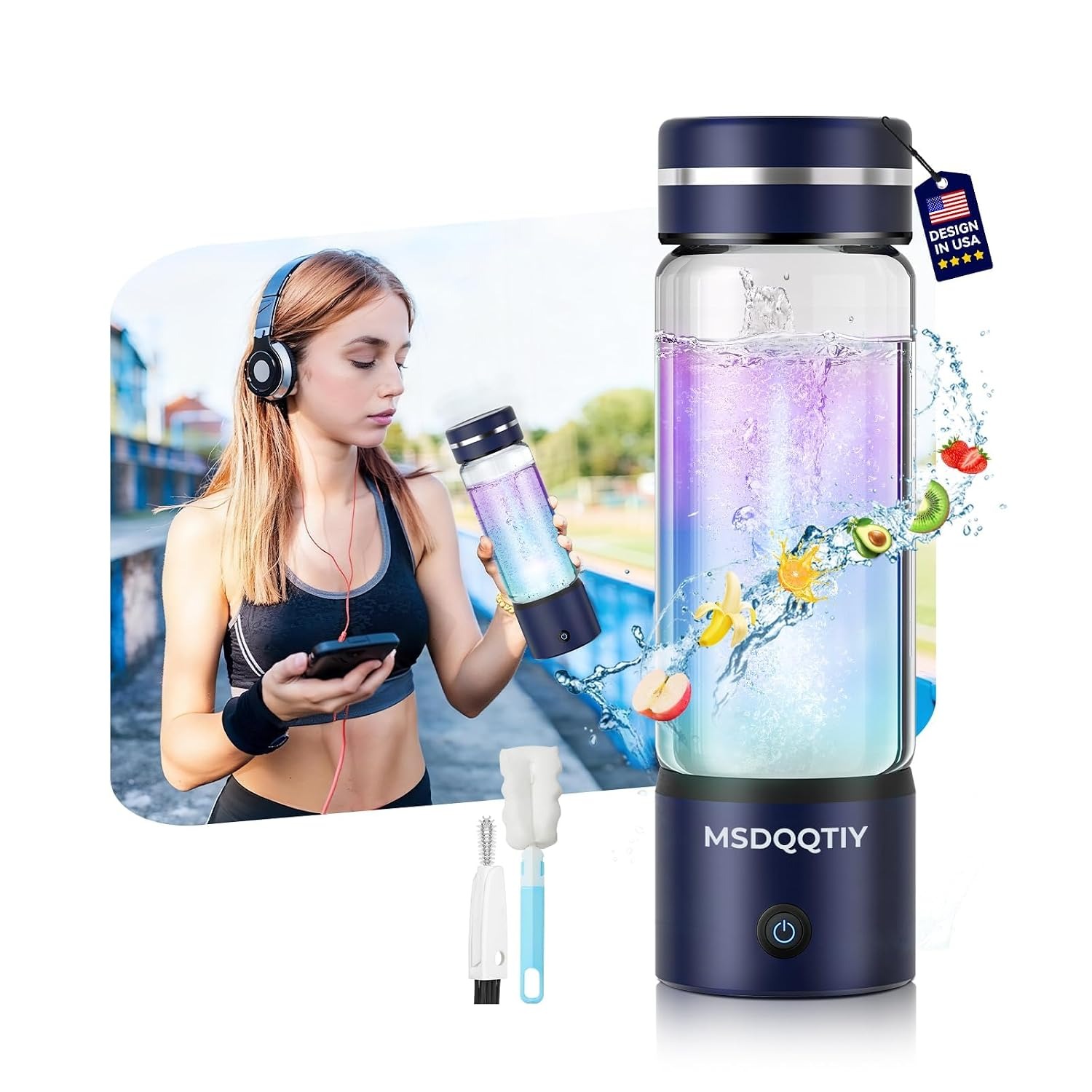
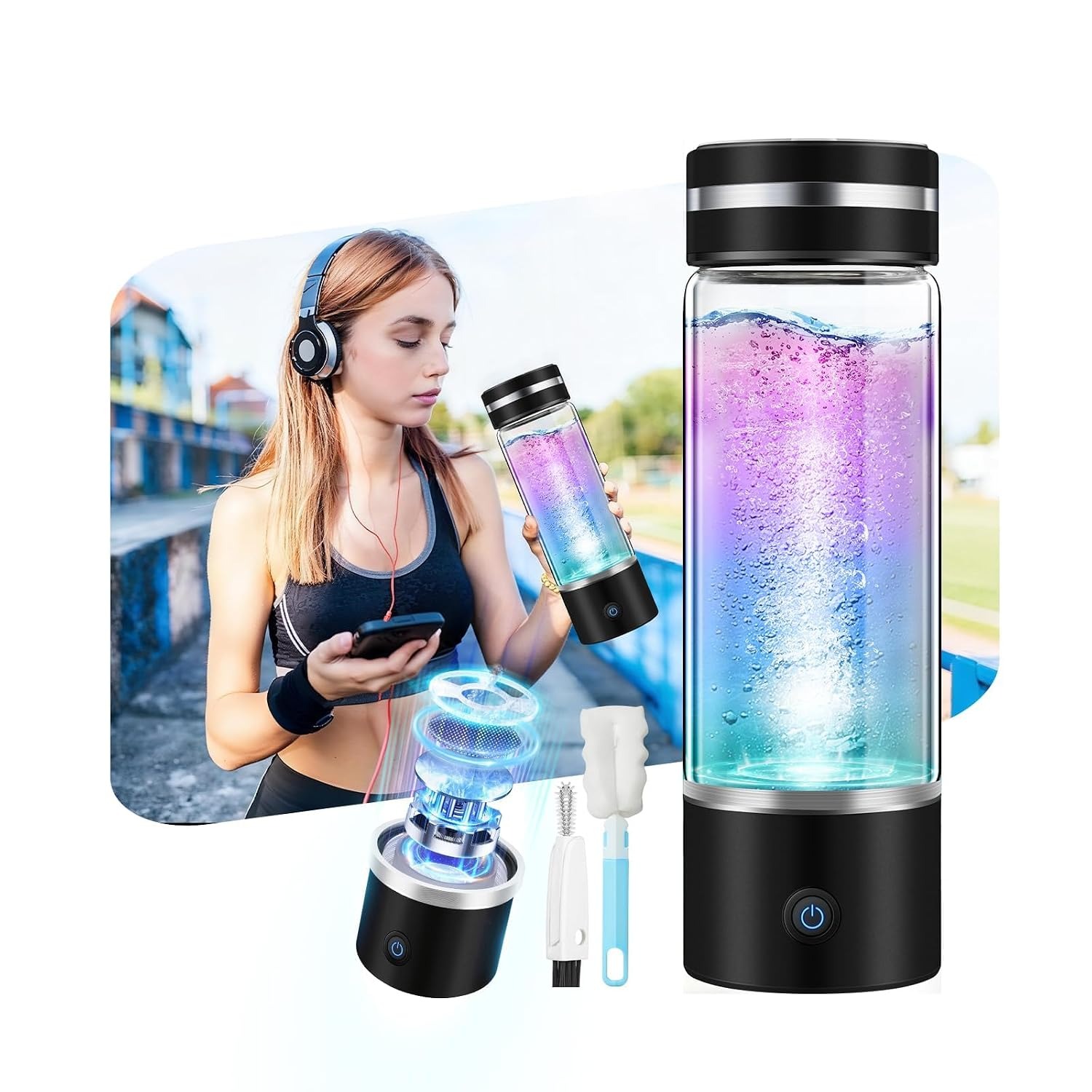
A portable hydrogen bottle solves that by putting the generator in the bottle itself. This one is a personal container with a battery-powered base, listed as leak proof and weighing around 500 g. You fill it, press the button, wait for the cycle, and drink from the same bottle you just made the water in. That is the whole interaction.
How a bottle like this actually works
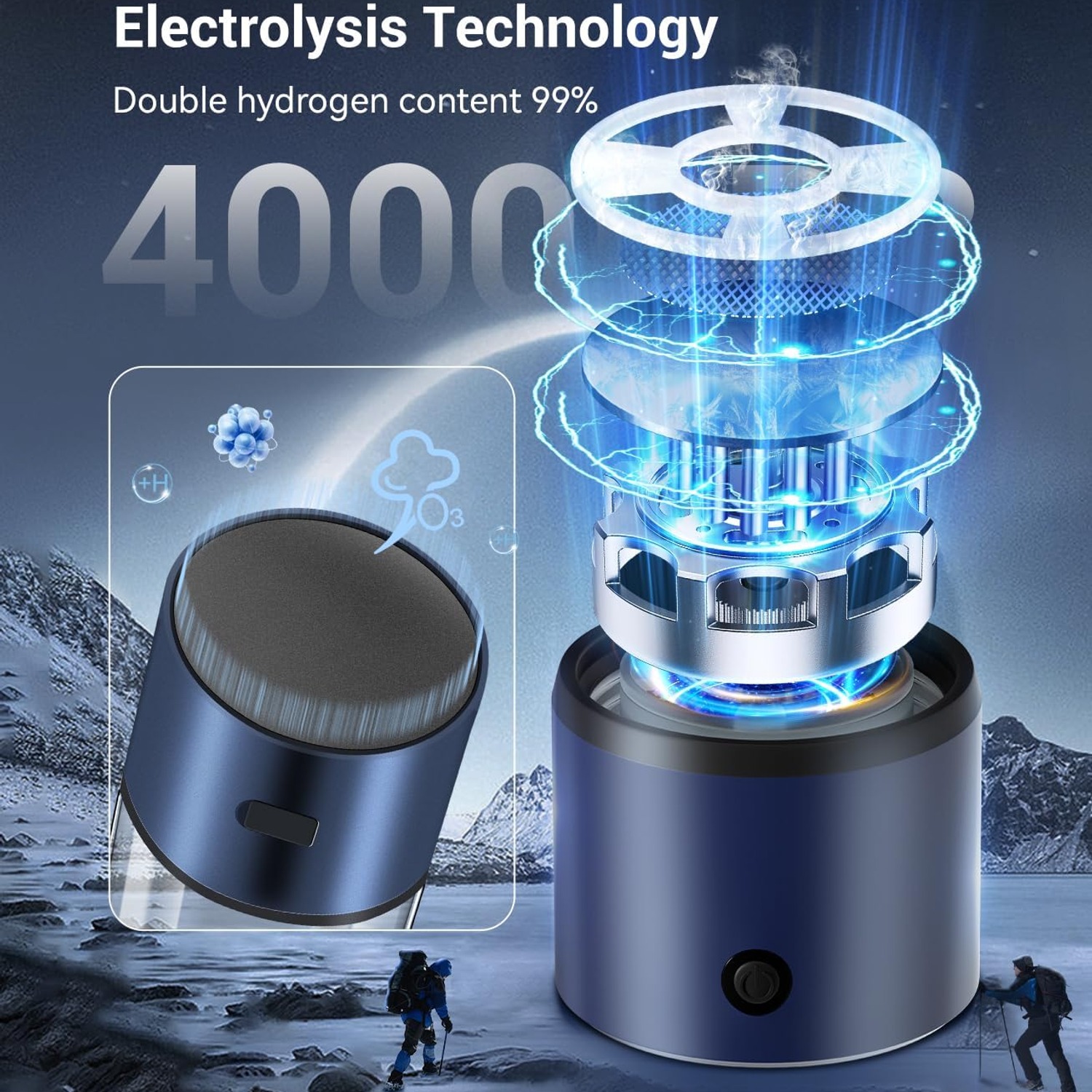
The base of the bottle holds the generator and the battery. The supplier lists the purification method as ion exchange and the power source as battery powered, recharged over a USB cable. You add plain drinking water, close the lid, press the button and let the cycle run.
There are no cartridges to swap out and nothing to measure. That matters more than it sounds. The single biggest reason wellness gadgets stop being used is friction. Anything that needs a refill, a weigh-out or a specific power point gets skipped on a rushed morning. A one-touch bottle gets picked up because it is no harder than filling any other bottle.
Charging over USB is the other quiet win. You can top it up from a laptop at your desk, a power bank on a train or a car adapter between appointments. Most people settle into charging overnight a couple of times a week and never think about it again.
One important boundary. This is not a water purifier. Start with water you would already happily drink. If your tap water needs filtering, filter it first, then fill the bottle.
Who gets the most out of it
The people who get real value from a portable unit are the ones who are rarely in the same place twice in a day. Commuters. Site workers. Anyone doing school runs, then a gym session, then the office. The bottle goes in the bag and the cycle happens wherever you happen to be.
Desk workers are the other obvious group. A bottle that lives permanently next to a keyboard and quietly tops up all day beats a machine in a kitchen you visit twice. If you are looking for the best desk water bottle that does something beyond holding water, this fits the brief.
Gym users do well with it too, provided you are honest about volume. This is a personal, single-serve bottle rather than a two-litre jug. If you empty a large bottle twice per session, you will be refilling and re-running cycles, which some people are fine with and others find annoying. Think about your actual drinking pattern before you buy.
Who should probably skip it? Anyone who only ever drinks at home from one spot. A bench-top unit makes more sense there. And anyone who wants to make hydrogen water for a whole household at once, because a personal bottle is built for one person.
What to look at when you compare bottles
Power and charging. Battery powered with USB charging is the flexible option, and that is what this unit uses. A bottle that needs a wall socket is really a kitchen appliance in disguise.
Weight and size. This one is listed at 500 g with a parcel size of 26.2 x 9.8 x 9.7 cm. That is a normal bottle footprint. Anything much heavier stops going in the bag.
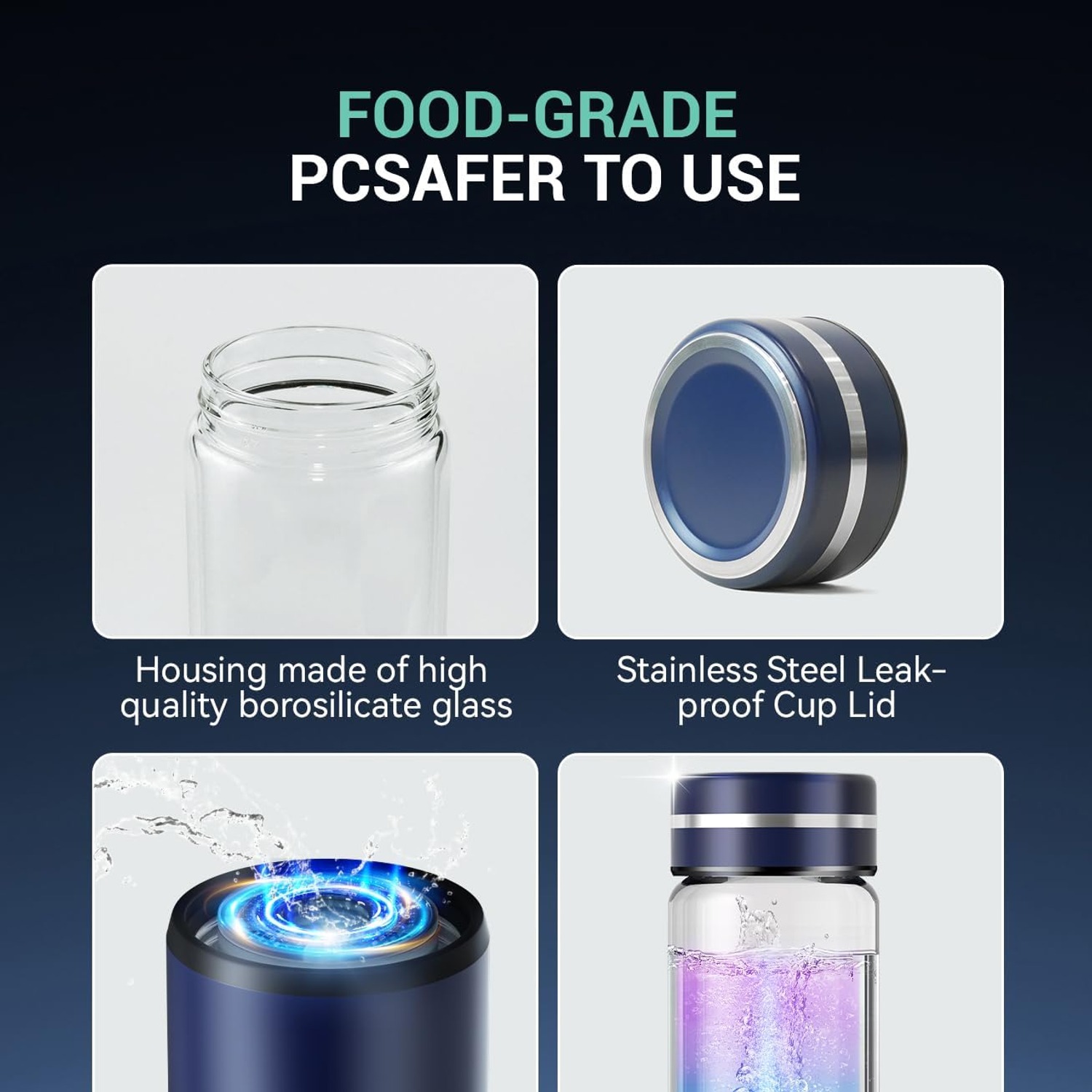
Sealing. The listing states leak proof as a special feature, which is what lets you pack it sideways. Whatever bottle you choose, check the closure, because a bottle that can only travel upright is a bottle you will eventually leave at home.
Cleaning access. A wide opening and a brush make the difference between a bottle you keep for years and one that develops a smell after two months. Base units cannot be submerged, so you want to be able to reach everything with a brush instead.
Honest spec sheets. Be wary of listings throwing around huge numbers with no explanation. Our own record here lists item dimensions as 10 x 10 x 10 mm, which is obviously a data entry quirk rather than the real bottle size, and we would rather tell you that than pretend otherwise.
Materials and what is known
The supplier lists the material type as metals. The listing includes a warranty description field, but no readable terms, so we are not claiming a specific warranty period. Your usual consumer rights apply either way.
We are deliberately not filling in the blanks. If a spec is not in the source data, guessing at it helps nobody, especially when you are deciding whether something fits in a particular bag or cup holder.
Looking after it
Cleaning is simple and it is the one habit worth building. Rinse with clean water after each day of use. Give the inside a proper brush-out weekly, more often in warm weather. Avoid abrasive pads and strong cleaning chemicals, which can damage seals and surfaces over time.
The base is the part to protect. It holds electronics and a battery, so it never goes in a dishwasher and never gets submerged. Keep the charging port dry, and wipe it before you plug in if the bottle has been sweating in a bag.
Store it empty with the lid loose so the inside can dry out. A sealed damp bottle sitting in a cupboard is how smells start. Charge with the cable supplied rather than whatever cable is nearest, and avoid leaving it on charge indefinitely.
Use it for plain water only. Juice, sports drinks and anything fizzy will foul the base and are difficult to clean out properly. If you want a bottle for electrolyte mixes, keep a separate one.
A realistic expectation
A portable hydrogen bottle is a convenience product. It makes hydrogen-rich water available in places where you previously could not make it, and it does that with one button and a USB cable. That is a genuinely useful thing if you are out of the house a lot.
What it is not is a filter, a medical device or a substitute for drinking enough water in the first place. We are not going to make health claims here. If you have a specific condition or concern, that is a conversation for a doctor, not a product page.
The short version
If you want hydrogen water and you are rarely in one place, a portable bottle is the sensible format. This one is battery powered, recharges over USB, uses an ion exchange base, is listed as leak proof and weighs around 500 g. It ships as a single new unit from China, boxed at roughly 26.2 x 9.8 x 9.7 cm.
If those details matter for your situation, message us before ordering and we will tell you exactly what we can confirm.