



The complete guide
How To Choose A Car Vacuum That Actually Gets Used
The problem with a dirty car
Most people do not plan to let their car get grubby. It happens one small thing at a time. A bit of gravel off a work boot, a spilled handful of crisps, some dry grass off a dog that was very pleased with itself. None of it feels urgent. Then one morning you glance into the back seat and realise the footwell has its own ecosystem.
The reason it builds up is simple. The household vacuum lives inside, the car lives outside, and the cord does not reach. So the job gets pushed to "the weekend", and the weekend turns up with better ideas. The fix is not more willpower. It is keeping a vacuum in the car so the job takes ten minutes and never gets big enough to dread.
That is the whole case for a handheld car vac. It is not about raw power compared with a full-size machine. It is about being there, being small enough to hold, and being easy enough that you actually bother.
How a 12 V car vacuum works
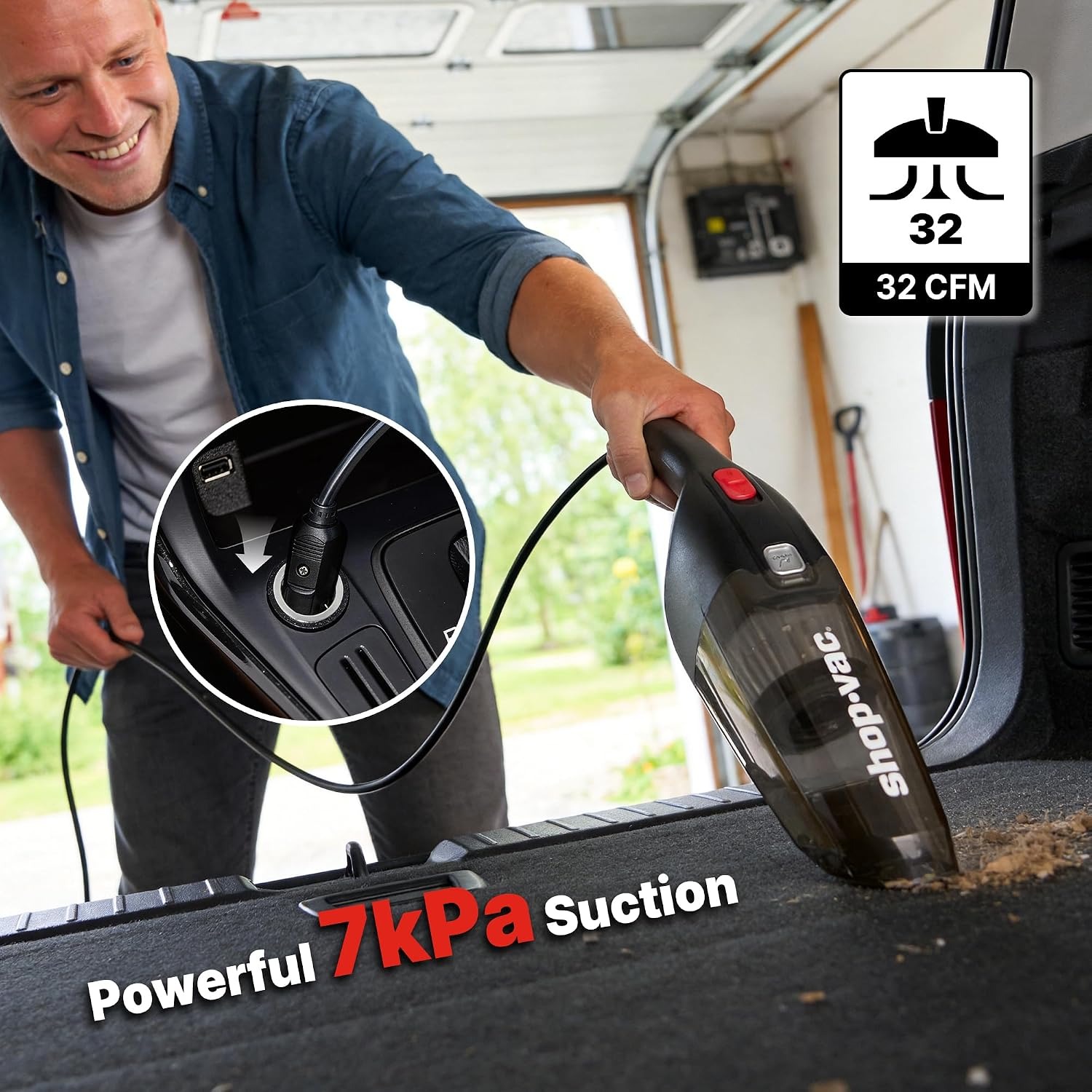
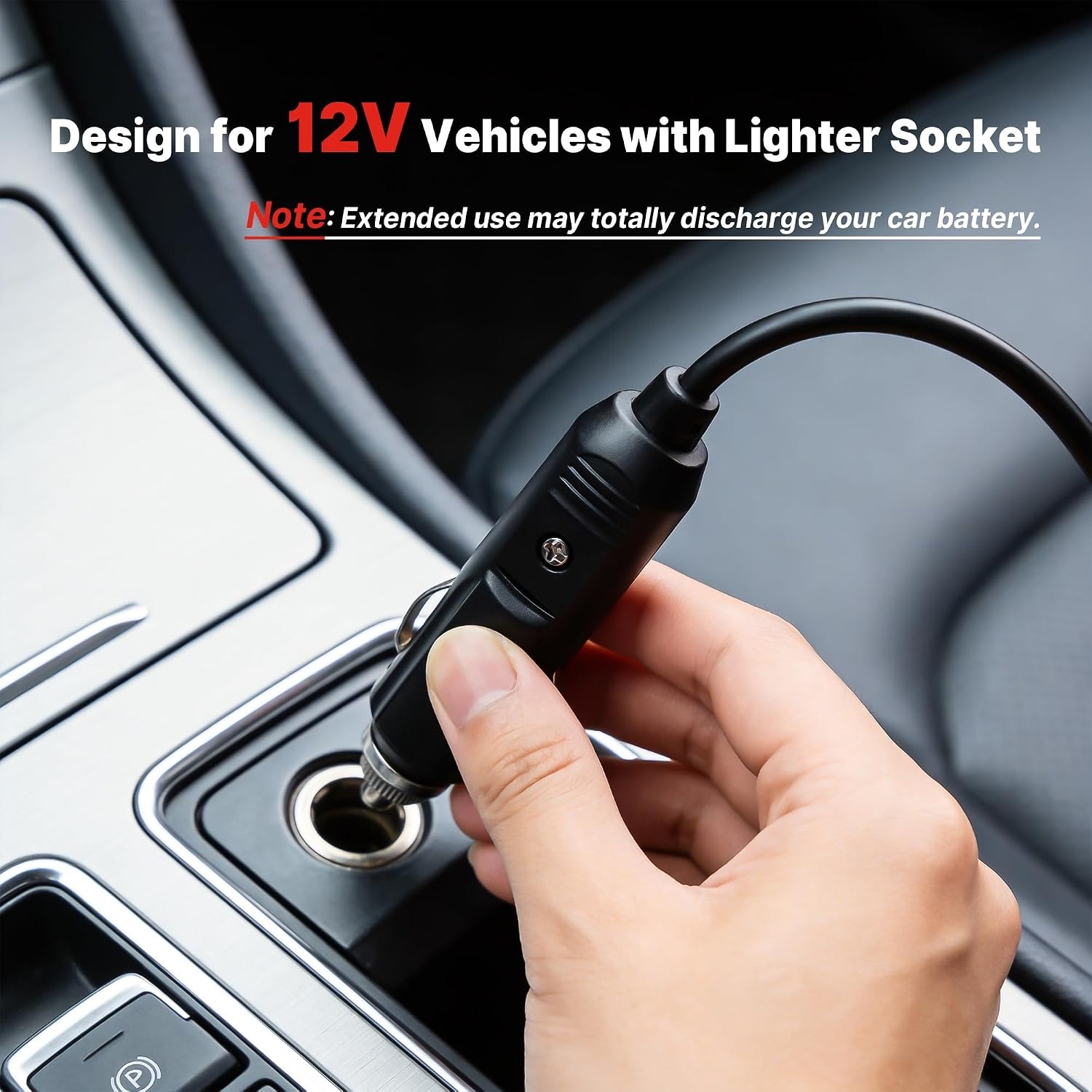
A 12 volt car vacuum cleaner draws its power from the vehicle's own 12 V DC socket, the round one most of us still call the cigarette lighter. You plug in, flick the switch, and the motor runs for as long as the car supplies power.
That is the key difference from a battery handheld. Cordless units are convenient to carry, but small batteries and vacuum motors do not get along well. Suction tends to fade as the charge drops, and runtimes are often shorter than one proper clean. A corded car vacuum gives you the same pull in minute fifteen as it did in minute one.
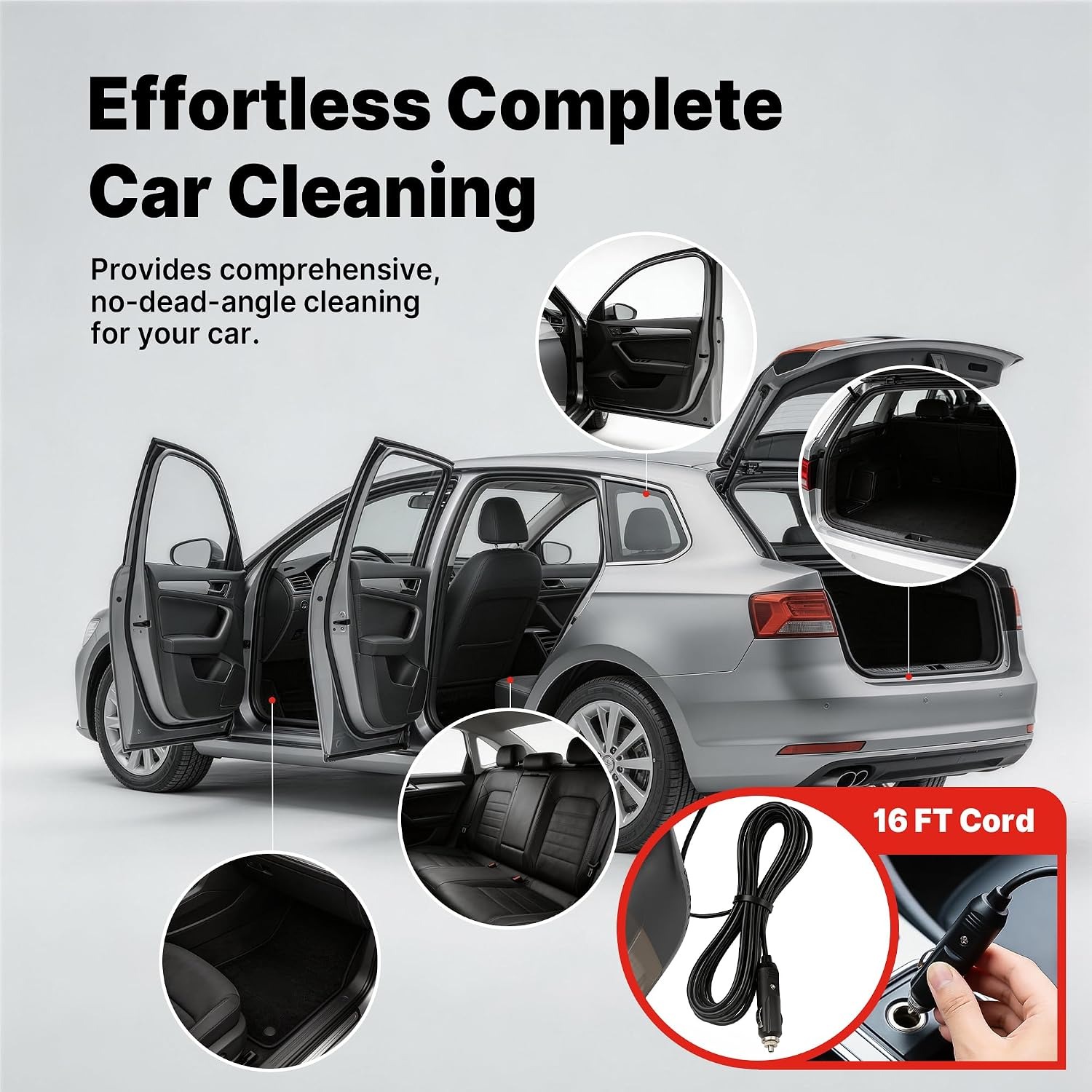
The trade-off is reach. Your working radius is set by the cord and by where the socket sits. In a small hatchback that is barely a thought. In a long wagon or a van, it pays to check whether you have a rear socket, or to plan on moving the plug once partway through.
One practical note on batteries. Running any accessory from the 12 V socket draws on the car battery. For a short clean on a healthy battery that is a non-issue. For a long detailing session, or if your battery is getting on in years, run the engine while you work.
What the specs actually mean
Specification lists for small vacuums can be confusing, so here is what matters on this one.
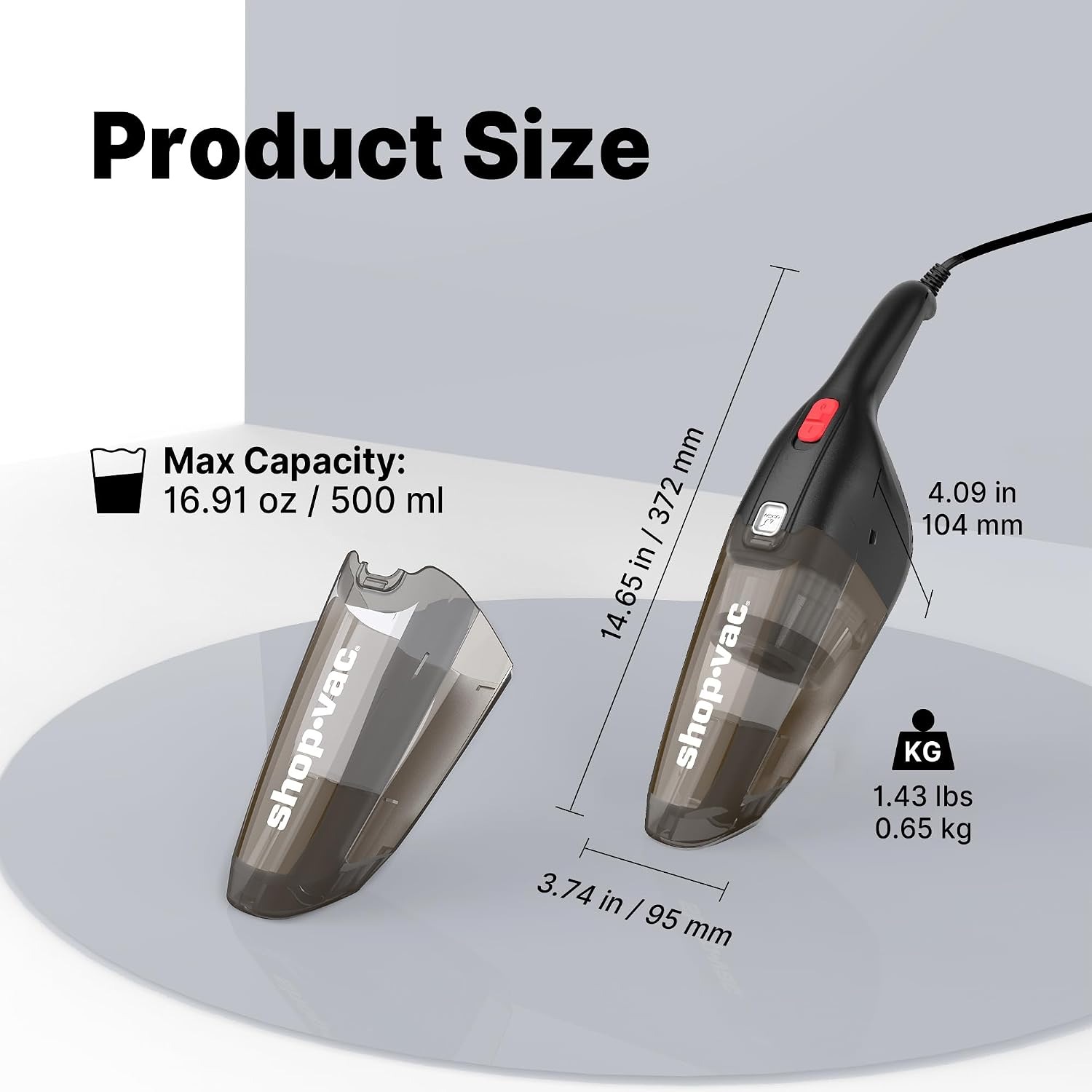
The capacity is 0.5 litres. That sounds small until you remember what car dirt actually weighs. Half a litre of grit, crumbs and hair is a solid result from one car. On a genuinely filthy vehicle you will empty it once mid-clean, which takes a few seconds.
Item weight is 1.12 kg. Hold your arm out and imagine a one litre bottle of water. That is roughly the feel. It is light enough that you can work bent into a footwell without your forearm complaining, which sounds minor until you have tried to do the same job with a two-handed machine.
The dimensions are 37.2 by 9.5 by 10.4 centimetres. The useful part of that is the width. A body under ten centimetres wide fits in the gap between a seat and the centre console, which is exactly where the worst of it hides.
Filtration is a washable cartridge filter. This is a quiet money saver. Disposable filters are a running cost, and the kind of running cost you forget about until the vacuum stops pulling properly and you discover a replacement pack costs a third of the machine. A car vacuum with a washable filter just needs a rinse and a full dry.
Who it suits
Pet owners get the most out of it, and pet hair is one of the listed recommended uses. Hair that has worked into upholstery needs slow, overlapping passes rather than quick sweeps, so having steady corded suction helps more than you might expect.
Parents are the next obvious group. Child seats generate crumbs the way clouds generate rain. A small car vacuum that lives in the boot means you can deal with the aftermath of a long drive before it bonds permanently to the carpet.
Tradies and anyone who works outdoors will appreciate it too. Dried mud, sawdust and gravel come off boots and into the footwell every day. Daily cleaning is unrealistic, but a weekly five minutes is not.
It also suits people selling a car. An interior that has been properly vacuumed, including the seat seams and the boot edges, reads as a well-kept vehicle long before anyone looks at the service book.
Who it suits less: anyone hoping for a general household vacuum. This is powered from a vehicle socket and is listed for indoor use, meaning cabin and boot rather than driveways in the rain. For stairs and sofas you want a different tool.
Getting the best out of it
A bit of order makes a big difference. Start by taking everything out: mats, bottles, the random single glove. Then do a quick hand pass for anything bigger than a pea. Hard objects are better picked up than rattled through a nozzle.
Work top down. Dash shelf and door pockets first, then seats, then footwells, then the boot. Dirt falls, so cleaning the floor first just means doing it twice.
Use the crevice tool more than you think you need to. Seat seams, the slot beside the handbrake, the rails under the front seats and the gap where the seat belt buckle sits are where most car dirt actually lives. Vacuuming the open carpet is the easy bit and the least rewarding.
For ground-in hair, run the tool in one direction repeatedly rather than back and forth. Pushing against the nap lifts fibres and brings the hair with it.
Finish by emptying the container and checking the filter. Doing it straight away, while you are still standing by the bin, is the habit that keeps suction strong. Letting dust sit in the filter for three months is the most common reason people think their vacuum has "gone weak".
Care and storage
Empty the 0.5 litre container after every clean. Rinse the cartridge filter in cool water when it looks grey, and give it plenty of time to dry. A damp filter is worse than a dusty one, because moisture turns loose dust into a paste that blocks the pleats.
Wipe the body and the attachments with a slightly damp cloth. Keep the cord coiled loosely. Tight wrapping around a body puts a repeated bend in the same spot, and that is where cables eventually fail.
Store it somewhere dry, out of direct sun. A boot organiser or a simple canvas bag keeps the crevice tool and the rest of the accessory kit with the machine instead of sliding around under the parcel shelf.
The short version
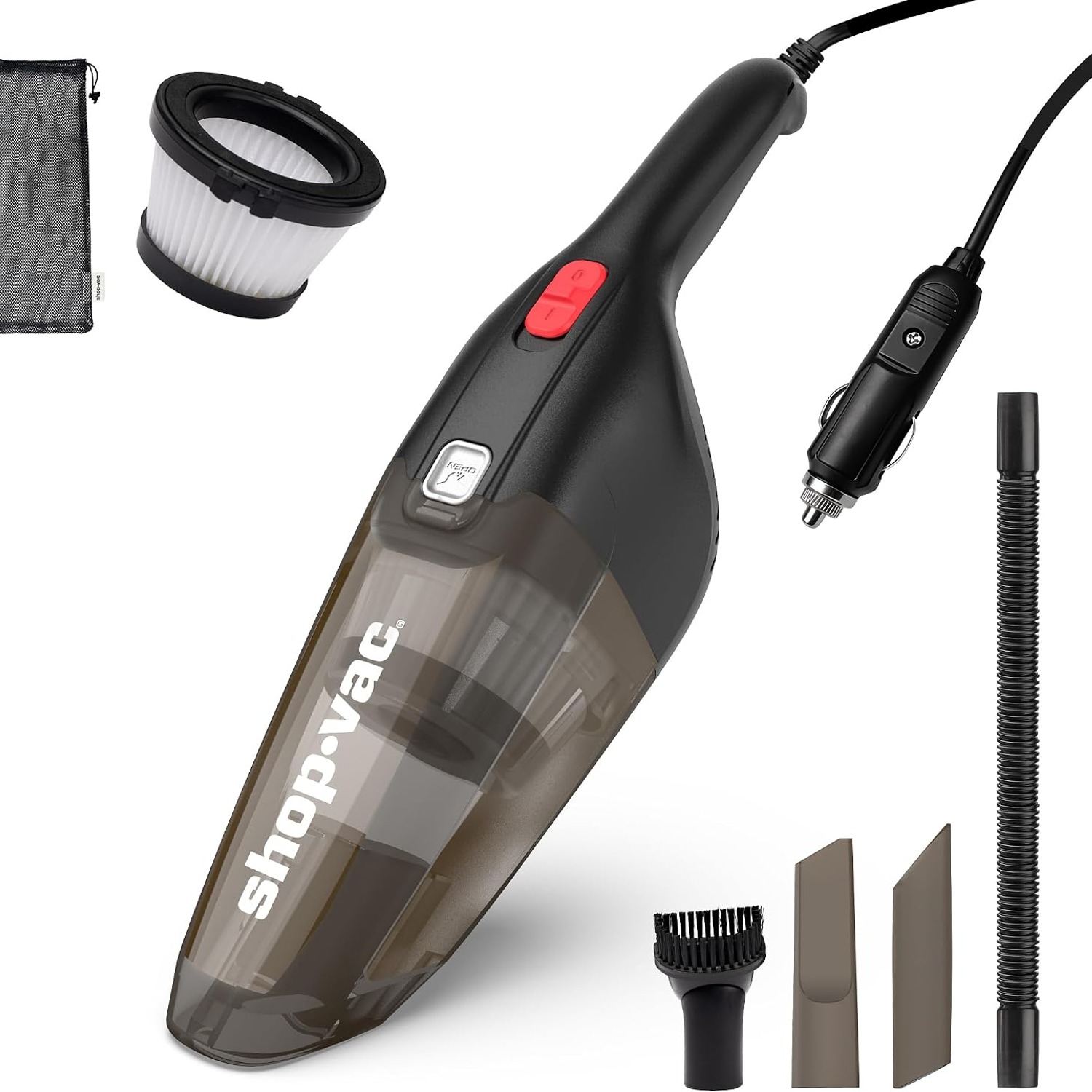
If your car gets dirty because the house vacuum is thirty metres and one locked door away, a handheld car vac solves the right problem. This one is corded and runs on 12 V, so suction stays constant and there is no battery to manage. It holds 0.5 litres, weighs 1.12 kg, and comes with a crevice tool, an accessory kit, a vacuum bag and a manual.
The filter is washable, so there is nothing to keep buying. It is recommended for car interiors and pet hair and is rated for all floor types.
Check you have a working 12 V socket, think about where it sits in your vehicle, and keep the vacuum in the boot. That last part is what turns a good tool into a clean car.