
The complete guide
Choosing Cut Resistant Sleeves, A Practical Buyer's Guide
The gap nobody plans for
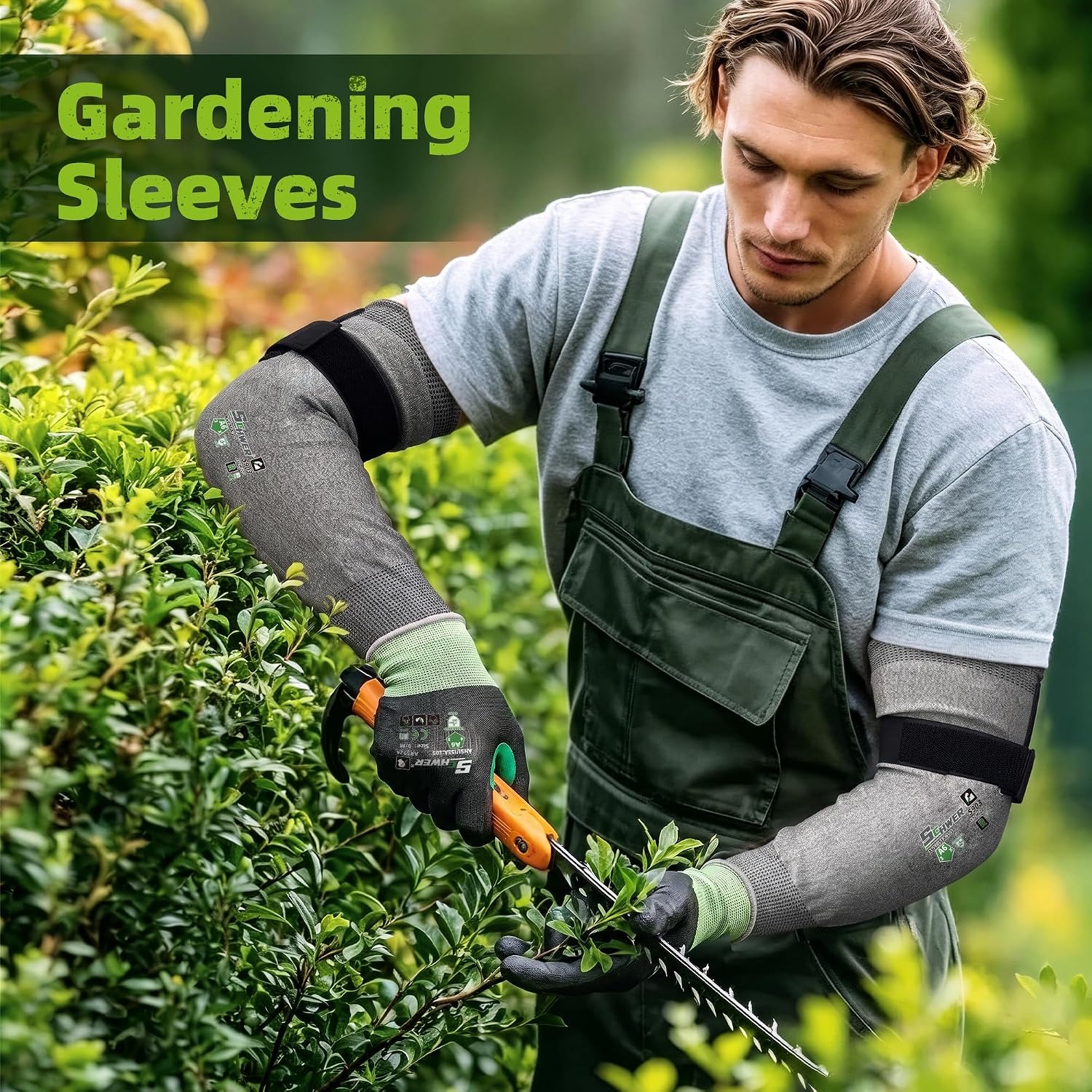
Think about where you actually get cut. It is almost never the palm, because the palm is in a glove. It is the forearm. You reach into a hedge and a branch drags across the skin. You slide a sheet of offcut metal off a bench and the edge catches the inside of your arm. You pull a bramble clear and three thorns rake you from wrist to elbow.
Gloves stop at the wrist. Shirt sleeves tear, ride up, or get rolled back because they are too hot. That leaves a strip of bare skin exactly where the contact happens, and it is why so many people finish a weekend of pruning with forearms that look like they lost an argument with a cat.
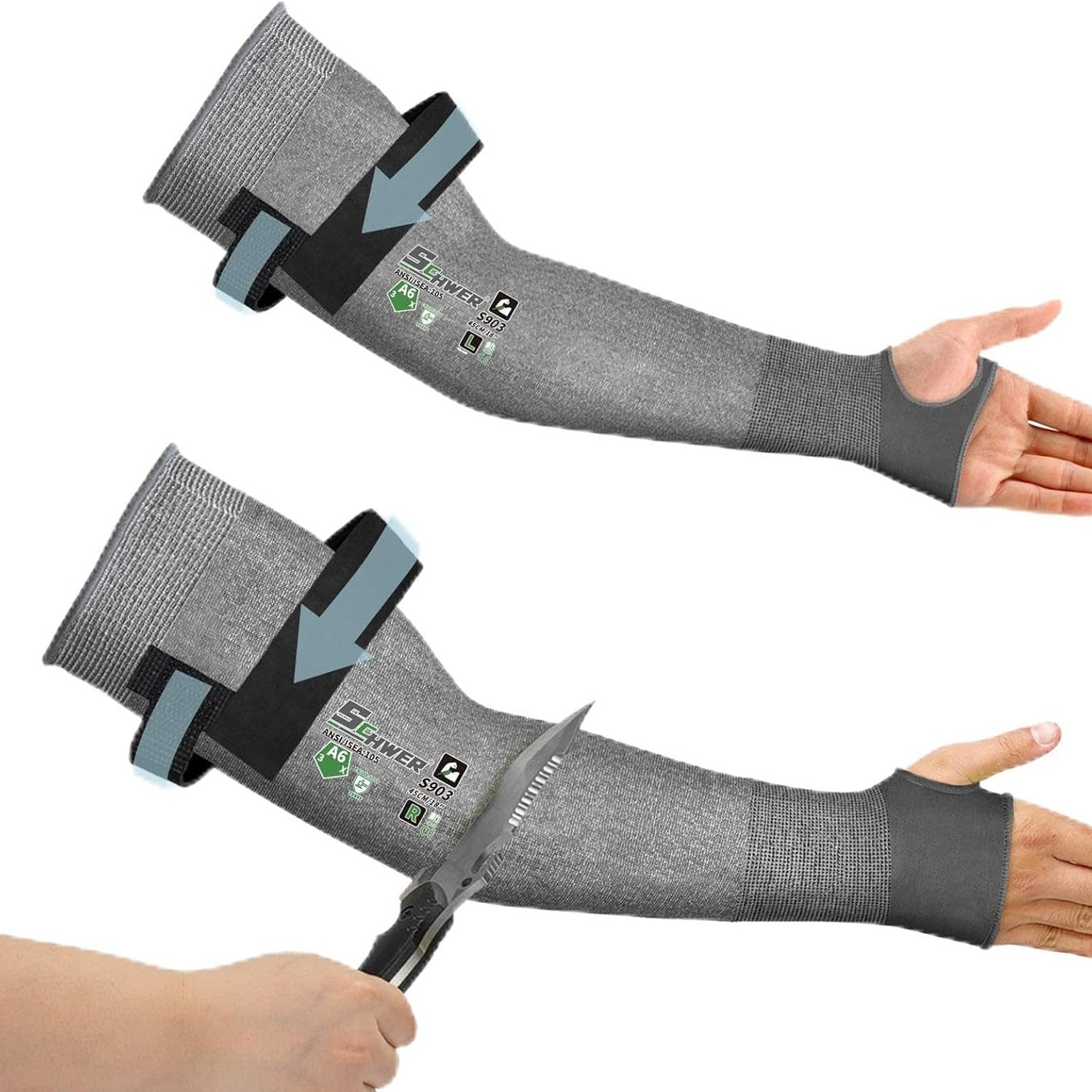
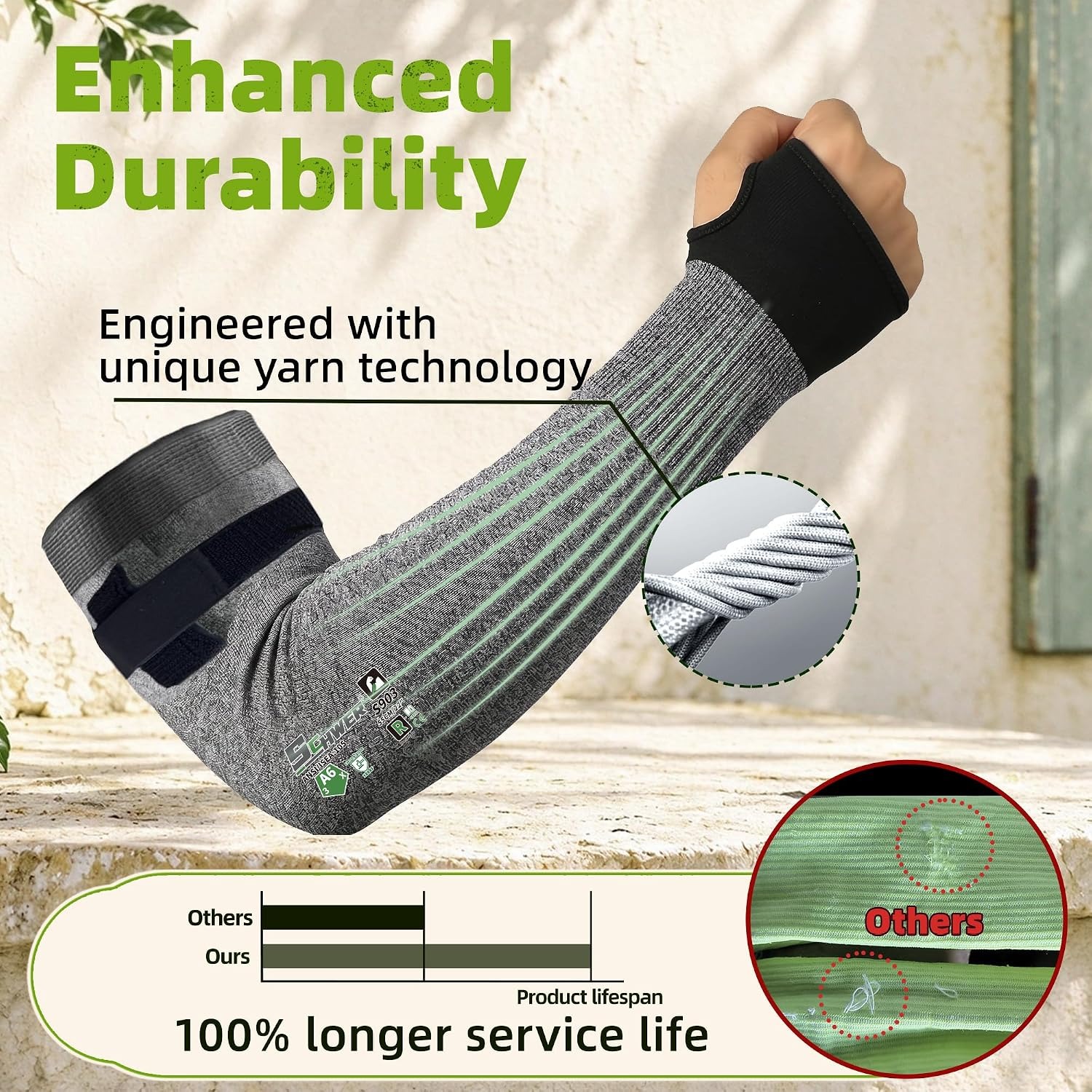
Cut resistant sleeves are built for that gap. They are knitted tubes that cover the forearm and part of the upper arm, made from yarn that resists a blade pulled across it. They are not armour. They are the layer that turns a cut into a scuff.
How cut resistance is actually measured
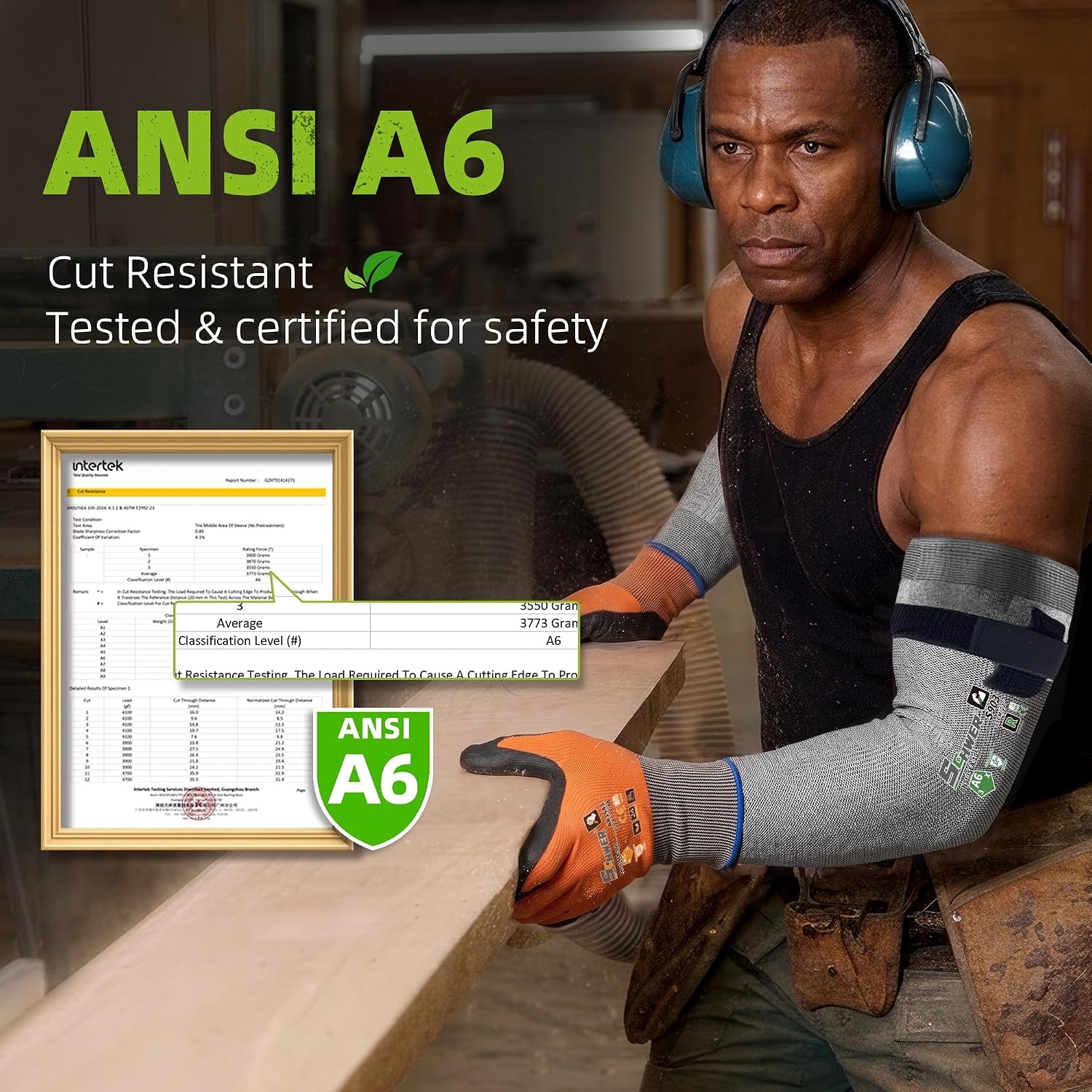
The ANSI cut scale runs from A1 to A9. A machine drags a blade across the fabric under a known load, and the rating is based on how much weight it takes to cut through at a set distance. A1 is light, suited to general handling. A9 sits at the top, used around very sharp materials under real risk.
This style is listed at ANSI A6. That places it in the upper band, well past the everyday handling levels most lightweight sleeves sit at. It is the kind of rating you would look for when glass, thin sheet metal, or sharp tools are part of the day rather than an occasional surprise.
One thing worth being clear about, because it trips people up. Cut resistance and puncture resistance are different tests measuring different things. A knit can be excellent at stopping a blade drawn across it and still be beaten by a fine point pushed straight through. Thorns, staples, wire ends and nails fall into that second category. The weave will often deflect them, but it is not what the A6 number is describing.
Heat is a separate matter again. No flame or spark rating is given for this style, so sparks from a grinder need dedicated gear.
Why weight matters more than people expect
The best cut resistant sleeves are the ones you keep wearing. That sounds obvious, but it is the whole problem with protective kit. Heavy sleeves get taken off during the hot part of the afternoon, which is usually the part of the afternoon when you are tired and more likely to make a mistake.
This pair weighs 130 g for both sleeves and sits in the lightweight fabric weight class. The construction is a fine polyester knit. You feel it as a second layer of fabric on the arm rather than as a sleeve you have to work around.
The fabric is listed as having no stretch, so the fit comes from the tube shape rather than elastic recovery. That is a trade off. A no stretch knit holds its form and does not loosen off the way an elasticated sleeve can after a dozen washes. It also means the fit is what it is, without compression gripping your arm.
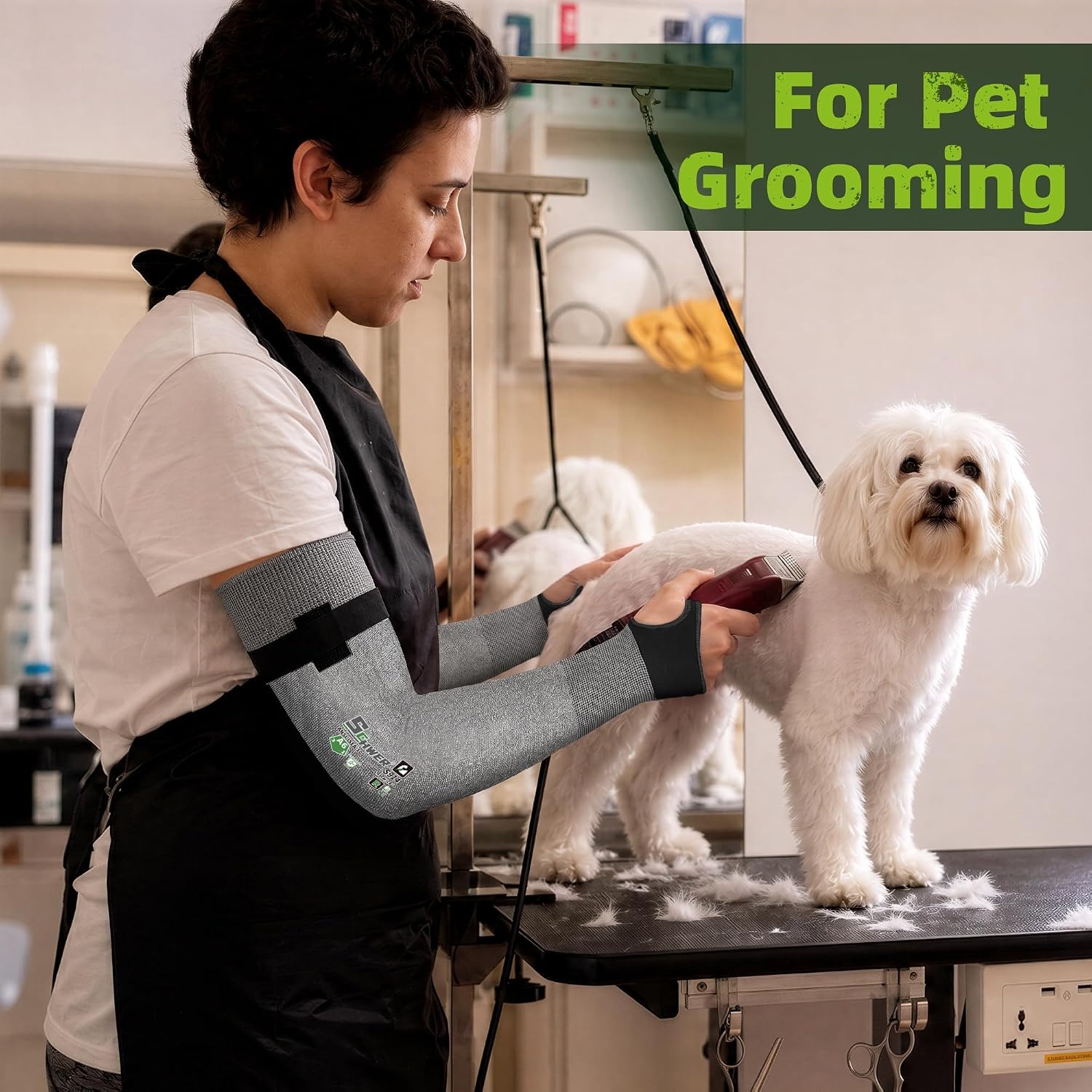
The thumbhole is the detail that makes the biggest practical difference. Hook it over your thumb and the lower end of the sleeve is anchored. Without that, every time you straighten your arm the sleeve slides a centimetre toward the elbow, and after twenty minutes you are adjusting it instead of working. It also means the glove cuff can overlap the sleeve end cleanly, so there is no bare band at the wrist.
The sun protection side of it
This is a dual purpose product and it is worth buying for either reason on its own.
The sleeves carry a UPF50+ rating. UPF works like SPF but for fabric, measuring how much ultraviolet light passes through the weave to your skin. A UPF50+ fabric blocks the large majority of it.
If you have ever spent a day weeding, fencing or painting, you know how fast sunscreen comes off forearms. Sweat, dirt, sleeves rubbing against it. You reapply, you forget, and by evening your arms are red. Fabric does not need reapplying. Pull the sleeve on in the morning and the covered skin is covered all day.
That makes these useful for people who are not thinking about cuts at all. Fishing, cycling, driving with your arm near the window, long days in the garden with nothing sharper than a trowel. For that use the cut rating is simply a bonus you are not calling on.
Who they suit
Gardeners get the most obvious benefit. Roses, blackberries, hawthorn, pyracantha and anything with a spine make pruning season a month of small wounds. Covered forearms change that completely.
Trade and workshop users are the other main group. The listing names high risk work alongside gardening, and the style is positioned for glass handling, metal handling, machining, maintenance and assembly. If your site has its own PPE requirements, check them before you rely on any sleeve, because workplace standards vary and your safety officer has the final say.
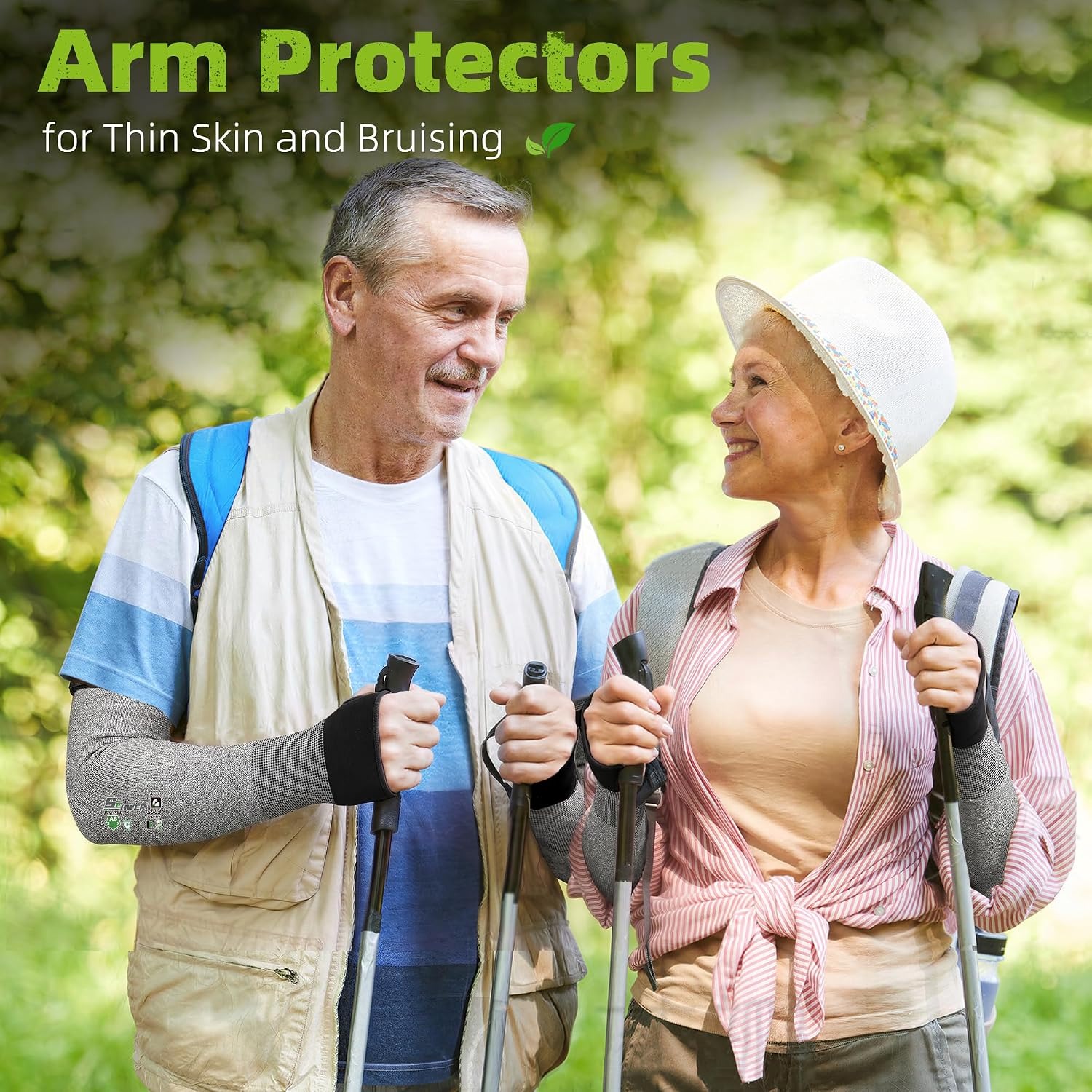
Then there are the quieter uses. Anyone handling broken crockery or scrap. People doing a house clearance. Volunteers on a hedge laying day. Anyone whose skin tears easily, where even a light scratch is a nuisance to heal.
Sizing and fit
The listing gives a single 18 in size, which is around 45 cm of sleeve, with garment sizing stated for the United States. On most adults that reaches from the wrist to somewhere above the elbow. Where exactly depends on your arm length and how high you pull the sleeve up.
Because this is an adult size with no stretch, it will be loose on slim arms and snug on larger ones. Loose is the greater problem with protective sleeves, since a sleeve that spins on the arm can move the protected surface away from where the contact is. If yours sit loose, the thumbhole does a lot of the work of keeping them aligned.
The age range is listed as adult, so these are not sized for children.
Looking after them
Care is simple. Machine wash cold or warm, skip the bleach, tumble dry on low. Bleach and high heat are the two things that shorten the life of a technical knit, so both are worth avoiding even when the sleeves are grubby.
Wash them away from zips, hooks and buckles. A snagged thread in a knitted sleeve can run, and a run is a weak line through the protection.
Inspect them regularly. Hold each sleeve up to the light and look for thin patches, holes or a pulled line. A sleeve with a cut through it offers no protection at that point, no matter how good the rest of the fabric is. That is the moment to replace it, not the moment to get one more job out of it.
Having a second pair in rotation helps. One in the wash, one on your arms, and you never end up skipping them because the only pair is still wet.
The short version
These are lightweight cut resistant sleeves listed at ANSI A6, in a 100% polyester knit, weighing 130 g for the pair, with a thumbhole to stop them riding up and a UPF50+ rating for sun cover. One pack is one pair, 18 in long, in dark grey.
They suit gardeners dealing with thorns, workshop users handling glass or metal, and anyone who wants forearms covered through a long day outside. They will not stop a puncture, they are not rated for heat, and they need replacing the moment the knit is breached.
Worn with gloves so the cuffs overlap, they close the one gap most people leave open.