


The complete guide
How to Choose a Car Window Shade That Actually Stays Put
The afternoon sun problem
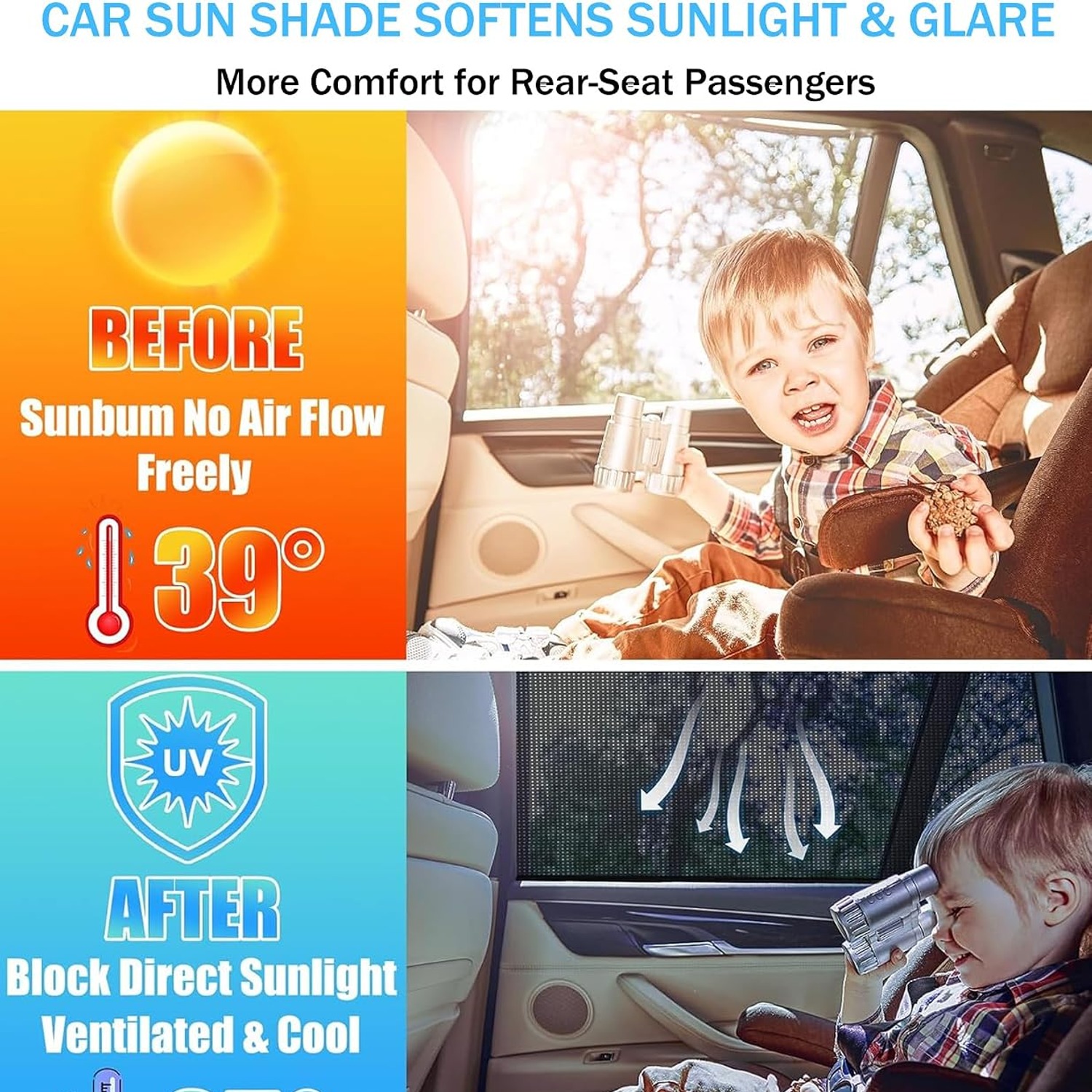
Most car sun shade purchases start with the same drive. It is late afternoon, you are heading in the direction the sun happens to be, and the light is coming in low through a rear side window. Adults can squint, turn their head or put on sunglasses. A small child strapped into a seat cannot do any of those things. They get hot, the light is in their eyes, and the rest of the trip is harder than it needed to be.
The side windows are the weak point in a car's sun protection. Windscreens are usually treated glass and quite large, which means the angle of the sun is rarely straight into someone's face. Side glass is different. It is vertical, it faces sideways, and in the morning and late afternoon the sun lines up with it almost perfectly. That is why a car window shade is one of the few car accessories people actually keep using after the first week.
How a stretch mesh shade works
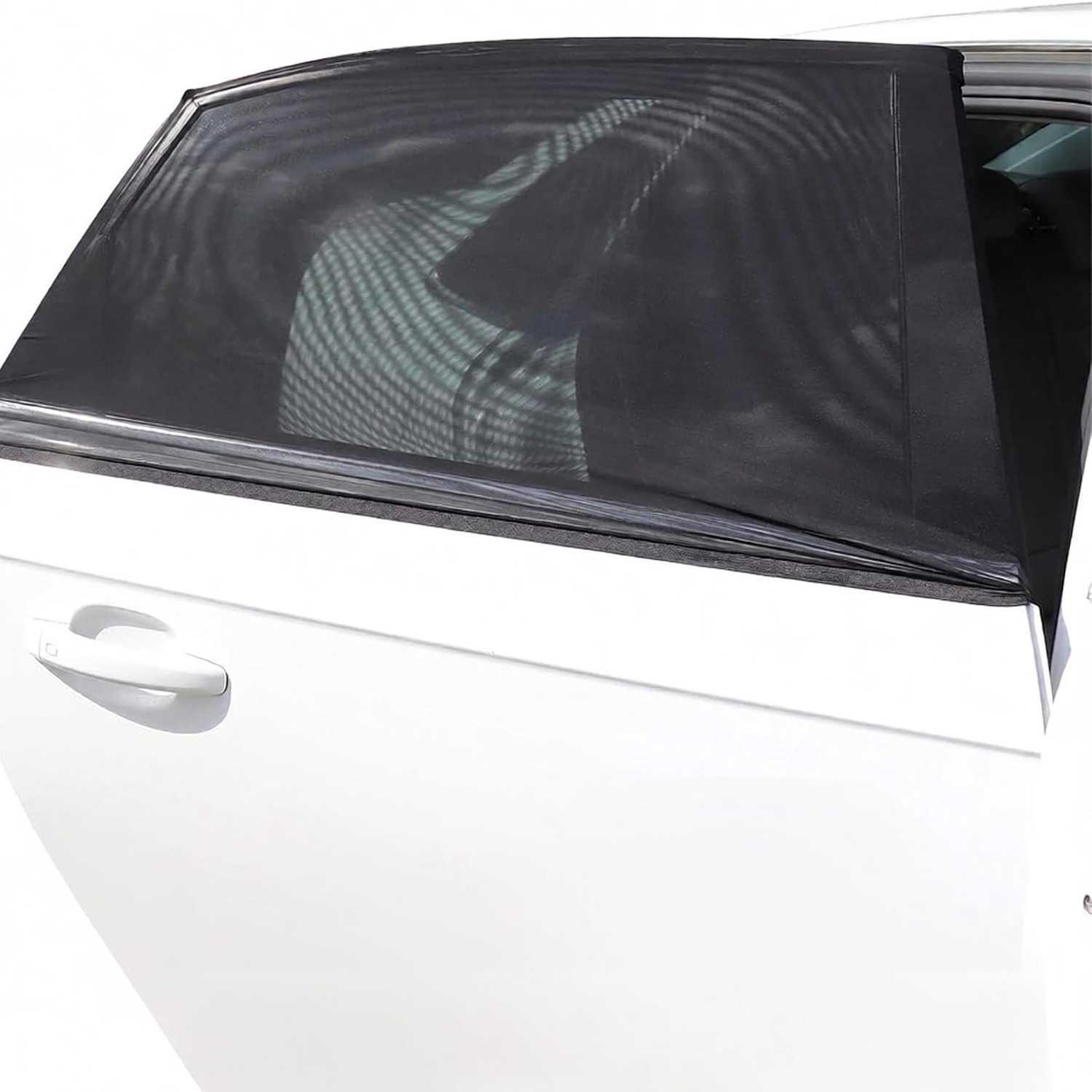
There are three main ways to shade a side window. The oldest is the suction cup panel, a flat sheet of plastic or fabric that sticks to the glass. The second is a roller blind that clips to the top of the door. The third, and the type this product uses, is a stretch fabric sleeve that pulls over the entire door frame.
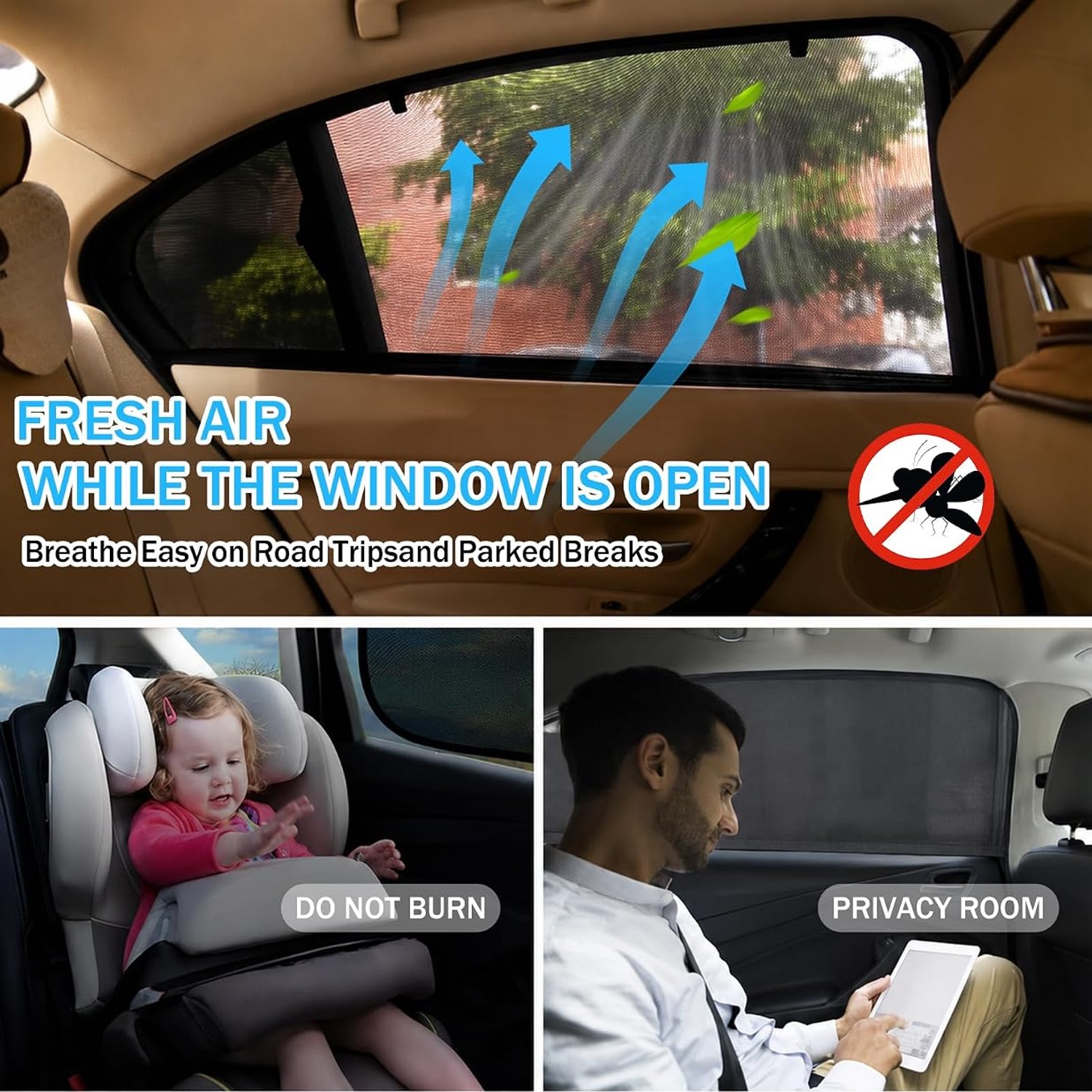
The sleeve style wins on two counts. First, it does not rely on suction. Suction cups fail in heat, which is exactly when you need the shade most, and the panel ends up on the floor behind the seat. Second, the shade sits outside the glass rather than against it, so the window can still be lowered. The mesh carries on doing its job while fresh air comes through.
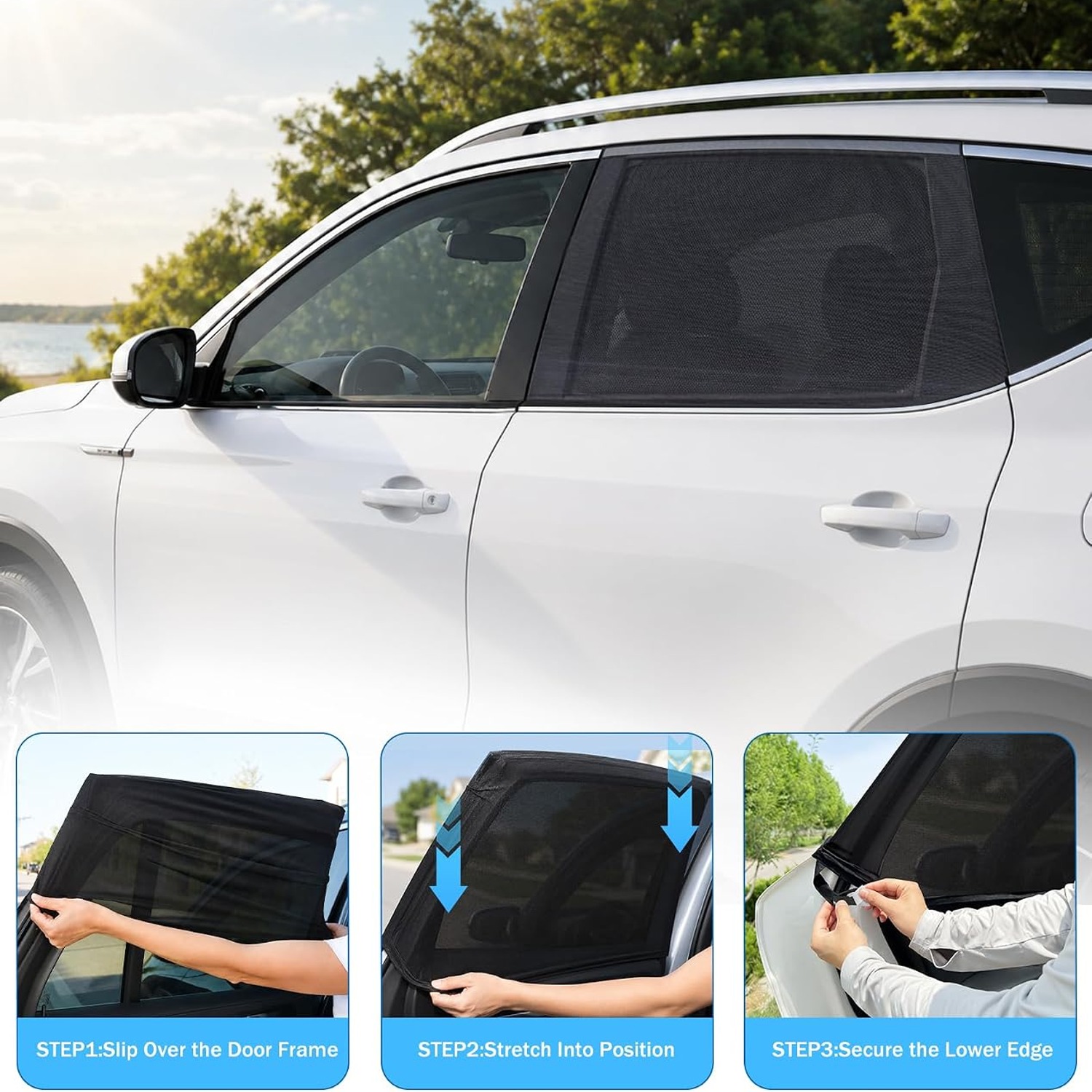
Fitting is deliberately simple. You open the rear door, pull the shade down over the frame so the fabric is taut all the way around, then close the door. The door itself clamps the fabric edge in place. There is nothing to adjust, nothing to stick, and nothing left on the glass when you pull it off again.
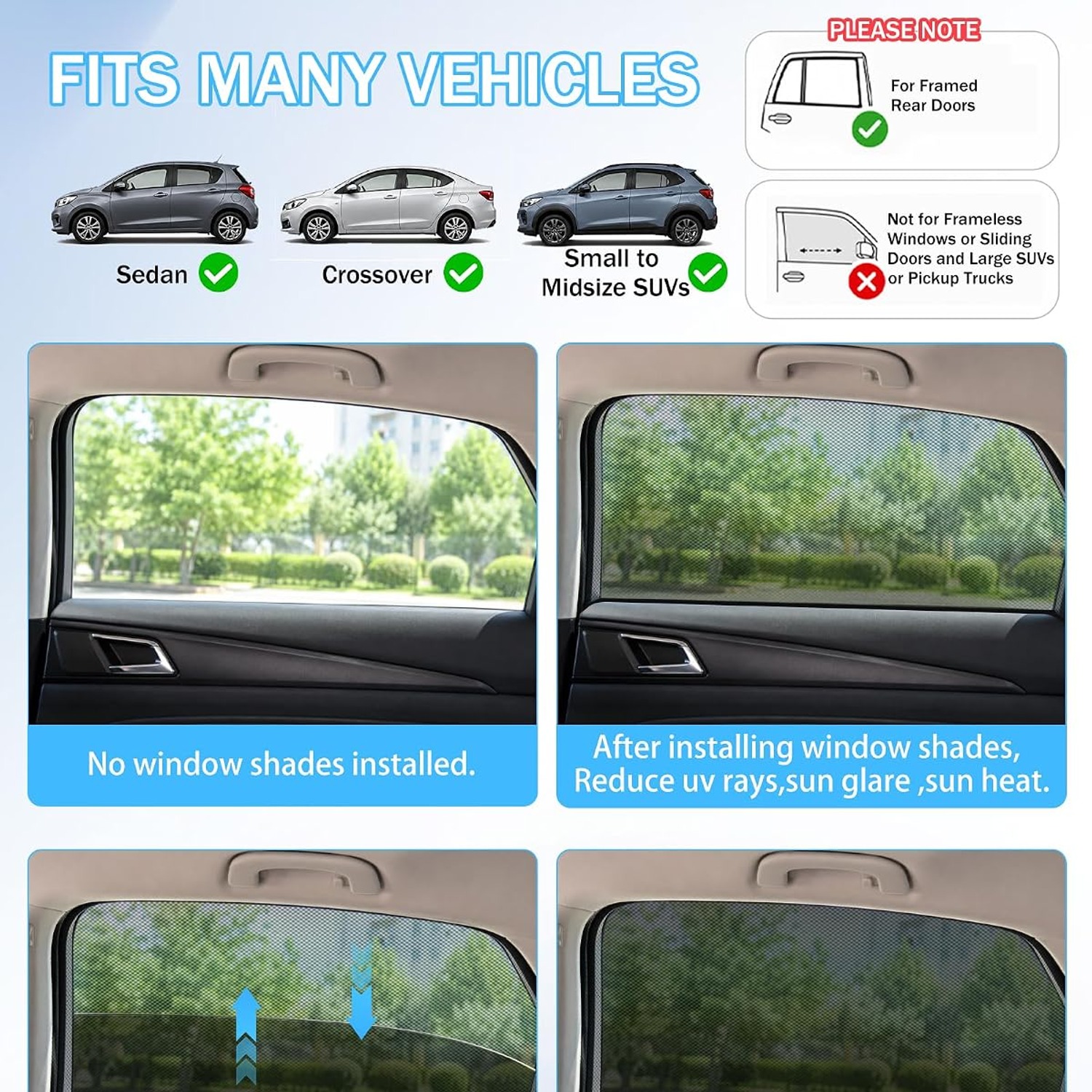
The mesh weave is what gives you shade without darkness. Light passes through at a much reduced level, so the cabin stays usable and the passenger can still see out. The listing describes it as offering UV protection, cutting sun glare, reducing heat and helping prevent children from getting burned or overheated.
Who this suits
Families are the obvious group. If you have a car seat in the back and you drive during the day, a baby car sun shade stops the fight over who is in the sunny seat. Two shades in a pack means both rear windows are covered, which matters once you have two kids and neither wants the bright side.
It is not only for parents though. Dog owners use the same shade so the back seat does not cook while they drive to the park. Rideshare drivers fit them because passengers notice the difference straight away. Anyone who regularly carries groceries, medication, electronics or plants on the back seat benefits from keeping direct sun off them during a drive.
They also travel well. The pair weighs 200 g and folds down to nothing, so they go in a suitcase for a trip where you will be renting a car. Because the fit is universal rather than model specific, they will go on the hire car without any guesswork.
Getting the fit right
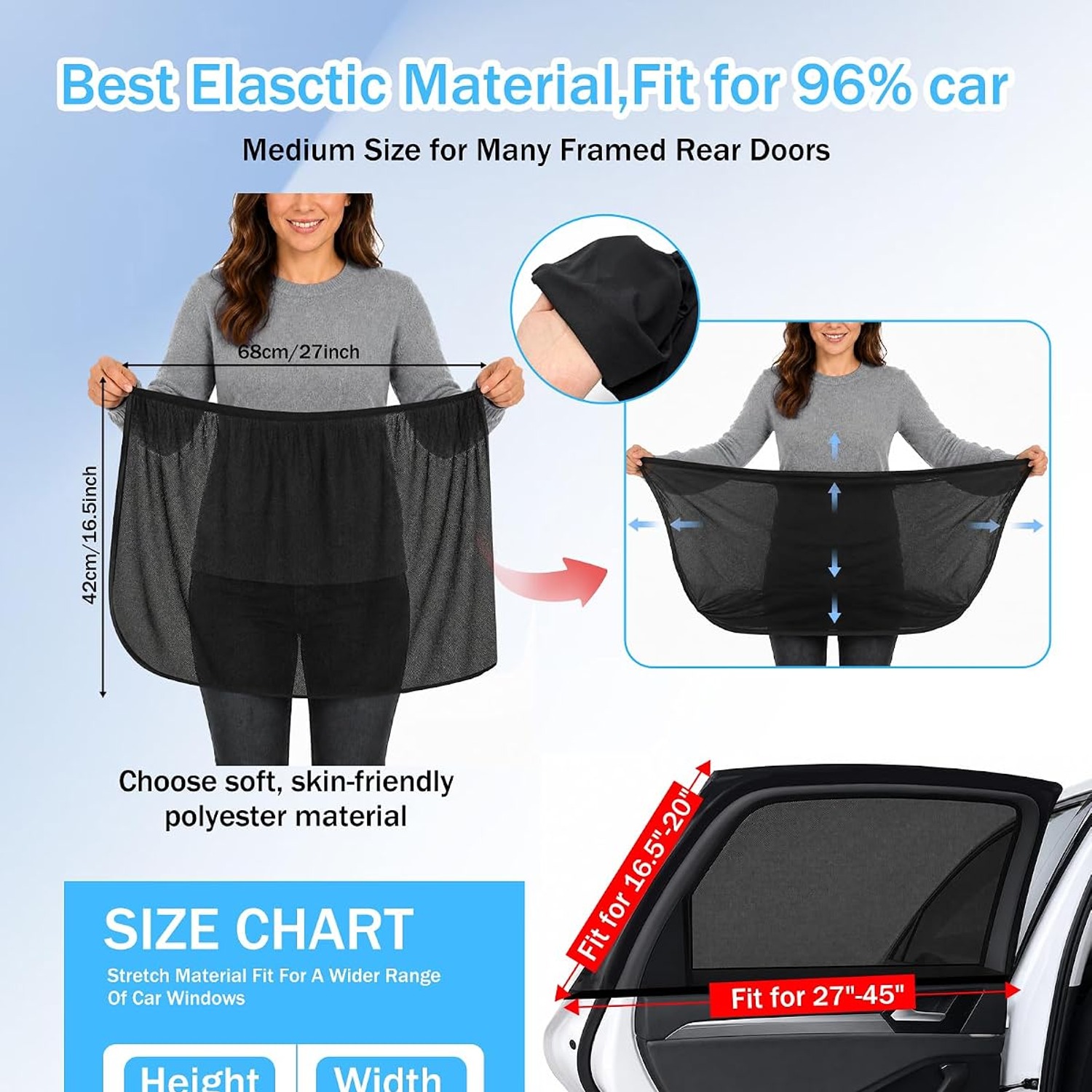
Each shade measures 130 cm long by 56 cm wide, and the material stretches from there. The supplier states a maximum fit of 45 inches in length and 20 inches in height across most car window frames. That covers the great majority of passenger cars, from compact hatchbacks up to larger sedans and small SUVs.
If you drive something with unusually tall rear doors, a van for example, measure the door frame before you order. Measure the full outer edge of the frame, not just the glass, because the sleeve has to go over the whole door. Smaller doors are rarely a problem, since the extra fabric simply pulls tighter.
One detail worth checking on first fit is the door seal. Pull the fabric smooth so it is not bunched where the door closes, then shut the door normally. If the door needs extra force, redistribute the fabric rather than slamming it. Once you have done it twice you will be fitting them without thinking.
Living with them day to day
Noise is the thing people ask about most. Any fabric in moving air can hum or flutter a little, especially at highway speed. The fix is usually tension. A shade pulled taut over the frame sits flat and stays quiet, while a loose one catches air. Dropping the window a couple of centimetres sometimes changes the airflow enough to settle it too.
Leaving them on permanently is fine for most people through the warmer months. The fabric is thin and the pair weighs very little, so there is no meaningful effect on how the car drives. Take them off before an automatic car wash, because rotating brushes and stretch mesh are not a good combination.
Cleaning is straightforward. Hand wash in cool water with a little mild detergent, rinse well and hang to dry out of direct sunlight. Skip the washing machine, the tumble dryer, bleach and the iron. Machine agitation can stretch fine mesh and heat can weaken elastic, which costs you the snug fit that makes the shade work. Between washes, shaking the dust out is usually all that is needed.
For storage, fold them flat or roll them loosely and put them in a seat back pocket or the boot. Avoid leaving them squashed under something heavy for months on end, since permanent pressure can set creases into the fabric.
A few honest limits
No side window shade turns a parked car into a cool car. Shade reduces direct sun on the seat, which helps, but a sealed vehicle in full sun will still get dangerously hot. Never leave a child or an animal in a parked car, regardless of what is fitted to the windows.
These are also designed for rear side windows. Fitting one to a front door can block your view and your mirrors while driving, which is both unsafe and likely against local road rules. Keep them where they belong, in the back.
Finally, mesh is mesh. It shades, it does not black out. If you want a pitch dark cabin for a sleeping baby on a long drive, a mesh shade will reduce the light significantly but it will not remove it entirely. Most parents find the trade off worth it, because total blackout also means no airflow and no view out.
The short version
A stretch mesh side window shade is a small, cheap piece of kit that fixes a real and frequent annoyance. It goes on in seconds, holds itself in place without suction cups, and lets the window stay usable. You get two in the pack, so both rear windows are sorted at once.
Check your door frame against the stated maximum of 45 inches long by 20 inches high if you drive something large. Fit them taut, hand wash them when they get dusty, and take them off before the car wash. Do that and you will probably forget they are there until the first clear afternoon drive, which is exactly the point.