

The complete guide
How to Choose a Beach Bag That Actually Survives the Beach
The problem with most beach bags
Think about the last time you packed for the beach. The bag looked fine going out. Coming back, it weighed twice as much, the bottom was damp, and three days later you were still finding sand in the car footwell.
That is not bad luck. It is what happens when you put wet, sandy things into a sealed container. Canvas and nylon totes are designed to keep water out, which also means they keep water in. Sand rides along with the water, settles into the seams, and stays there. The bag never really dries, so it starts to smell, and you end up either washing it constantly or replacing it every summer.
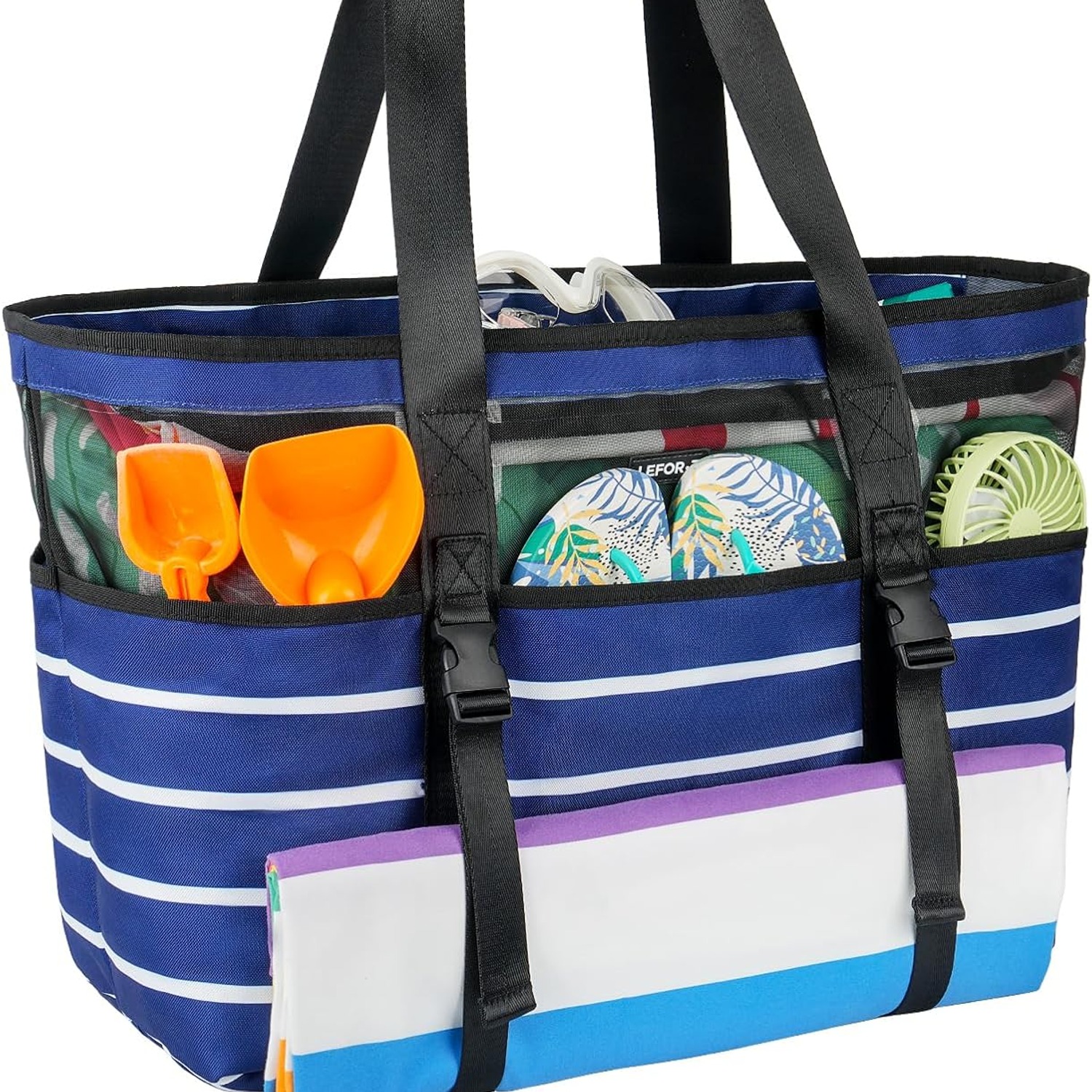
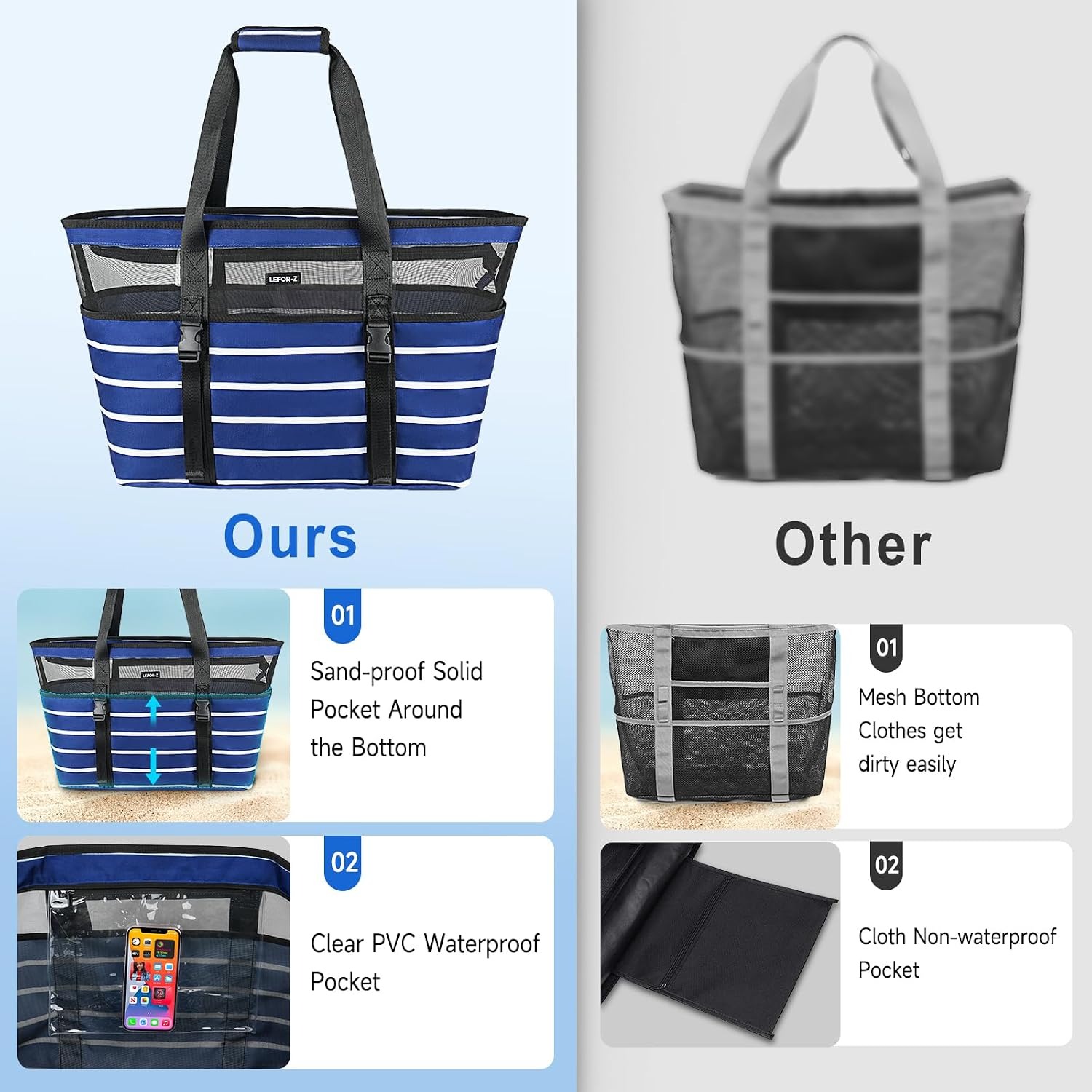
A mesh beach tote flips the logic. Instead of trying to seal the mess in, it lets the mess fall out. Water runs through the weave on the walk back to the car. Dry sand sifts away with a shake. The bag dries in an hour on a washing line rather than sitting damp in a cupboard. Once you have used one, going back to a solid tote feels like carrying a bucket.
How a mesh beach bag works
There is not much to it, which is part of the appeal. The body is an open weave, so air and water pass straight through. There is no lining to hold moisture and no stiff base panel to crack after a season of being folded into a car boot.
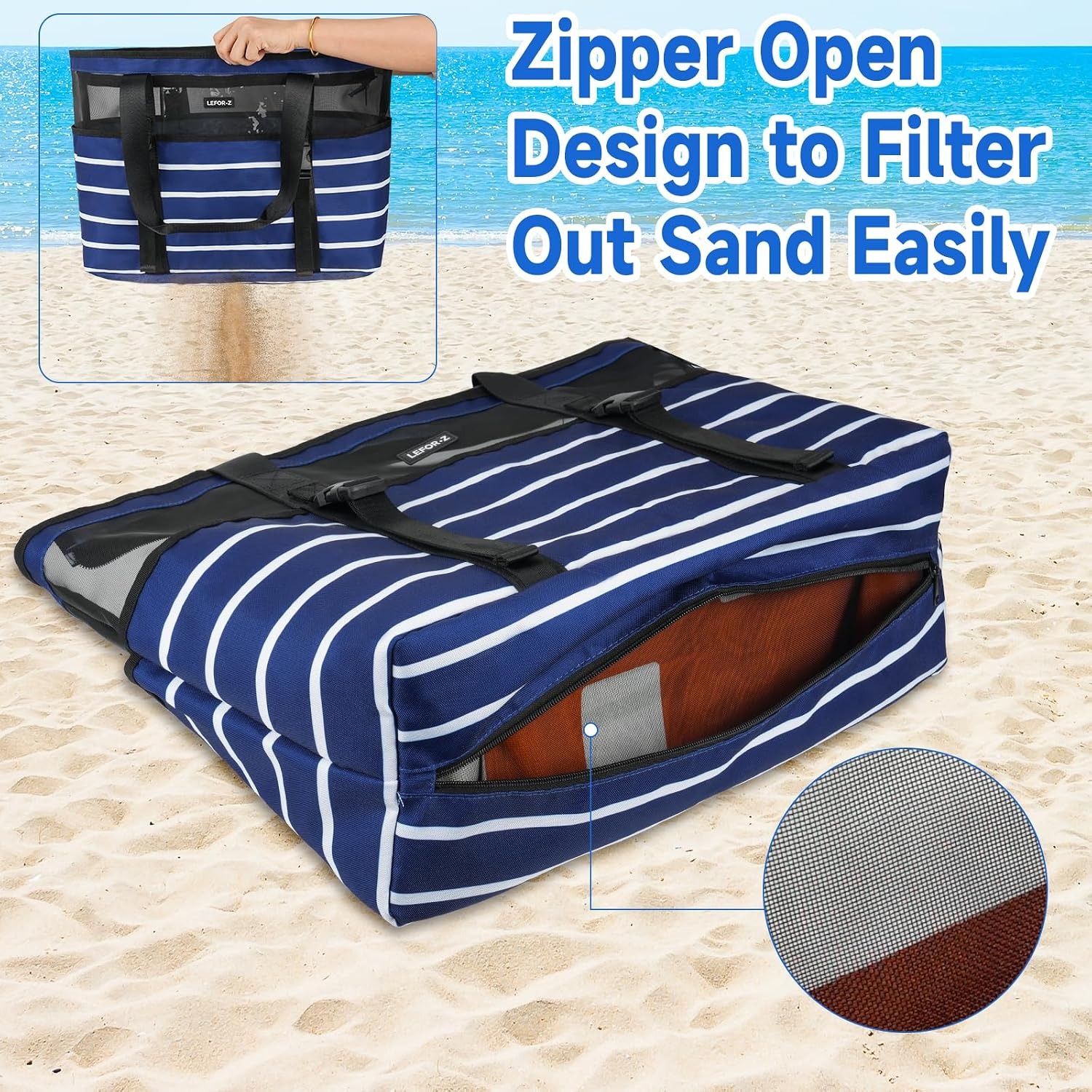
Drainage is the obvious benefit. Put a soaking towel in and the water leaves almost immediately. Sand is the quieter win. Loose, dry sand is small enough to pass through the gaps in the weave, so most of it is gone before you reach the car park. Damp sand sticks, but a rinse with the garden hose takes care of that in under a minute.
The third benefit is drying. A wet swimsuit sealed inside a nylon bag for a two-hour drive will smell. Inside mesh, air keeps moving, so things dry as you travel. That matters most for families, where somebody always forgets to hang their costume up.
The trade-off is that mesh is not private and it is not secure. Everything inside is visible, and an open-top tote is easy to reach into. That is fine for towels and toys. For a phone, car keys or a wallet, use a small zipped pouch or dry bag tucked inside.
Who it suits
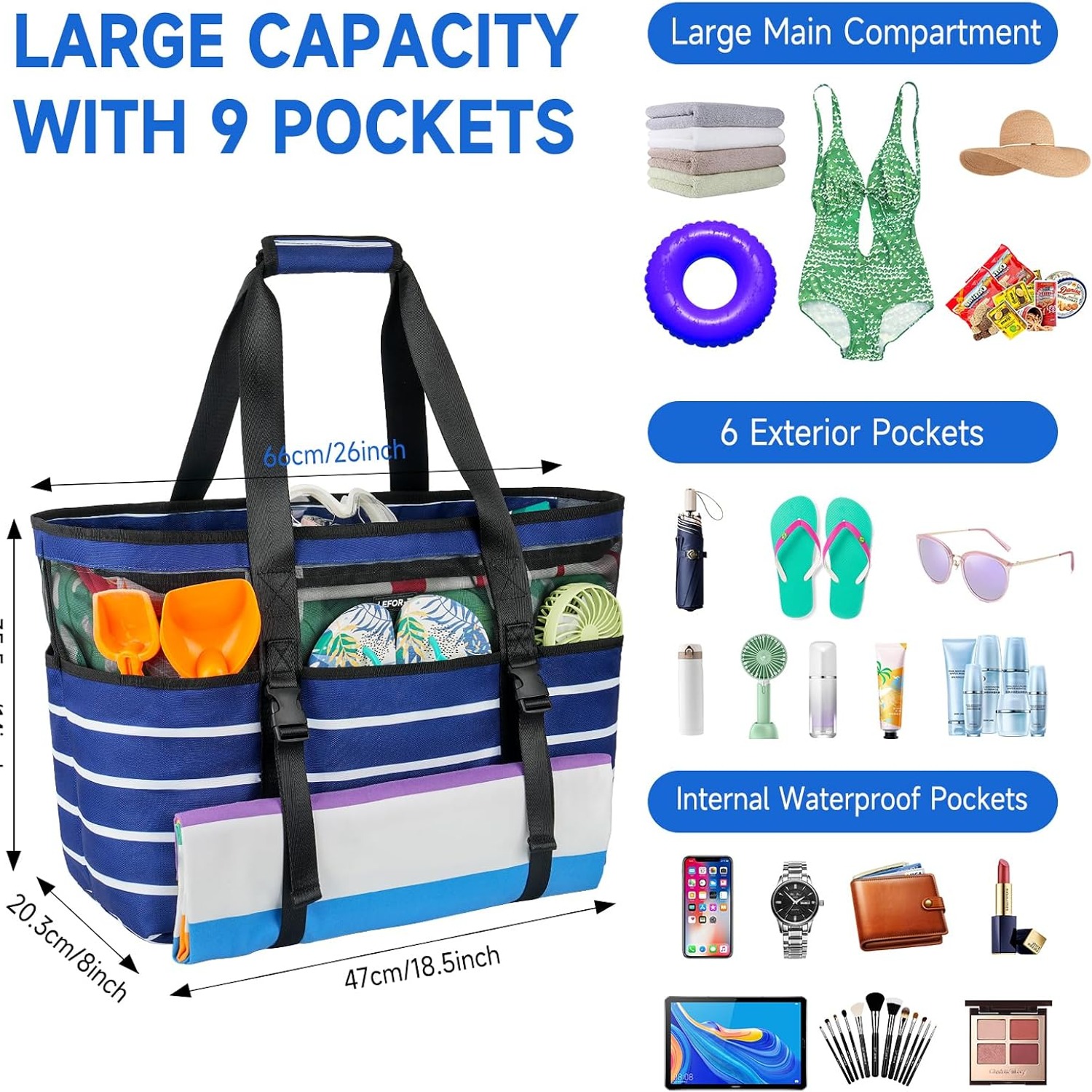
Families get the most out of a large pool bag. One oversized tote carries what three small bags would, and you only have one thing to keep track of when you are herding children across hot sand. Towels go in the bottom, snacks and sunscreen on top, toys wedged down the sides.
Swimmers and gym-goers are the second group. A swim bag that breathes keeps kit from going sour between sessions. If you train before work and the bag sits in a car all day, mesh is noticeably kinder to your nose than a sealed holdall.
Travellers like them because they fold flat. An extra large beach bag that takes up no suitcase space is easy to justify packing, and it doubles as a shopping bag, a laundry bag or a day tote once you arrive.
Then there are the people who never take it to the beach at all. Mesh totes are quietly brilliant for storing pool toys, carrying firewood kindling, hauling garden clippings, moving sports equipment, or keeping a bundle of cleaning supplies in the boot. They are not precious, which is exactly why they get used.
Choosing the right size
Size is the decision people most often get wrong, usually by going too small. Towels are the problem. A single large bath towel, folded, is bulkier than most people picture, and four of them fill a standard tote before anything else goes in.
A rough way to think about it: one or two people on a short visit can manage with a medium bag. Two adults and two children for a half day need a large one. A full day with chairs, a cooler, spare clothes and a round of snacks usually means a big tote plus one extra item carried separately. Buying the extra large version costs little more and saves the second trip to the car.
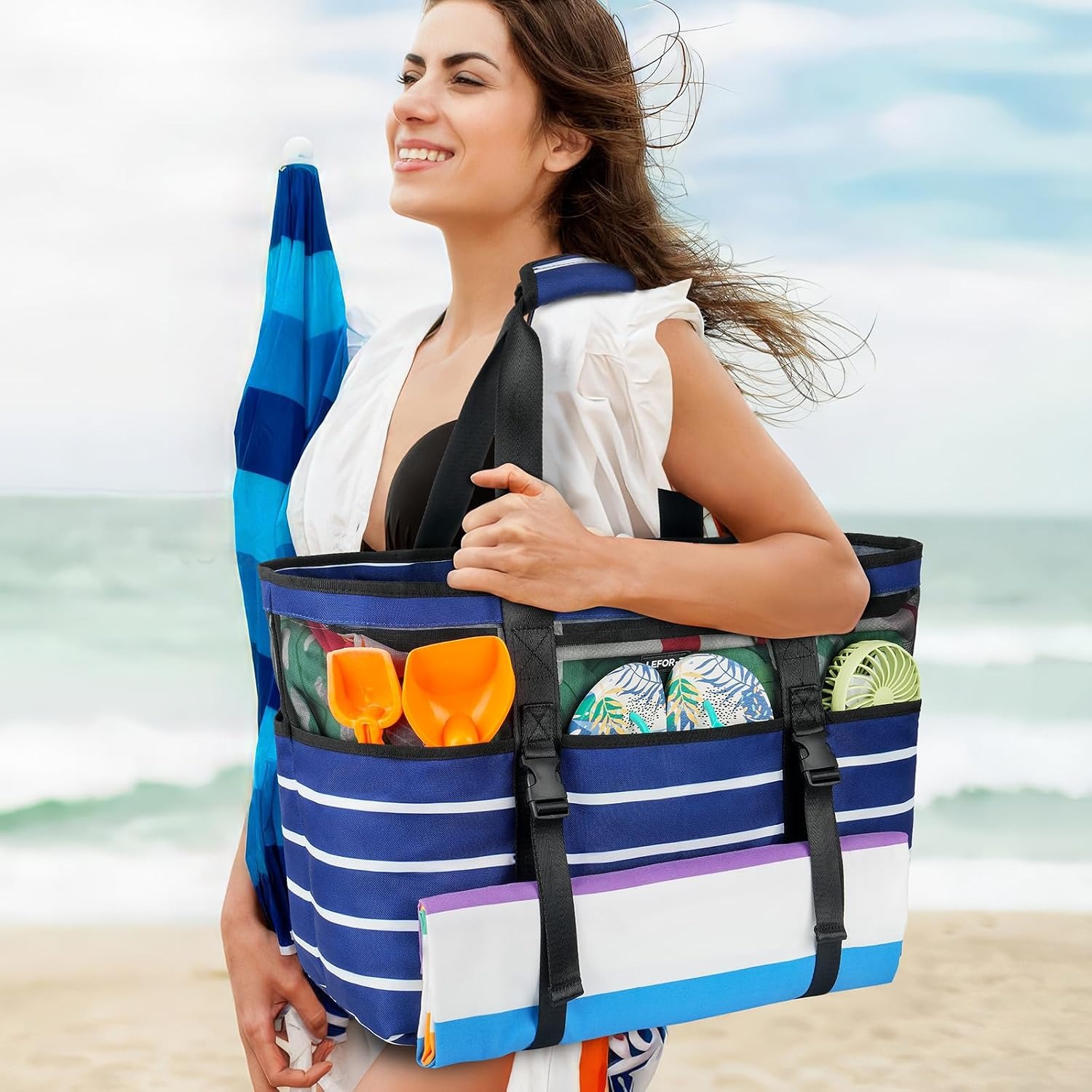
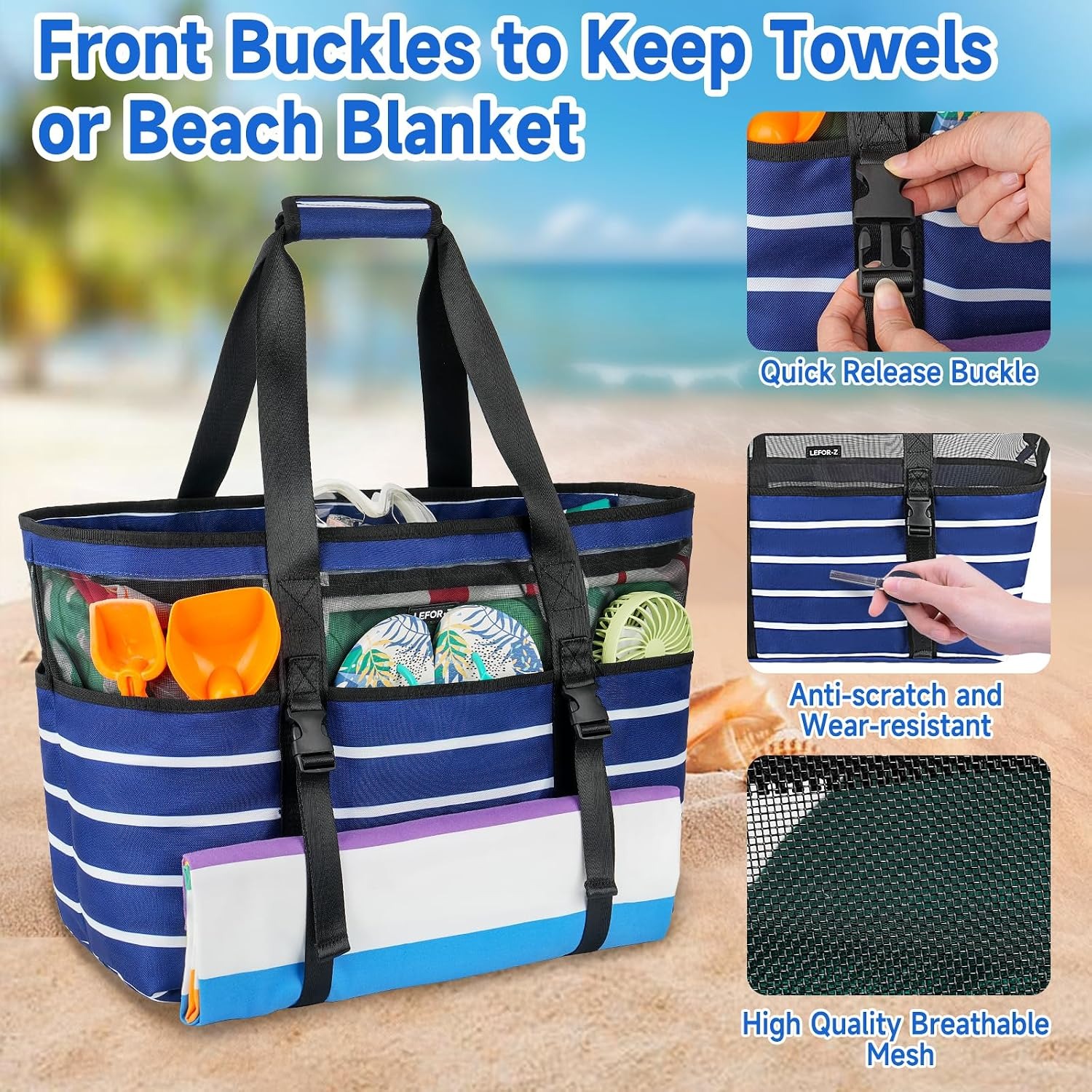
Also think about how you carry it. Shoulder-length handles matter more than they sound. If you are holding an umbrella in one hand and a child in the other, a bag you have to grip in your fist is not going anywhere. Over the shoulder, it just comes along.
Finally, consider what else you want it to do. If the answer is only beach days, size it for the beach. If you want one bag for the pool, the gym and the supermarket, lean larger and accept that it will slouch a little when half empty.
What to pack and how
Load it in layers. Towels at the bottom, because they are the heaviest and the bulkiest, and they give everything above a soft base. Then the items you want to reach quickly: sunscreen, water, a hat. Toys go down the sides where they fill the gaps.
Keep anything that must stay dry in its own sealed pouch. Mesh will not protect a paperback from a leaking water bottle. A simple zip-lock bag handles phones and car keys fine.
On the way home, shake the bag out before loading it. Thirty seconds of shaking on the grass will remove most of the sand that is going to come out at all, and it is far easier than doing it in a car park with your hands full.
Looking after it
Care is genuinely simple. Shake out the loose sand after every use. Rinse the bag with fresh water to clear salt and chlorine, both of which are hard on fabric over time. If it needs a proper clean, hand wash it with mild soap in cool water and work gently around the weave.
Skip the washing machine. Mesh can snag or stretch in a drum, and the agitation does it no favours. Skip the tumble dryer too. Hang the bag open in a shaded, breezy spot and let it dry all the way through. Shade matters because strong sun will fade colour faster than anything else.
Store it dry and loosely folded. If you pack it away damp, you will find out next summer, and you will not enjoy the discovery. At the end of the season, a quick rinse and a full dry before it goes in the cupboard is all it needs.
Small habits that make it last
Do not overload it in one spot. Spread heavy things across the base rather than dropping a cooler in one corner, which puts strain on a single section of the weave and the handle attachment. Avoid dragging it across rough concrete when it is loaded. And if a strand of the mesh does catch, trim the loose end rather than pulling it, which stops a snag turning into a hole.
None of this is demanding. Mesh bags tend to outlast lined ones simply because they never stay wet, and staying wet is what kills most bags.
The short version
A beach bag only has to do a few things well. Hold a lot. Let water out. Let sand out. Sit comfortably on a shoulder when your hands are full. A large mesh tote does all four, and it dries fast enough that you can use it again the next morning.
Buy bigger than you think you need, keep valuables in a pouch inside, rinse it after salt water, and dry it in shade. Do that and it will handle years of beach days, swimming lessons, gym mornings and the odd shopping run without complaint.