

The complete guide
Choosing a Baby Playmat Gym That Lasts Longer Than Six Weeks
The problem with the first few months
New parents hear the same advice from every direction. Put the baby on the floor. Do tummy time. Give them things to look at. All true, all useful, and all much harder than it sounds when you are holding a three-week-old who objects to being put down anywhere.
The real problem is not motivation. It is that a bare floor gives a newborn nothing to do. A baby lying on a rug with nothing above them will usually fuss within two minutes. Lay the same baby under an arch with a shiny mirror and a jingle ball hanging just within swiping distance, and you often get ten or fifteen minutes of genuine, contented effort. That is the whole point of a baby playmat gym. It buys the baby something worth staying down for, and it buys you a chance to drink a coffee while it is still hot.
How a play gym actually works
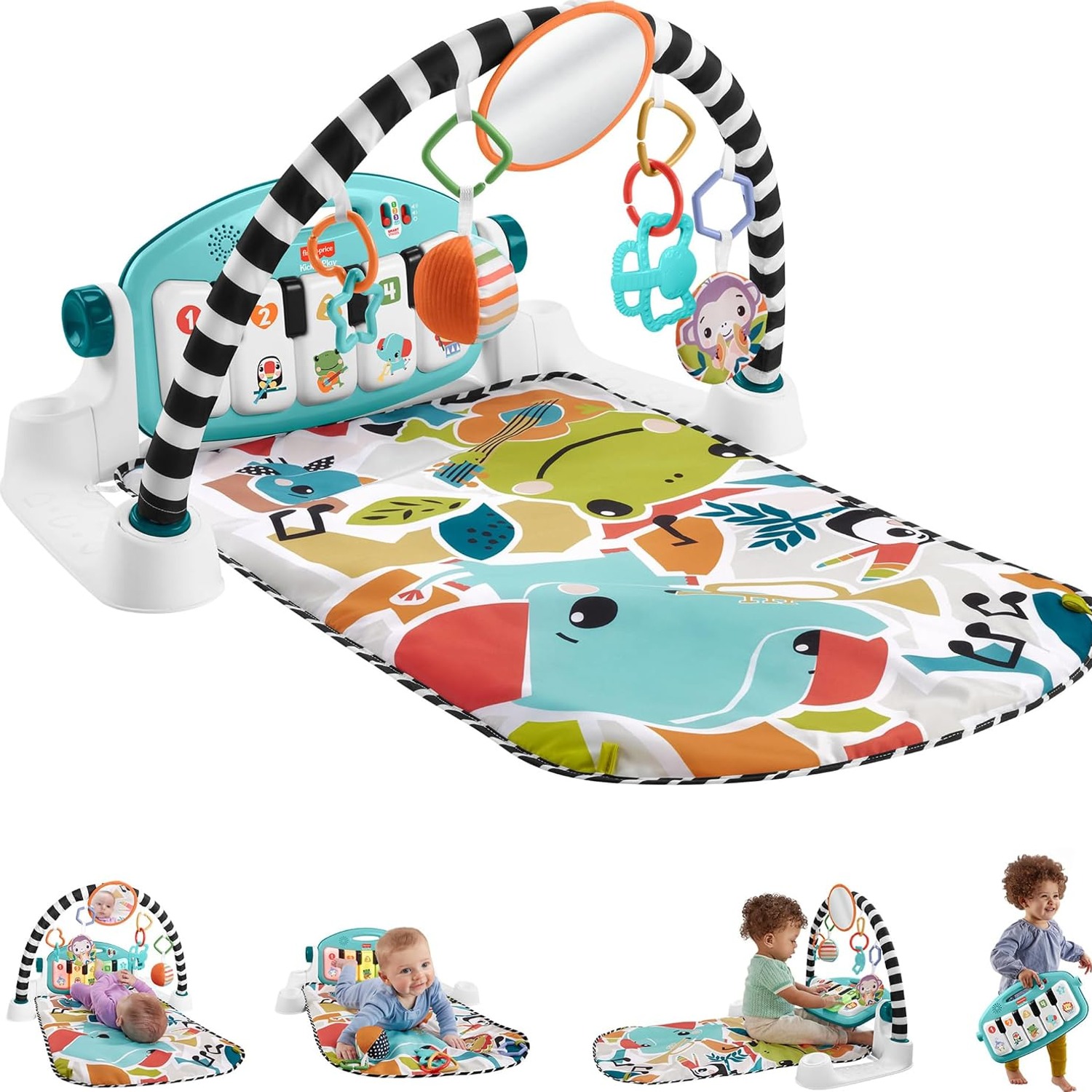
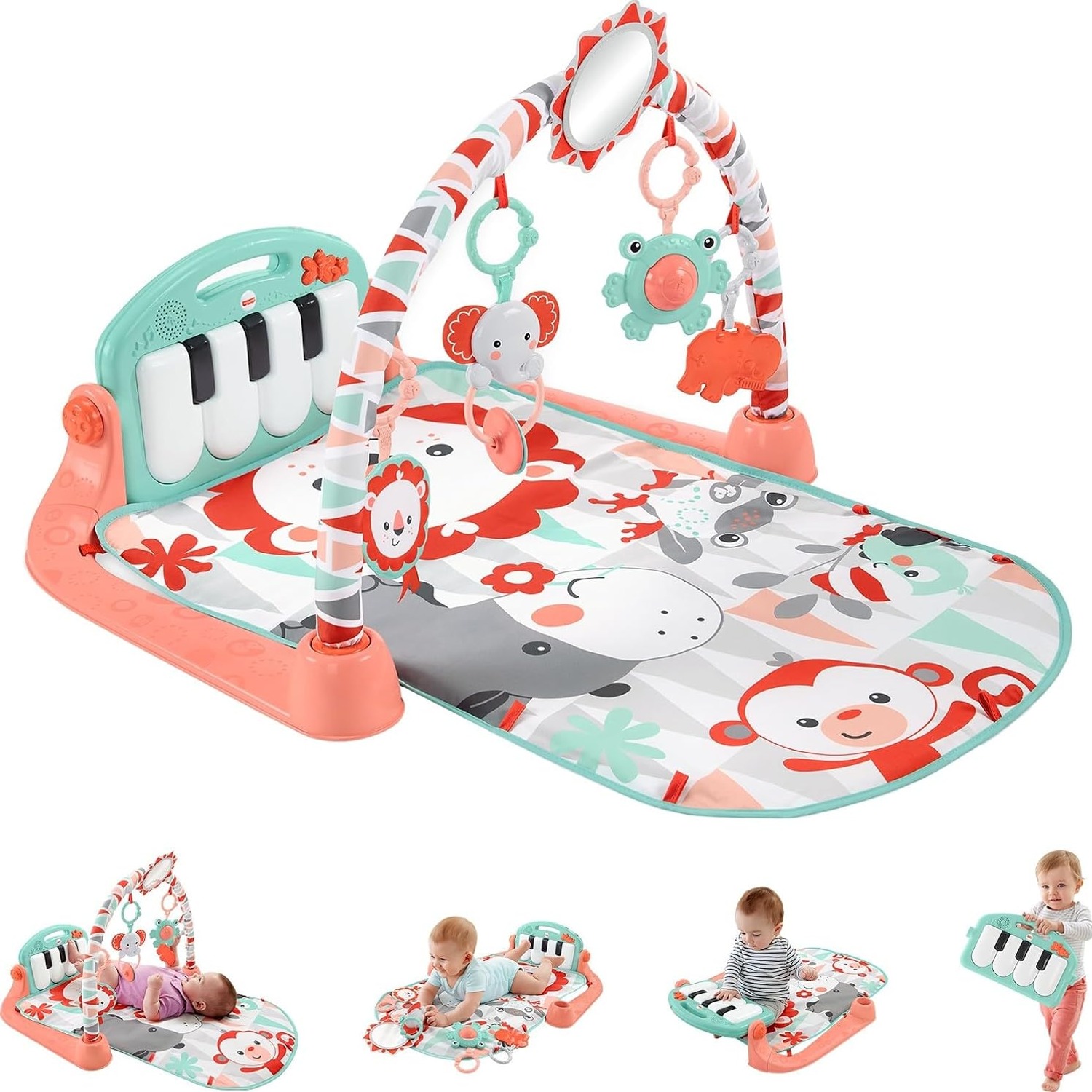
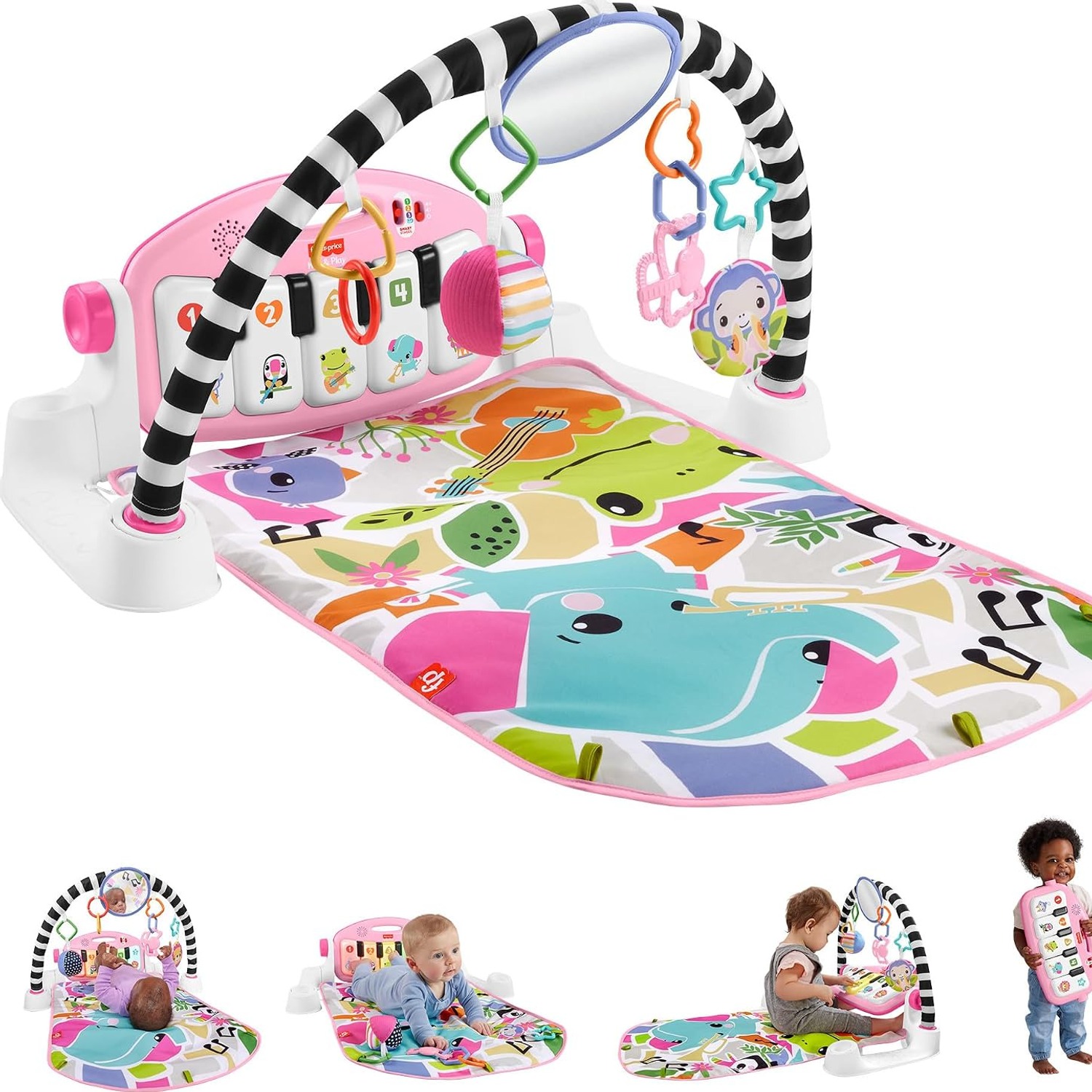
Strip away the lights and the songs and the mechanism is simple. A padded mat defines a safe patch of floor. An arch holds toys at a height a baby can see and, eventually, reach. Everything else is refinement.
The refinements matter more than you would think. High contrast patterning on the arch exists because newborn vision is poor at distinguishing soft colours but fairly good at picking out strong light-and-dark edges. Give a two-week-old a pastel cloud mobile and they will look past it. Give them black-on-white stripes and they will lock on.
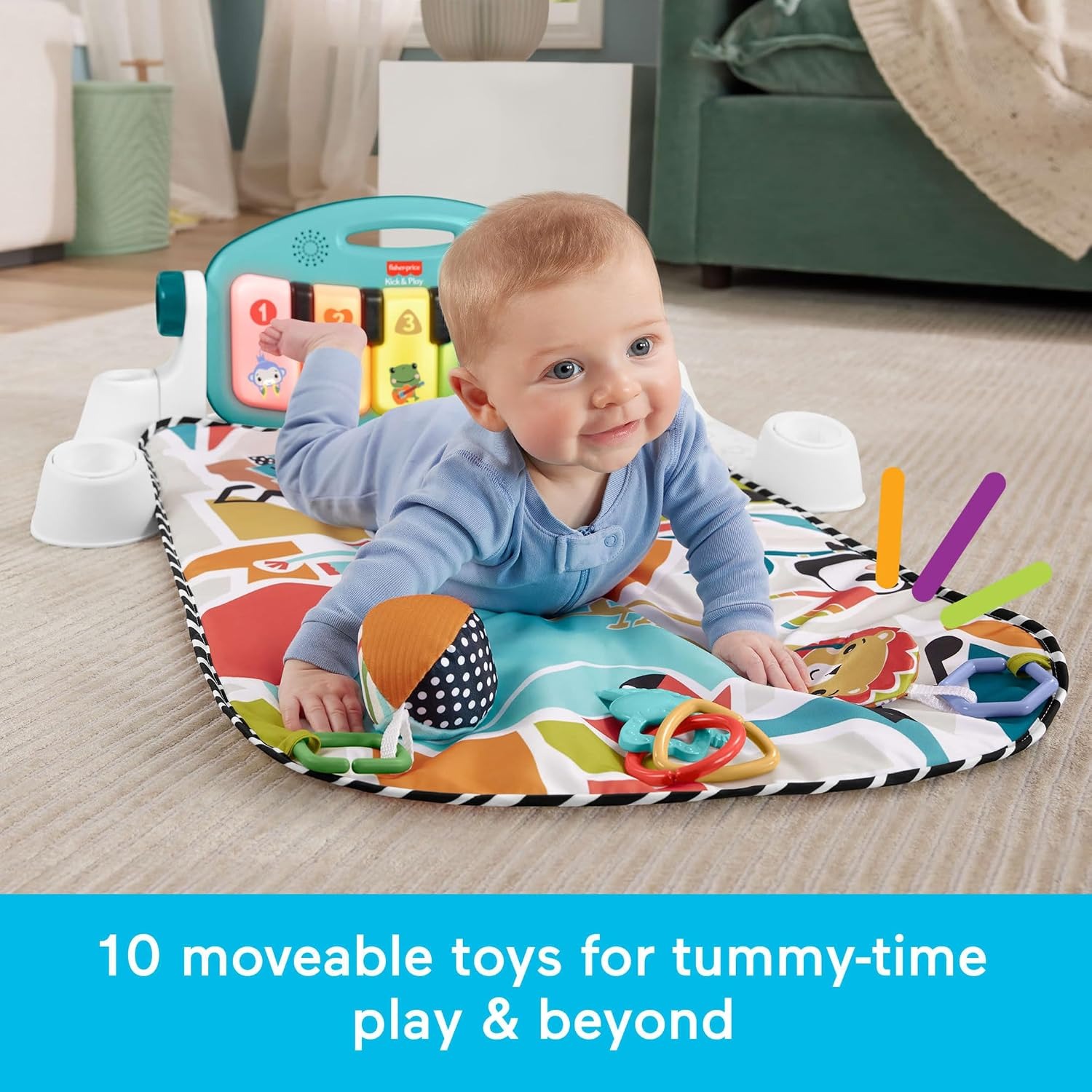
Repositionable toys matter for a different reason. A baby's reach changes month to month, and so does their preferred position. At six weeks the toys need to be directly overhead. At four months the baby is rolling and batting sideways. At six months they are on their tummy and want things at eye level, on the mat itself. A gym where the toys clip onto the arch and onto loops in the mat covers all three stages. A gym with toys sewn permanently into place covers one.
This mat comes with ten linkable toys: a jingle ball, a butterfly teether, a crinkle toy, a self-discovery mirror and six coloured shape links. The variety is the point. Different babies latch onto different things, and you will not know which until you try. Some babies ignore everything except the mirror for a month straight.
The piano, and why it matters later
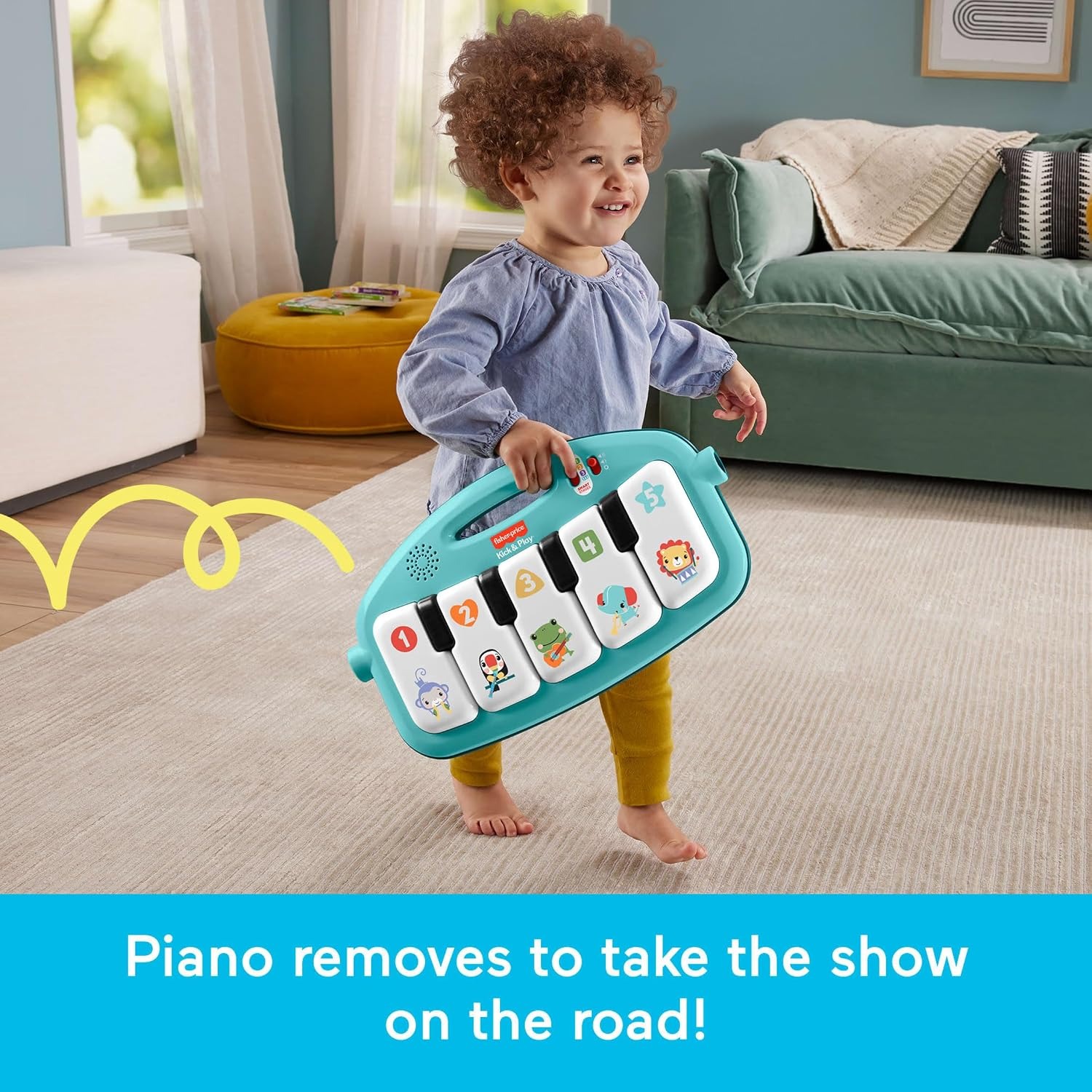
The removable piano is the feature that extends the useful life of this gym well past the newborn window. It has five multi-coloured keys that light up, four musical settings and more than 85 songs, sounds and phrases covering animals, colours, numbers and shapes.
In the first few months, a baby kicks the piano by accident, hears a noise, and slowly works out that the kick caused the noise. That connection, cause and effect, is one of the first big cognitive steps a baby takes. Most of what looks like random thrashing in month three is actually a baby testing a hypothesis.
Later, the piano comes off the mat entirely. A sitting baby can have it in front of them and press keys deliberately. A toddler can use the freestyle mode, which plays real piano notes rather than preset tunes, and bang out whatever they like. Three learning levels shift the spoken and sung content as the child gets older, so the same hardware does not sound identical at two months and two years.
Who this suits
If you are expecting a first baby, a gym like this is close to essential kit. You will use it daily from about week two.
If you already have a baby of four to six months, it still earns its place. That is the age when reaching, rolling and sitting all arrive at once, and a gym that lets you move the toys around suits that rapid change well.
If your child is already walking confidently, the mat portion has less to offer, though the detachable piano may still get play. The listed age range runs to 36 months, but the bulk of the value sits in the first year.
It is also a strong baby shower gift. Most new-baby presents are clothes that get outgrown in weeks. A play gym gets used every single day for a year, and the person who gave it gets remembered for that.
How to choose between play gyms
A few things are worth weighing up.
Washability. The mat will get spat on, dribbled on and occasionally worse. A machine-washable mat is not a luxury. Check that the arch and electronics come off cleanly before washing, which they do on this one.
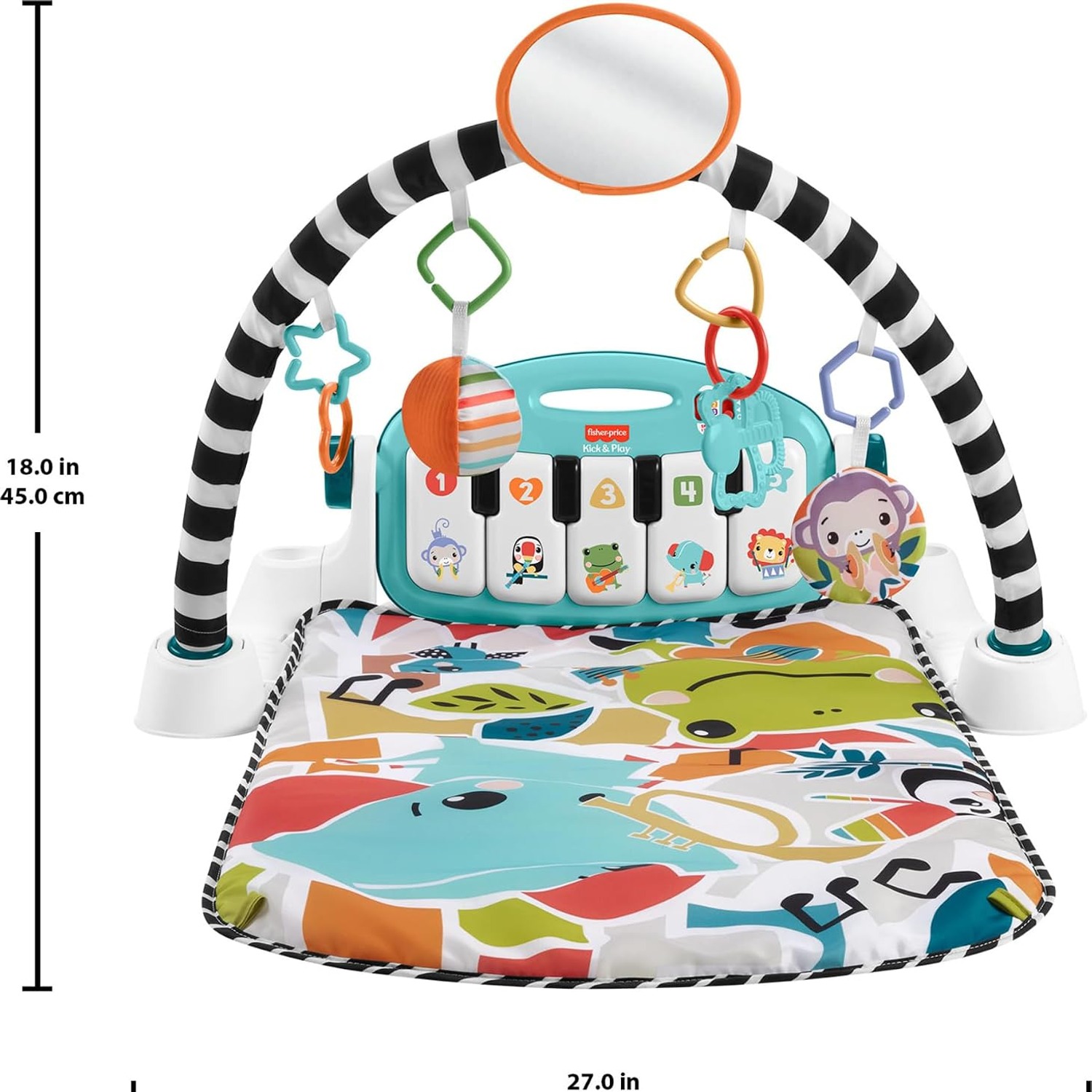
Weight and footprint. This gym weighs 1.66 kg and measures 91.5 x 68.6 x 45.7 cm set up. Light enough to carry one-handed, small enough for a flat. Heavier gyms with rigid frames tend to live in one room permanently, which is fine if you have the space and frustrating if you do not.
Batteries or no batteries. Electronic gyms need power. This one takes three AA batteries, included. If you want silence, you can simply not fit the batteries and use it as a plain mat with toys, which works fine.
How the toys attach. Linkable toys with clips are far more useful than fixed ones. They move around the arch, they clip to the mat loops, and they often clip to a pram handle or car seat too.
Noise tolerance. Be honest about this. A musical gym is genuinely engaging for a baby, and genuinely repetitive for the adult in the room. If you share a small space with someone working from home, think about where it will live.
Looking after it
Keep the care routine simple and it will stay in good shape.
Take the arch, piano and toys off the mat before washing. Machine wash the mat on a gentle cycle and dry it flat rather than in a tumble dryer, which is kinder to the padding. Wipe the piano and the plastic toys with a damp cloth and dry them right away. Never submerge anything with batteries in it.
Check the battery compartment stays closed and that the screw is tight. Give the arch joints and the toy clips a quick look every few weeks, especially once your baby is strong enough to pull hard on things. Replace batteries when the sound starts to distort rather than waiting for them to die, because weak batteries make the audio sound unpleasant long before it stops.
Store it somewhere dry. This is listed for indoor use, and the electronics will not thank you for a damp garage.
A note on realistic expectations
No play gym turns a fussy baby into a content one. Some days your baby will want nothing but your arms, and that is normal. What a gym does is give you a reliable option for the days when floor play does work, and those days get more frequent as the weeks go by.
Expect short sessions at first. Five minutes under the arch at three weeks is a win. By three months you may get twenty. By six months, with the toys moved down to mat level for tummy time, you might get a decent stretch while the baby works on pushing up.
The short version
A baby playmat gym solves a specific problem, which is that a bare floor is boring to a newborn. This one covers the full stretch from lying and kicking to sitting and playing, with ten movable toys, a high-contrast arch and a removable piano carrying five light-up keys, four musical settings and more than 85 songs, sounds and phrases.
It measures 91.5 x 68.6 x 45.7 cm, weighs 1.66 kg, runs on three included AA batteries and the fabric mat goes in the machine. Listed age range is birth to 36 months, indoor use, one child at a time. No manufacturer warranty is stated.
If you want one piece of baby kit that gets used daily from week two and keeps earning its place well into the second year, this is a sensible place to put your money.